



Building communications software should get the right notice to the right unit, on a channel the resident reads, with a record you can produce later. It handles emergencies and replies too. URBI does this inside one resident app and staff dashboard; this guide uses it as the reference point.
This is a requirements guide, not a ranked list. If you want the ranked list, see best building communication software in 2026. Here we cover what the software must do, which channels reach people, what the law demands before you press send, when a building has outgrown email and group chat, and what to ask on a demo.
What should building communications software actually do?
It has six jobs, and a product that does only the first one is a newsletter tool with a new name.
- Notices. Write once, schedule, and publish to the app, email, and the lobby. Elevator outages, water shutoffs, and meeting agendas are the daily load.
- Emergencies. One action pushes an alert to every phone and every screen in the building, and the same action can post the all clear.
- Two way messages. Residents reply, and the reply lands in a staff inbox that someone owns, not a personal phone.
- Targeting. Send to one unit, one floor, one tower, owners only, or tenants only, without exporting a spreadsheet.
- Translation. A resident who reads Spanish or Mandarin gets the notice in a form they can act on.
- Proof. Later, you can show what was sent, to whom, when, and who approved it.
The sixth job matters more than boards expect. In Jones v. Flowers (2006), Chief Justice Roberts wrote that when mailed notice came back unclaimed, the State had to take additional reasonable steps before acting. The case involved a tax sale, but the logic carries: knowing a notice failed and doing nothing is a weak position. Software should tell you when a message bounced so a person can follow up.
Boards also keep the decision. Kevin Hirzel, managing member of Hirzel Law, writes that directors must "adequately inform themselves of material facts" before exercising business judgment. A tool that drafts a notice does not remove the duty to read it.
Which channels reach residents, and what do the numbers say?
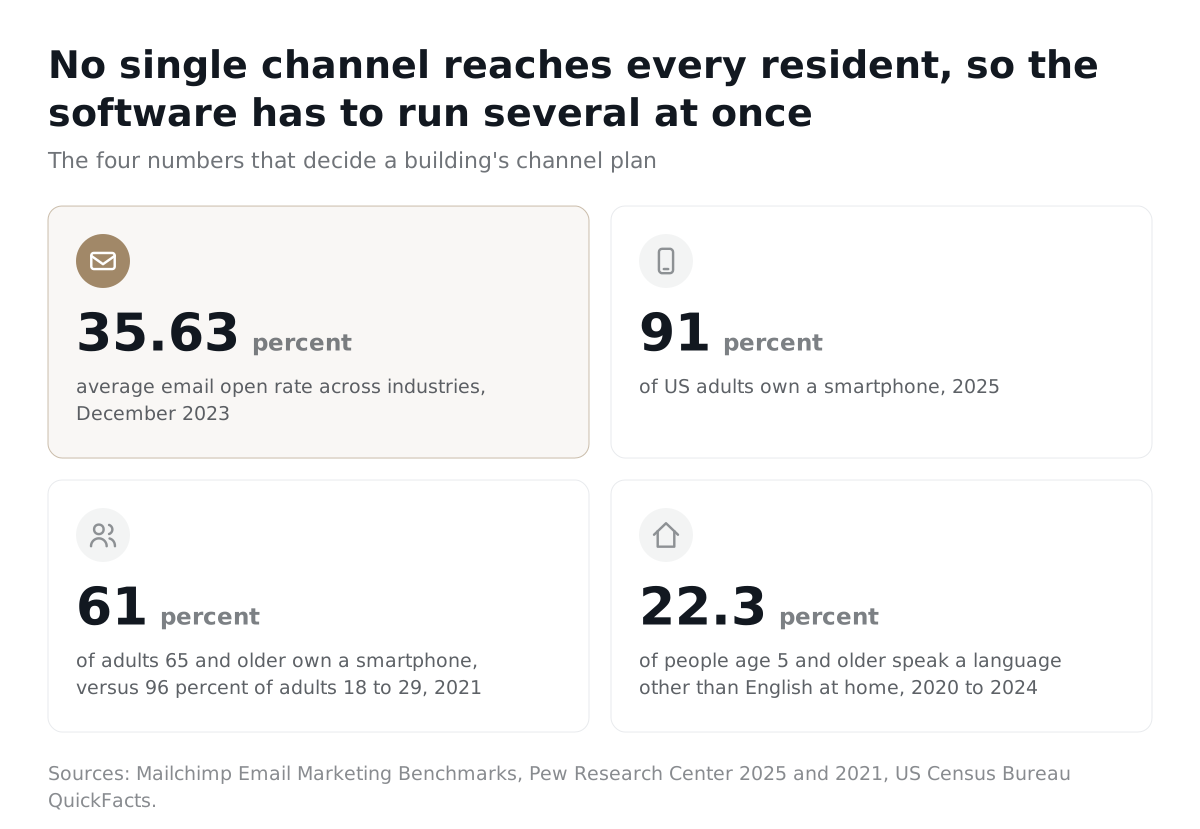
No single channel reaches everyone, so the software has to run several at once and let each resident pick the one they read.
Three numbers frame the problem. Mailchimp's benchmark across all industries put the average email open rate at 35.63 percent as of December 2023, which means roughly two of every three delivered emails never register an open. Pew Research Center found in 2025 that 91 percent of US adults own a smartphone, but its 2021 age breakdown showed 96 percent of adults 18 to 29 versus 61 percent of adults 65 and older. And the US Census Bureau reports that 22.3 percent of people age 5 and older spoke a language other than English at home in 2020 to 2024.
| Channel | What the evidence says | Best use in a building | Weakness |
|---|---|---|---|
| 35.63 percent average open rate (Mailchimp, December 2023) | Long notices, agendas, budgets, attachments | Two thirds may not be opened; bounces go unnoticed | |
| SMS | Reaches the 91 percent of adults with a smartphone plus basic phones (Pew, 2025) | Short urgent updates, water and elevator outages | Consent and registration rules apply; no attachments |
| App push | Same smartphone base; weaker among adults 65 and older at 61 percent (Pew, 2021) | Everything, once residents have installed the app | Requires adoption; older residents may not see it |
| Voice call | Works on every phone, including landlines | Emergencies and residents who do not use apps | Slow to produce; automated calls need consent or an emergency basis |
| Lobby and elevator screen | Requires no device and no language setting on the resident's side | Emergency takeover, daily notices, meeting reminders | Only reaches people who walk past it |
The practical rule: urgent goes to SMS, push, and screens together. Long form goes to email and the app document hub. Anything legally required goes on whatever channel the statute names, plus the app. And a building with a large share of older residents keeps voice and paper as fallbacks rather than treating them as legacy.
What does the law require before you text or email residents?
Before you text residents from software you need documented consent, a registered sending number, an opt out that works, and a record of all three. Email notices have their own rules that vary by state and by the kind of notice. This section is a checklist, not legal advice; confirm your state's statute with counsel.
What does the TCPA require for texts and automated calls?
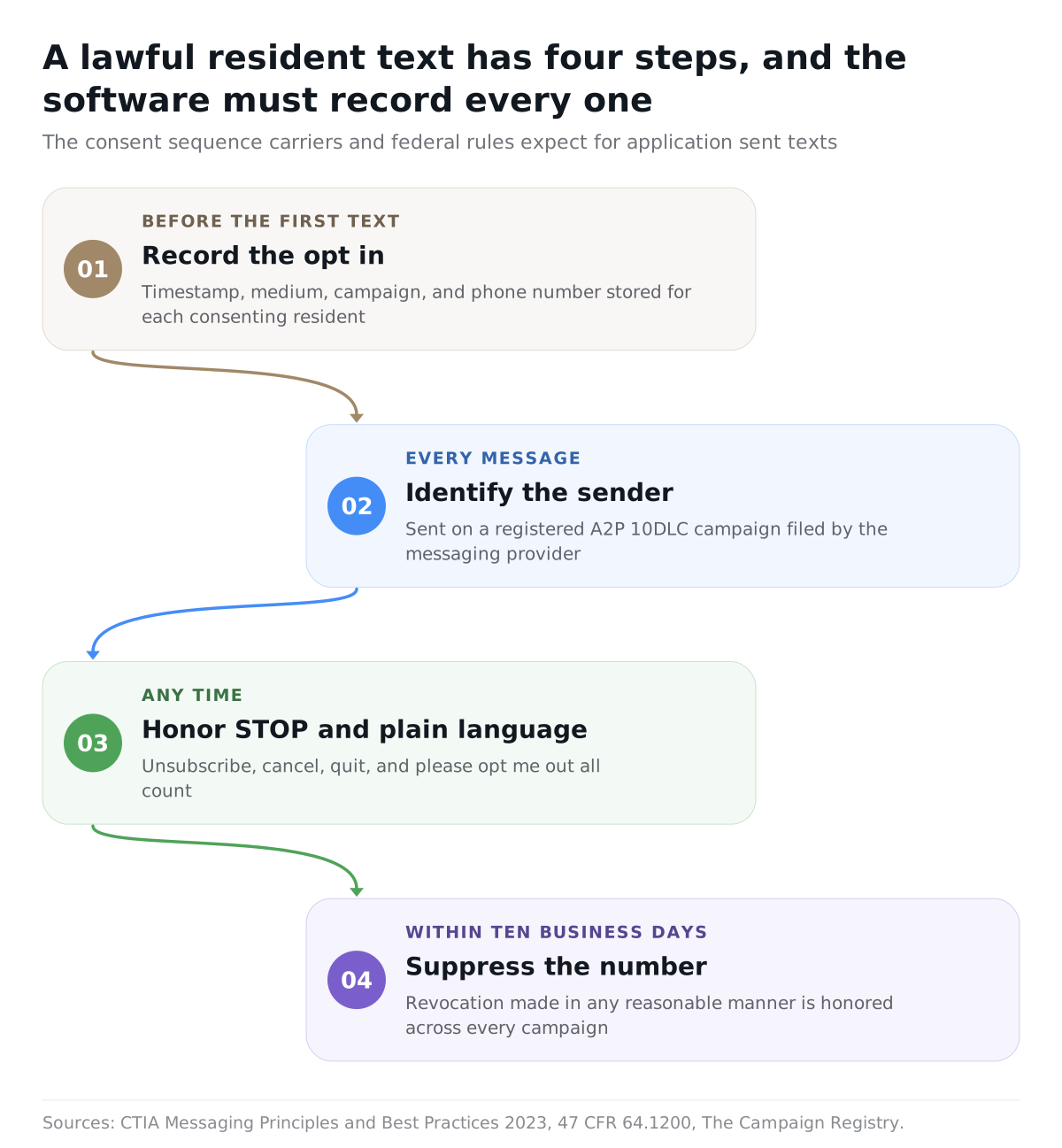
Federal rules bar calls and texts to a cell number made with an autodialer or a recorded voice unless the call is for emergency purposes or the person gave prior express consent. The same regulation says a revocation made in any reasonable manner must be honored within a reasonable time not to exceed ten business days. The emergency exception is real, but it covers a fire alarm, not a pool schedule.
The carriers' own rulebook is stricter in places. CTIA's 2023 messaging principles tell senders to get a consumer's consent to receive messages generally and express written consent for marketing, to honor STOP and plain language such as "unsubscribe" or "please opt me out," and to keep a record of each opt in with its timestamp, medium, campaign, and phone number.
What is A2P 10DLC and why does the vendor have to handle it?
A2P 10DLC is the registration system for application sent texts from ordinary ten digit US numbers, and your building cannot register itself. The Campaign Registry states that direct registration is not available for brands; a registered messaging provider files the brand and campaign so that the who and the what of every campaign are traceable. Ask any vendor who does that filing and whether your building's messages ride on a registered campaign. The full walkthrough is in texting residents legally: A2P 10DLC and TCPA.
When is email a legal notice?
Only when the statute or governing documents say so, and often only after the resident consents in writing. Florida's landlord and tenant law allows required notices by email only when the parties have signed an addendum to the rental agreement agreeing to electronic delivery, and either side can revoke. Florida condominium law lets meeting notices go by electronic transmission only to unit owners who consent, and it still requires physical posting on the property.
| Florida example (2026 statute text) | Requirement | What the software must do |
|---|---|---|
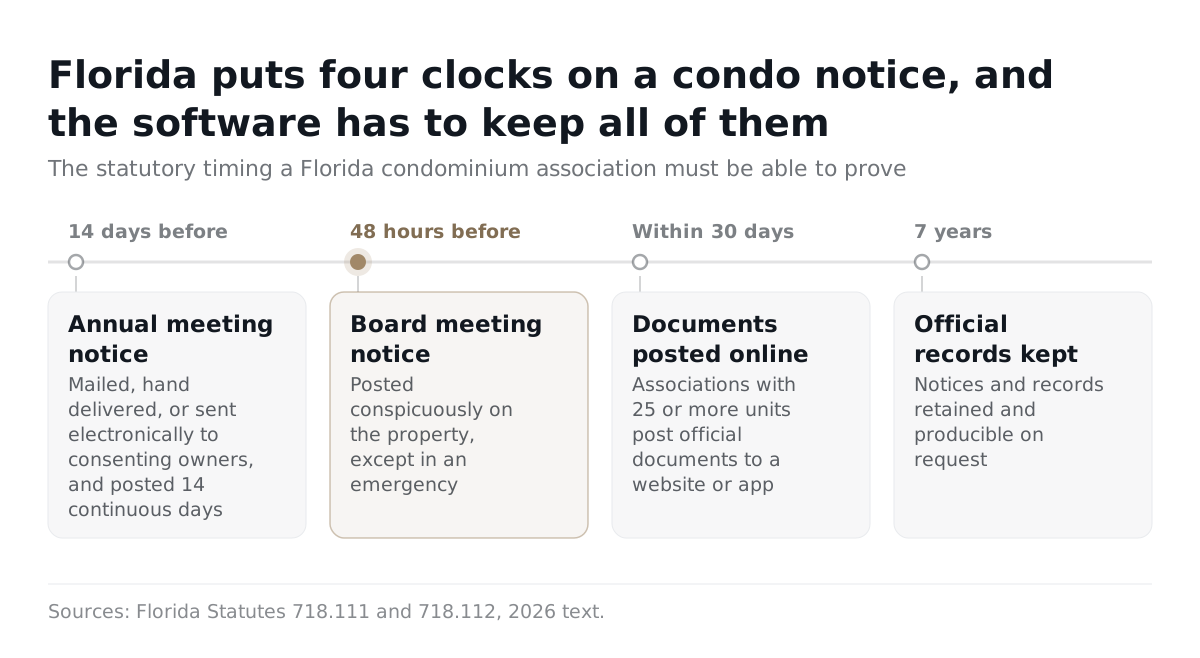
| Annual meeting notice | Mailed, hand delivered, or electronically transmitted at least 14 days before, and posted 14 continuous days | Schedule the send, store the consent flag per owner, create a posting task |
| Board meeting notice | Posted conspicuously at least 48 continuous hours before, except in an emergency | Post to lobby screens and the app on a timer |
| Electronic notice | Only to owners who consented to electronic transmission | Capture consent at onboarding and keep it on the unit record |
| Official records | Kept at least 7 years; associations with 25 or more units post documents online or in an app within 30 days | Retain notices, exports, and document hub with search |
The retention row comes from Florida Statutes 718.111. Other states set different clocks, but the pattern is the same: consent first, the statutory channel second, the record kept.
What about accessibility and fair housing?
Accessibility is a legal duty for housing providers, not a nice to have. HUD and the Department of Justice state that courts have applied the Fair Housing Act to property owners, housing managers, homeowners and condominium associations, including the duty to make reasonable accommodations in rules, policies, practices, or services. The ADA's effective communication rule requires businesses open to the public to provide auxiliary aids and services when needed; a leasing office is the clearest case. In practice that means large text, screen reader friendly notices, and a voice or paper alternative on request.
What goes on the compliance checklist?
Eight items, and a vendor should be able to show you where each one lives in the product.
- Written or recorded SMS opt in for every number, with timestamp, source, and campaign stored.
- A2P 10DLC brand and campaign registration filed by the vendor, with the campaign name on record.
- Sender identification in every text and a working STOP plus plain language opt out.
- Opt outs honored inside ten business days, and suppressed across every campaign.
- Electronic notice consent captured per owner or tenant where the state requires it.
- A posting task for notices that still require a physical posting.
- Retention that meets your state's official records clock, seven years in Florida.
- An accessible alternative on request, and a language alternative for the resident population you actually have.
When has a building outgrown a mailing list, a WhatsApp group, or a bulletin board?
A building has outgrown its informal tools the day it cannot answer a simple question: who was supposed to get this notice, and did they? A small, stable building with one manager who knows every occupant can run on email and a corkboard for years. The break comes with turnover, an emergency, a contested notice, or a resident who does not read English.
| Situation | Email list or bulletin board | WhatsApp or group text | Time to buy software |
|---|---|---|---|
| Routine notice to everyone | Works | Works, until the group fills with off topic replies | When you need per unit or per floor targeting |
| Owners and tenants with different rights | Manual list splits, error prone | Cannot separate audiences | Now |
| Elevator or water outage at 6 AM | Too slow; unread until morning | Fast, but only for members who joined | When one action must hit phones and screens together |
| Meeting notice with a statutory clock | Works if someone tracks consent and posting by hand | Not a lawful notice channel | When you cannot produce the send record two years later |
| Resident replies and complaints | Land in one person's inbox | Public argument in front of the whole building | When replies need an owner, a queue, and a history |
| Residents who read another language | Nobody translates | Nobody translates | When more than a handful of units are affected |
| Staff turnover | The list leaves with the manager | The admin leaves with the group | Now, if the building owns nothing |
Group chat deserves a specific warning. It is fast and free, and residents like it, but the building does not own it, cannot moderate it well, cannot record consent for it, and cannot use it for a legal notice. Keep it for social chatter if residents want it. Move anything official to a channel the building controls. For a fuller picture of what residents expect from the building beyond notices, see is multifamily resident experience software worth it.
Does the same test apply to commercial buildings?
Yes, with a different audience: office tenants are companies, so the unit of targeting is the suite and the tenant contact list rather than the household. The channel math shifts toward email and lobby screens, and the compliance load shifts from consumer texting rules to lease notice clauses. The buyer's questions are otherwise the same.
What questions should you ask on a demo?
Ask the vendor to do each of these live, in front of you, and treat a checkmark on a slide as a no. AI is already common in this market. The Foundation for Community Association Research found in May 2025 that more than 70 percent of respondents use AI, roughly 80 percent of them for communication assistance, and nearly 27 percent for translation and text to speech. That makes the approval question the most important one on the list.
- Send one elevator outage notice to floors 8 through 12 only. Show me who received it and who bounced.
- Send the same notice to owners but not tenants. Show me how the audience was built.
- Schedule a meeting notice to go out in 14 days. Where is the owner's electronic consent stored?
- Trigger an emergency alert. What happens on residents' phones and on the lobby screen, and how do I post the all clear?
- Reply to that notice as a resident by email. Where does the reply land, and who is assigned?
- Show me a resident texting STOP. What is suppressed, and where is the record?
- Who filed our A2P 10DLC registration, and under which campaign?
- Draft a notice with your AI. Who approves it before it goes out, and can it send on its own?
- Translate that notice. Can a bilingual staff member correct it before it publishes?
- Export everything about one notice: text, version, approver, audience, channel outcomes.
- Remove the manager's account. What does the building still own?
- Show the same post going to three properties at each building's local time.
If the answer to number eight is "it just sends," walk away.
How does URBI handle building communications?
URBI treats communications as one part of the building's operating system rather than a separate blast tool, so a notice, a reply, a ticket, and a lobby screen all share the same unit records. The full picture is in what is URBI and the residential walkthrough in URBI for residential buildings. Here is how it maps to the six jobs.
- Notices. News and announcements are written in rich text with scheduled publish and home screen banners, targeted per unit and by access level. A property management company can write one post that fans out across several properties, each building sending at its own local time.
- Two way. Email replies to an announcement route into the staff inbox as a threaded conversation. Concierge and direct messaging give residents a chat with staff that is logged, searchable, and reviewable by management, with server enforced access so only the right people can read a thread.
- Emergencies. URBI Display runs branded lobby and elevator screens with rotating news, events, and weather, and a property wide emergency takeover flips every display to the alert. Residents get push alerts through the app.
- Resident questions. Arthur, URBI's resident facing AI, answers on voice, SMS, email, and in app chat in ten languages, verifies identity by PIN before anything sensitive, and escalates unknown questions to the property manager with a summary.
- Drafting with approval. HERO, the manager facing AI, can draft a notice or a reply from a thread through Inbox Assist, and can propose a ticket, a task, or a notice. Nothing sends until a person confirms it.
- Onboarding and consent. Resident invites are token based with OTP verification and consent capture, and units and residents can be imported in bulk by CSV.
A note on proof: URBI logs concierge conversations and keeps threaded inbox history, and news posts carry their schedule and audience. Read receipts are not part of that record. For the statutory record, pair the platform with the posting task and retention policy in the checklist above. See communication and community features for the feature list, and the sibling guide on amenity management software for pools, spas, and gyms for how the same unit records drive bookings.
FAQ
Do I need resident consent to send building emergency texts?
Federal rules exempt calls and texts made for emergency purposes from the prior express consent requirement, so a fire or gas leak alert can go to a cell number without an opt in. Routine notices do not qualify. Collect opt in for everything else, keep the record, and let the emergency exception stay an exception rather than a policy.
Is a WhatsApp group a lawful notice channel for a condo?
No. State statutes name mail, hand delivery, posting, and electronic transmission to owners who consented, and none of those describe a resident run group chat. The building does not control membership, cannot document consent, and cannot export a send record. Keep WhatsApp for social use if residents want it and move official notices to a channel the building owns.
How long should a building keep sent notices?
Match your state's official records clock. Florida requires condominium associations to keep official records at least seven years, and associations with 25 or more units must post documents online or in an app within 30 days. Other states set different periods. Choose software that can export a notice with its audience and approver at any point in that window.
Can AI send a notice on its own?
It should not, and in URBI it cannot. HERO drafts the notice or the reply and proposes the action; a staff member reads it and confirms before anything goes out. That approval step is where the board's duty to inform itself lives, and it is the first thing to test on a demo of any AI feature.
Choosing building communications software comes down to six jobs, a channel plan that reaches every resident, and a compliance checklist you can actually run. If you want to see URBI do each of the demo questions above, write to hello@myurbi.co or book a demo.
Keep reading
- Building emergency preparedness plan
- Multilingual resident communication
- Commercial tenant communication
The same guide for other buildings


