



Amenity management software for pools, spas, and gyms handles the operating job: who may enter, how many at once, which guests, what terms they accepted, when the space is closed, what got tested, and what went wrong. URBI runs it in one platform for condo boards and multifamily operators.
What does amenity management software do that a booking app does not?
A booking app answers one question: who has the slot. Amenity management software also answers the questions a board member, an inspector, or an insurer will ask later. Was the spa closed when the heater failed? Who signed the rules? How many guests were in the pool area on Saturday? When was the chemistry last checked, and by whom?
Most of the tools that rank for this search are built for pool service contractors or swim clubs. They track routes and memberships. A condo or apartment building has a different problem. The pool is one shared space among several, and its records need to sit next to service tickets, notices, and incident notes.
Health departments in several states expressly regulate condo and apartment pools. A reservation calendar does not produce a chemistry log, and a chemistry log does not stop a resident from bringing eight guests. The building needs both, linked. Our guide to the best amenity booking software covers the booking layer on its own. This post covers everything around it.
What are the real risks of running a pool or hot tub in a residential building?
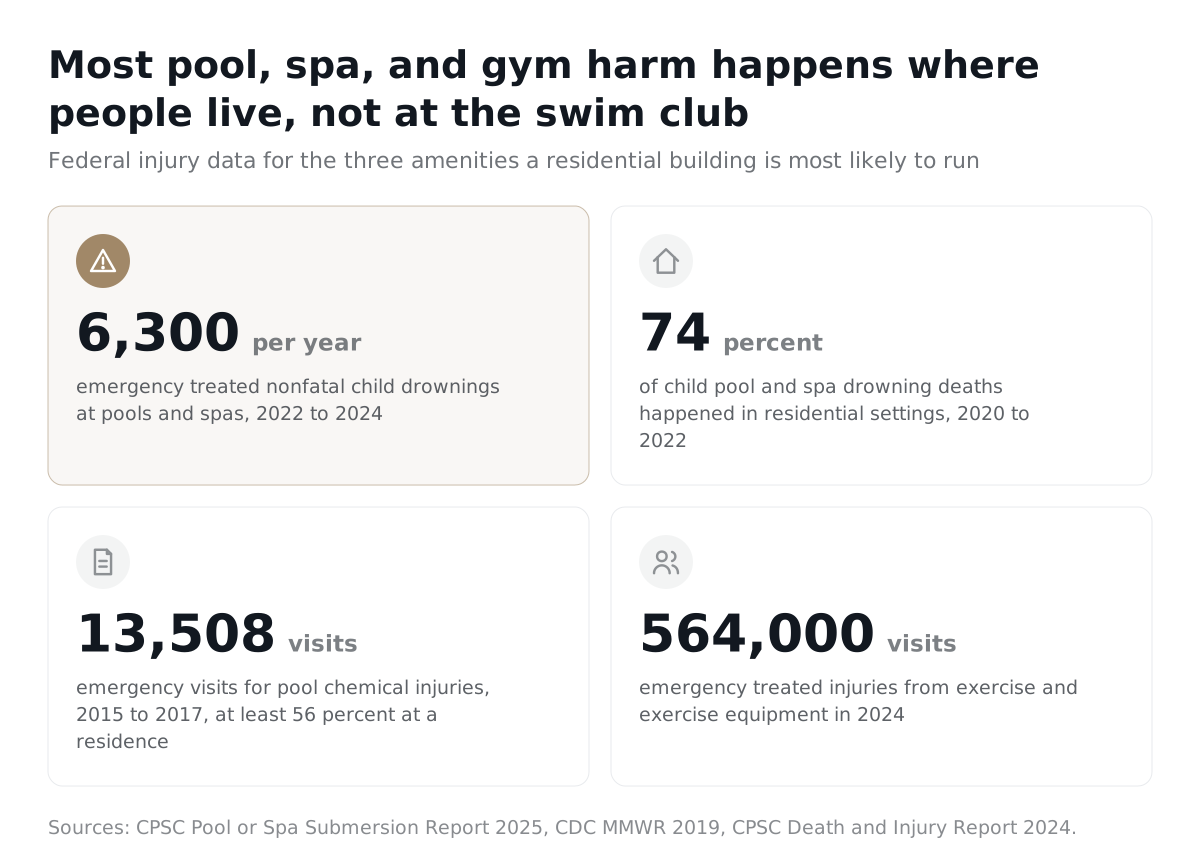
Drowning, chemical injury, and drain entrapment are the three risks that show up in federal data, and most of the harm happens in residential settings. The US Consumer Product Safety Commission (CPSC) reports an estimated 6,300 emergency department treated nonfatal drowning injuries per year among children under 15 at pools and spas for 2022 through 2024. For 2020 through 2022, CPSC counted an average of 357 reported child fatalities per year, and 74 percent of those deaths happened in residential settings. Seventy nine percent of the victims were under 5.
Chemicals are the second risk, and it lands on staff as often as swimmers. The CDC estimated 13,508 emergency department visits for pool chemical injuries in the United States for 2015 through 2017, with at least 56.3 percent occurring at a residence. The same CDC report tells operators to get trained in pool chemical safety and to ask for help when a task is outside their training. That is a staffing and scheduling question, which is why chemical checks belong on a recurring ticket assigned to a named person rather than on a whiteboard.
Entrapment is rare and severe, and it skews toward spas. CPSC identified 11 circulation entrapment victims from 2013 through 2017, two of them fatal, and 64 percent of the incidents involved a spa. Federal law already sets the baseline: the Virginia Graeme Baker Pool and Spa Safety Act requires compliant drain covers and, for a public pool or spa with a single blockable main drain, at least one secondary anti entrapment system. A board that cannot show when the drain covers were last inspected has a gap.
Gyms are not exempt. CPSC's 2024 injury report attributes 564,000 emergency department treated injuries and 1,869,000 medically attended injuries to exercise and exercise equipment in the United States that year. One insurer's published claim example is a gym member who developed a chronic shoulder injury and sued the gym and the trainer for failing to tell him how to do an exercise properly. A residential fitness room usually has no trainer at all, so posted rules, inspection logs, and incident records are the only paper trail the building will have.
| Risk | US figure | Period | Source |
|---|---|---|---|
| Child nonfatal drowning at pools and spas | 6,300 emergency visits per year | 2022 through 2024 | CPSC |
| Child fatal drowning at pools and spas | 357 per year, 74 percent residential | 2020 through 2022 | CPSC |
| Pool chemical injuries | 13,508 emergency visits, 56.3 percent at a residence | 2015 through 2017 | CDC |
| Drain entrapment | 11 victims, 2 deaths, 64 percent spa | 2013 through 2017 | CPSC |
| Exercise and equipment injuries | 564,000 emergency visits, 1,869,000 medically attended | 2024 | CPSC |
What should the software track for each amenity type?
Each amenity needs its own capacity, hours, guest limit, terms, closure rules, and log, because the rules that make a pool safe make a gym annoying. A gym that requires a reservation for every visit will sit empty. A hot tub with no capacity limit will fill up on the first hot Saturday. The table below is the minimum a board should expect the software to hold per amenity.
| What to track | Pool | Spa or hot tub | Gym |
|---|---|---|---|
| Capacity | Bather load per session, enforced at booking | Small fixed limit, usually one household per slot | Headcount cap, often no reservation needed |
| Hours | Seasonal and daily hours, plus lighting rules after dark | Shorter evening hours, quiet hours | Extended or 24 hour access by fob |
| Rules and terms | Pool rules accepted at first booking, kept in the document hub | Age and health rules, maximum temperature notice | Equipment rules, no unsupervised minors |
| Guest limits | Per unit guest cap, guest names on the booking | Guest count tied to the slot | Guest passes with a monthly allowance |
| Closures | Weather, chemistry, staffing, maintenance, all scheduled from a ticket | Heater or pump faults, drain cover inspections | Equipment out of service, cleaning windows |
| Recurring checks | Chemistry tests on the schedule your state sets, drain cover inspection | Chemistry and temperature, more often than the pool | Equipment inspection and cable checks |
| Logs | Test readings, corrective actions, incidents, who did what and when | Same as pool, plus temperature | Inspection log, incident notes, access log |
The usage pattern matters too, because the software should not add friction where demand is thin. Multifamily Dive, reporting on the 2024 renter preferences survey run by the National Multifamily Housing Council and Grace Hill, found that 28 percent of renters were neutral about their community fitness center and 16 percent were dissatisfied, and only 7 percent used it daily. That survey drew on 172,703 renters across 4,220 communities. Christine Serlin, writing in Multifamily Executive on 2026 amenity trends, lists "minimalistic gyms" among the spaces that "no longer justify their footprint." If the software cannot show you how often a room is actually used, it cannot help you decide whether to invest in it or repurpose it.
What do inspectors and insurers ask to see?
Inspectors ask for water test results, corrective actions, operator qualifications, signage, and a written safety plan. They do not ask for the reservation calendar. Several states and cities apply these rules directly to condo and apartment pools, so a building with a shared pool is a regulated facility whether or not the board thinks of it that way.
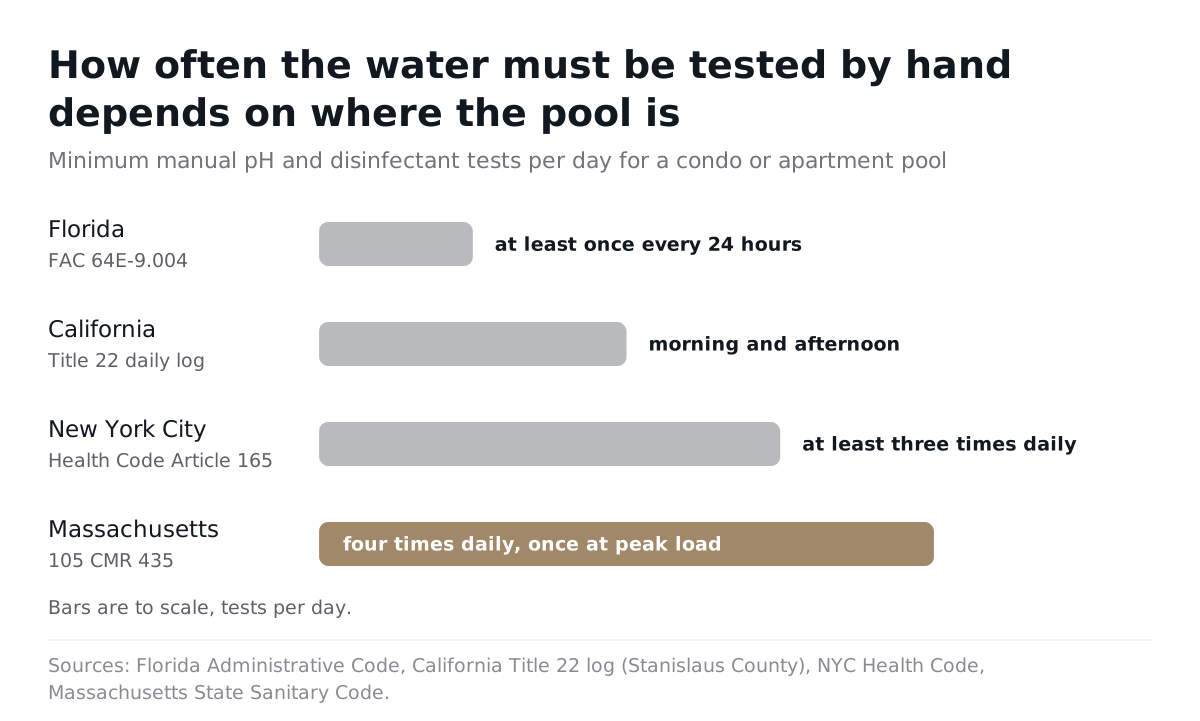
- Massachusetts defines a semi public pool to include one on the premises of an "apartment house, condominium," requires disinfectant tests four times daily including once during peak load, and where no lifeguard is required, a no lifeguard warning sign in letters at least four inches high.
- New York City Health Code Article 165 covers bathing establishments run by "apartment houses, condominiums," requires pH and free disinfectant tests at least three times a day, a written safety plan, and daily operational records kept on site for six months and submitted monthly.
- Florida requires manual pH and disinfectant tests at least once every 24 hours, weekly cyanuric acid tests when stabilized chlorine is used, and a monthly report on form DH 921 kept at the pool for the health department.
- California Title 22 calls for a daily log. The county form Stanislaus County publishes records morning and afternoon disinfectant and pH readings, monthly cyanuric acid when added, and a spa maximum of 104 degrees Fahrenheit.
- Los Angeles County inspectors test free chlorine, pH, and cyanuric acid on site and close a pool on the spot when they find an imminent health hazard. Pools without lighting must post a no use after dark sign at every gate.
| Jurisdiction | Manual water tests required | Records | Condo and apartment pools named in the rule |
|---|---|---|---|
| Florida | At least once every 24 hours | Monthly report on form DH 921, kept at the pool | Public pools broadly |
| California (Title 22) | Morning and afternoon | Daily log, cyanuric acid monthly | Public pools broadly |
| New York City | At least three times daily | Daily records, kept six months, submitted monthly, plus a written safety plan | Yes |
| Massachusetts | Four times daily | Operator records, Board of Health decides lifeguard need | Yes |
Insurers ask a related but different set of questions. They want to know that rules were posted and accepted, that guests were controlled, that equipment was inspected, and that incidents were written down the same day. A pool waiver in a rental building is usually a separate addendum the resident signs at move in. It is a document, not an operating process, and it does nothing if the building cannot show the resident actually saw and accepted it. Our post on amenity booking waivers goes deeper on what to collect and when.
The practical test for any software is simple. Can a manager pull up the pool and show last month's chemistry tickets, the closures and why, every booking with guest counts, and every incident note? If any of those lives in a binder or a text thread, the answer is no.
Is a sign up sheet or a key fob enough?
Sometimes, yes. A small building with a low demand gym, fixed hours, and no guest problems can run on a fob and a posted rule sheet. One community association member on a public forum described exactly that: "We have key card access for the entry gates and for entry into our clubhouses and pool gates." A moderator in the same thread added that card distribution needs firm rules or it "gets out of hand really fast." That is the weak point. A fob log tells you a credential was used. It does not tell you who walked in behind it, how many guests came, or whether anyone accepted the rules.
The fob or sheet stops working when management becomes the referee on slots, guest counts, cleaning buffers, deposits, or complaints to the board.
| Situation | Sign up sheet or fob | Amenity management software |
|---|---|---|
| Low demand gym, fixed hours, no guests | Enough | Nice to have |
| Pool with a bather limit on summer weekends | Fails, no capacity control | Capacity enforced at booking |
| Hot tub with a per household slot rule | Fails, disputes land on staff | Conflict detection, one booking per slot |
| Guest limits and repeat guest abuse | Fails, no guest record | Guest names and pass counts on the booking |
| Chemistry checks on a state mandated schedule | Paper log, easy to miss a day | Recurring ticket with an assignee and a record |
| Pool closed for a heater fault | Printed sign, phone calls | Closure from the ticket, bookings blocked, residents notified |
| Incident in the pool area | Email to the board, if anyone remembers | Typed incident note tagged to the unit and the amenity |
| Board asks what happened last month | Reconstruct from memory | Pull the amenity's bookings, tickets, and notes |
If you are weighing a shared calendar as a middle step, read amenity booking software vs Google Calendar first. It covers why a calendar handles the slot and nothing else.
How does URBI handle pools, spas, and gyms?
URBI treats each amenity as a set of rules, a booking calendar, a ticket history, and a notes file, all on one record. The amenities feature is capacity aware, so a pool session with a bather limit stops accepting bookings when it is full, and a spa configured for one household per slot rejects a second one. Conflict detection catches overlaps before they reach the resident. Multi day bookings carry an after service buffer, so a party room or pool deck reserved for an event has cleaning time built in, and an atomic collision guard means two residents cannot grab the same slot in the same second.
Deposits are handled inside the booking. Staff can keep or return a deposit with an audit trail on the decision, defer collection until closer to the date, and record a manual payment when a resident pays another way. Residents pay by card, Apple Pay, or Google Pay in the app, and a confirmed booking can go into Apple Wallet. QR deep links open the booking in the resident app, which is how a front desk or a pool attendant checks that the person at the gate holds the slot.
Rules and terms live in two places. The building's pool rules, gym rules, and any waiver addendum sit in the Document Hub, where every resident can find them. For events on the pool deck or in the fitness room, URBI's events tools include waiver signing with an audit logged staff bypass, Apple and Google Wallet passes, and QR check in at the door. Guests are covered by visitor registration with live available pass counts, a verification desk for front of house check in, and guest parking QR passes with a monthly allowance.
Closures come straight from operations. When a service ticket is opened for a failed spa heater, the amenity closure is scheduled from that ticket, which blocks new bookings for the closed period. Chemical checks and equipment inspections run as recurring service tickets with an assignee, comments, and attachments, so the test readings and corrective actions are on the record. Incidents are typed notes, tagged to the unit, the person, and the property, searchable later. For an urgent closure, URBI Display's emergency takeover flips every lobby and elevator screen to the notice at once.
The two AI layers stay in their lanes. Arthur, the resident facing concierge on the Premium plan, can book an amenity for a resident over the phone, by SMS, by email, or in the app chat, after verifying the caller by PIN. HERO, the team's AI inside the Kore dashboard, can draft the closure notice, propose the service ticket, and propose the emergency display banner, but each one stays a proposal until a staff member approves it. Nothing goes out on its own. That split is described in more detail in what URBI is and in our overview of URBI for residential buildings.
| Job | How URBI does it |
|---|---|
| Capacity and conflicts | Capacity aware booking, conflict detection, atomic collision guard |
| Cleaning and setup time | Multi day bookings with an after service buffer |
| Deposits | Card checkout, deferred collection, keep or return with audit trail |
| Rules and waivers | Document Hub for rules; waiver signing on events with audit logged bypass |
| Guests | Visitor registration with live pass counts, verification desk, guest parking QR passes |
| Closures | Scheduled straight from a service ticket; emergency takeover on URBI Display |
| Chemical and equipment checks | Recurring service tickets with assignee, comments, attachments |
| Incidents | Typed incident notes tagged to unit, person, property, full text search |
| Resident requests | Arthur books by phone, SMS, email, or in app chat after PIN verification |
| Staff drafting | HERO proposes notices, tickets, and display banners; a person approves |
Amenities are also one of the clearest places to measure whether a resident platform earns its keep, which is the subject of is multifamily resident experience software worth it. And when the pool has to close at 4 PM on a Friday, the notice has to reach everyone, which is why how to choose building communications software is the natural companion to this post.
FAQ
Does amenity management software replace a certified pool operator?
No. The software schedules the checks, records the readings, and keeps the closures and incidents on file. A trained person still tests the water and handles the chemicals. The CDC's guidance is explicit that chemical work belongs to trained staff. Treat the software as the record system that proves the trained person did the work on schedule.
Can residents sign a pool waiver inside URBI?
Waiver signing in URBI is built into events, with an audit logged staff bypass for edge cases, so a pool deck party or fitness class can require a signed waiver at ticket time. For everyday pool use, the building's rules and any waiver addendum live in the Document Hub where every resident can read them.
What happens to existing bookings when the pool closes for maintenance?
In URBI the closure is scheduled from the service ticket itself, which blocks the closed period on the calendar. Staff then notify affected residents through the announcement tools, and deposits on cancelled bookings are returned with an audit trail. HERO can draft the closure notice for a staff member to review and approve before it is sent.
Does the gym need reservations at all?
Usually not. Most residential gyms run on fob access with a headcount cap and posted rules. Reservations make sense for a small room during peak hours, for a class, or during a capacity restriction. The more useful software features for a gym are equipment inspection tickets, out of service closures, incident notes, and usage data that tells the board whether the room is worth its footprint.
If your building runs a pool, a spa, or a gym on a sign up sheet and a binder, we would like to show you the alternative. Write to hello@myurbi.co or book a demo.
Keep reading


