



Tenant communication software for a commercial building should get a notice to the right suite, reach the contacts who can act on it, and keep a record you can pull later. URBI does this in one tenant app and one staff dashboard, and this guide uses it as the reference.
This is the commercial edition of a buyer's guide. If you run condos or apartments, read the residential version, how to choose building communications software. Here the tenant is a company, the unit of targeting is the suite, and the compliance load comes from the lease and workplace safety rules.
What should tenant communication software do in a commercial building?
Six jobs, and a product that does only the first is a newsletter tool with a lobby logo.
- Notices. Write once, schedule, and publish to the tenant app, email, and the lobby screen. HVAC shutdowns and freight elevator windows are the daily load.
- Emergencies. One action puts the alert on every registered phone and every screen, and the same action posts the all clear.
- Two way messages. A tenant's office manager replies, and the reply lands in a staff inbox someone owns, not in the property manager's personal phone.
- Targeting. Send to one suite, one floor, one tenant company, all retail tenants, or all primary contacts, without exporting a spreadsheet first.
- Translation and accessibility. A contractor who reads Spanish and an employee who uses a screen reader both get a version they can act on.
- Proof. Later, you can show what was sent, to which suites, on which channels, when, and who approved it.
Targeting is where commercial differs most from residential. A tenant is a company, not a household. A building management office typically asks each tenant for a business hours representative, a separate after hours contact, the employee population by time band, and the names of employees who need help in an evacuation. One generic email per suite cannot hold that. The software has to.
Proof matters because the experience problem in an office building is usually an operations problem nobody closed. Emma Buckland, global president of CBRE's property management business lines, said in 2025: "There's a problem with the elevator that continues to break down" and it creates a bad impression for clients. The notice is only useful if the update and the closure follow it.
Which channels reach tenant employees and decision makers, and what do the numbers say?
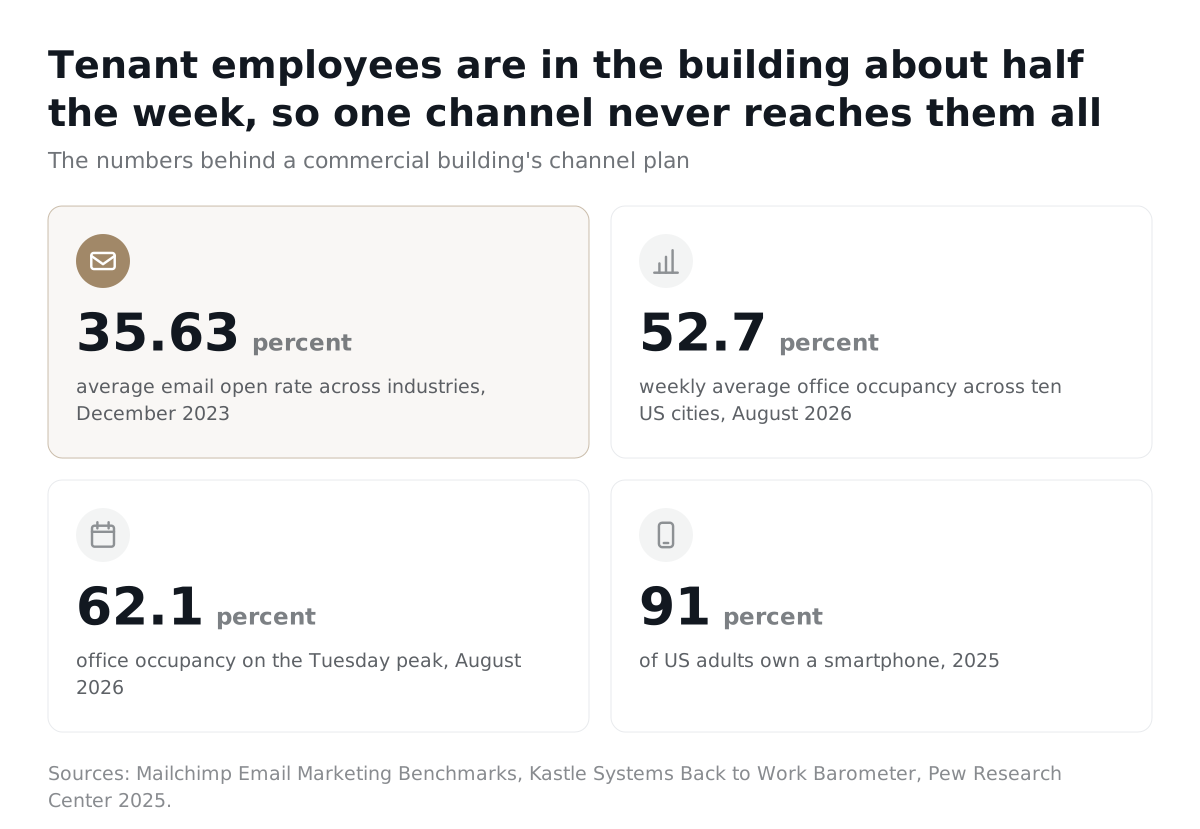
No single channel reaches an office population, because the office population is not in the office. Gensler's 2026 Global Workplace Survey of 16,459 office workers in 16 countries found employees spend 55 percent of a typical workweek in the office, 18 percent at home, and 26 percent somewhere else. A lobby screen reaches the people who walked past it that day.
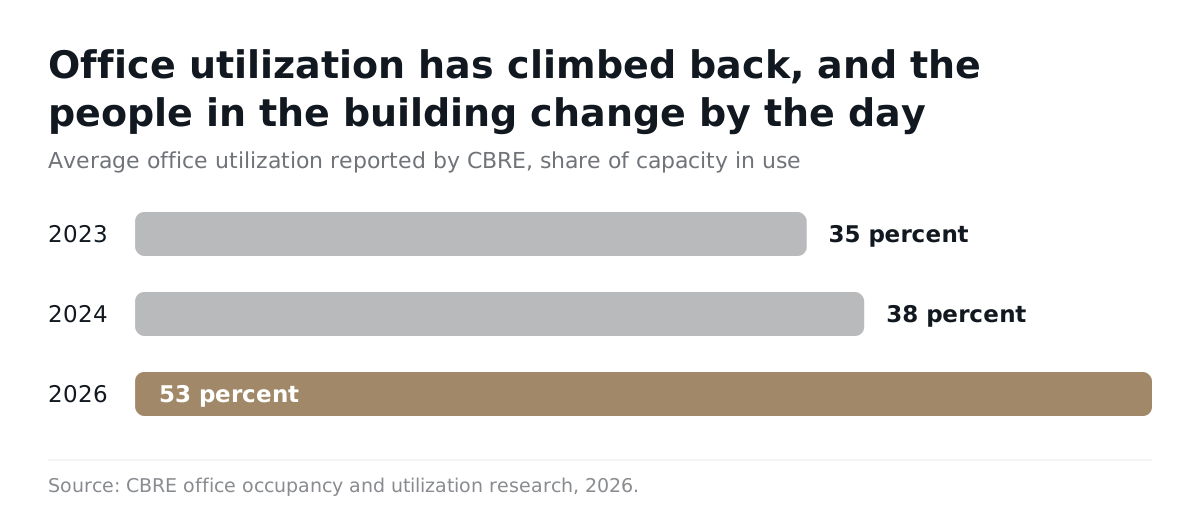
Attendance is lumpy by weekday too. Kastle's ten city barometer, which counts badge entries against a pre pandemic baseline and is "not a national statistical sample", showed a weekly average of 52.7 percent and a Tuesday peak of 62.1 percent in August 2026. CBRE's 2026 report, drawn from 303 million square feet of client data, puts utilization at 53 percent in 2026, up from 38 percent in 2024 and 35 percent in 2023. Utilization is rising and still uneven. A Friday HVAC notice posted only in the lobby misses most of the people it concerns.
Email is the default commercial channel, and it is weaker than it looks. Mailchimp's benchmark puts the average open rate at 35.63 percent as of December 2023, and business and finance senders sit at 31.35 percent. The counterweight is the phone in every pocket: Pew Research Center reported in 2025 that 91 percent of US adults own a smartphone.
| Channel | What the evidence says | Best use in a commercial building | Weakness |
|---|---|---|---|
| Email to tenant contacts | 35.63 percent average open rate; 31.35 percent for business and finance senders (Mailchimp, December 2023) | Construction schedules, rules, attachments, anything the tenant will forward internally | Two thirds unopened; the contact may be on vacation; bounces go unnoticed |
| SMS | Reaches the 91 percent of adults with a smartphone (Pew, 2025) | Short urgent updates: elevator out, garage closed, water off on floors 8 to 12 | Needs documented consent from each employee; no attachments |
| Tenant app push | Same smartphone base, limited to employees who registered | Everything, once a tenant has onboarded its staff | Registration is not daily use; ask for active user counts |
| Lobby and elevator screens | Reaches the 55 percent of the week people are on site (Gensler, 2026), peaking on Tuesdays (Kastle, August 2026) | Emergency takeover, drill reminders, today's notices | Misses remote days, night crews, and anyone in the garage |
The practical rule: urgent goes to SMS, push, and screens at once. Long form goes to email and the app's document library. Anything the lease calls a notice goes by the method the lease names. The roster behind all of this also decays as tenant employees change jobs. Have each tenant confirm its contacts twice a year, and make the software show which addresses bounced.
What do the lease and the law require before you send?
You need to separate operational messages from legal notices, because the lease treats them differently. Operational messages want speed and reach. Legal notices want the method the lease names and a dated record. This is a checklist, not legal advice; confirm each item with counsel and your fire marshal.
What does the lease say about notice?
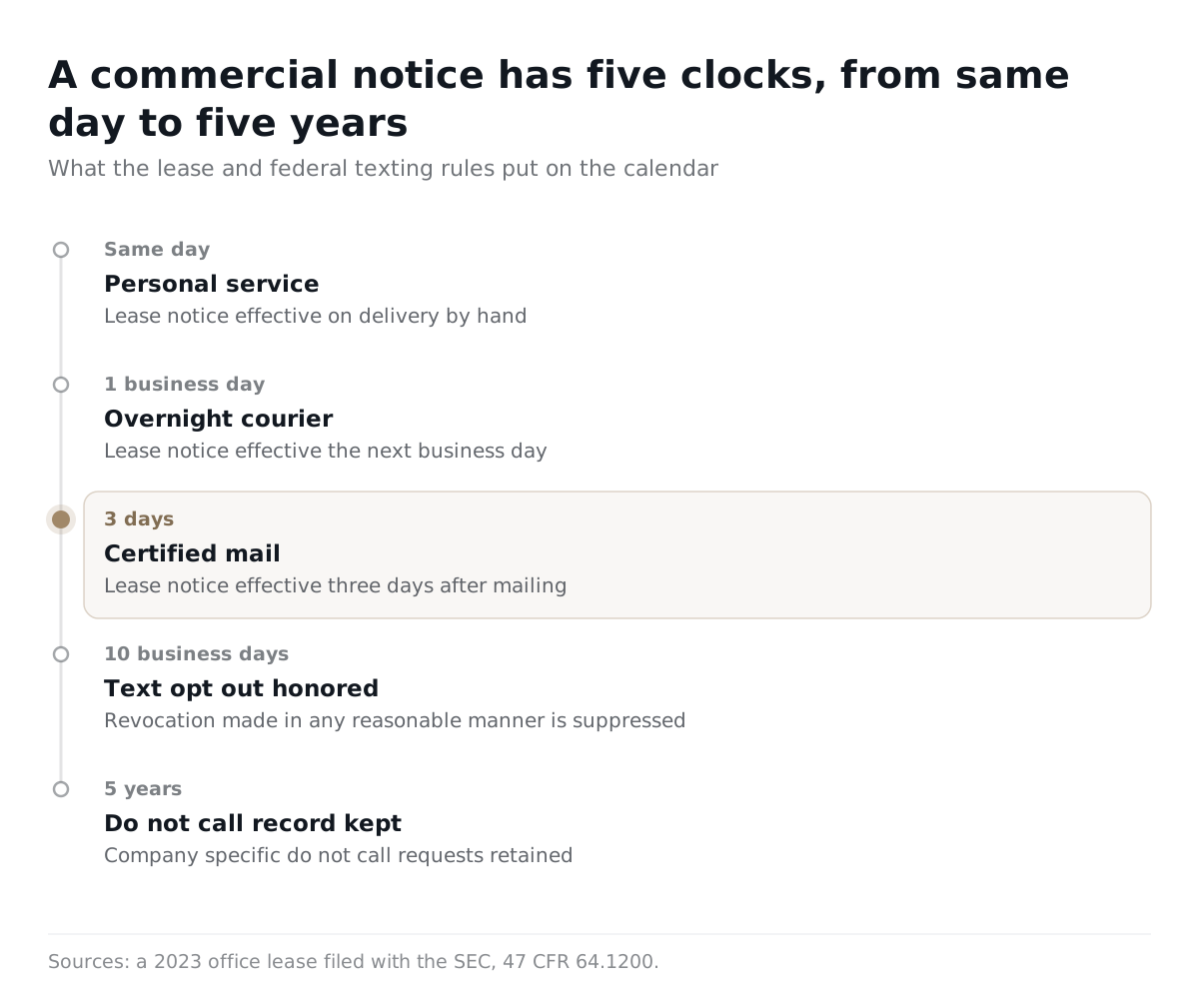
Most commercial leases name the delivery methods that count, and email is often not one of them. A lease filed with the SEC between The Waters HM LLC and Encore Medical, Inc., effective February 3, 2023, lists email addresses for both parties but makes notice effective only by certified or registered mail, overnight courier, or personal service. A platform can prove every contact opened the outage alert and still fail the lease on a renewal notice.
| Delivery method in that lease | When notice is effective | What the software should do |
|---|---|---|
| Certified or registered mail | 3 days after mailing | Create the mailing task; store tracking and date on the tenant record |
| Overnight courier | 1 business day after handoff | Same, with the courier receipt attached |
| Personal service | Same day | Log who delivered it, to whom, and when |
| Listed, but not an operative method | Send a courtesy copy through the app, labeled as such |
Your leases will differ. The software should hold a notice clause per tenant, so whoever sends a formal notice sees the method and the clock first. The wider case is in commercial tenant communication.
What does the TCPA require for texting tenant employees?
The employee's phone is a consumer phone, so consumer rules apply. Federal regulation bars autodialed or prerecorded calls and texts to a cell number unless the message is for emergency purposes or the person gave prior express consent. The same rule names stop, quit, end, revoke, opt out, cancel, and unsubscribe as reasonable ways to revoke, requires revocation to be honored within ten business days, and keeps a do not call request in force for five years. The FCC delayed one piece, the rule that a revocation covers all unrelated robocalls and robotexts from that caller, from April 11, 2025 to April 11, 2026, and that date has passed.
The carriers add their own layer. CTIA's 2023 messaging principles tell senders to obtain consent to receive messages generally, to act on STOP and plain language such as "please opt me out," and to record each opt in with its timestamp, medium, campaign, and phone number. The vendor also files your A2P 10DLC registration, since buildings cannot register themselves. In practice: a fire alarm text can go without an opt in, a parking reminder cannot.
What do OSHA and the fire code expect from occupant notification?
Each tenant employer owns its own emergency action plan, and the building's alert channels support that plan without replacing it. OSHA requires the plan in writing, kept in the workplace, with procedures for reporting, evacuation, and accounting for employees, plus an employee alarm system with a distinctive signal for each purpose. A tenant app is not that alarm. The alarm system under your adopted fire code is the life safety layer; the app, screens, and texts tell people what happened and when they can return.
What does the ADA require for effective communication?
A building open to the public is a public accommodation, so its notices must reach people with disabilities in a form they can use. The regulation says the type of auxiliary aid "will vary in accordance with the method of communication used by the individual" and with the nature and context of the message. The Department of Justice lists large print, screen reader files, and captioning as examples for businesses and nonprofits that serve the public. So the emergency notice exists as text, as a visual on the screen, and as a voice message.
What goes on the compliance checklist?
- A notice clause on file per tenant, with the lease's delivery methods and clocks, and a formal notice workflow separate from the daily broadcast.
- Individual SMS opt in for every employee number, with timestamp, source, and campaign stored.
- A2P 10DLC registration filed by the vendor, campaign name on record.
- Sender identification in every text, a working STOP, and suppression within ten business days.
- A tenant roster with business hours and after hours representatives, certified twice a year, with bounces surfaced.
- Emergency notices in text, visual, and voice forms.
- Retention that covers the lease term plus your counsel's dispute window, with a full export per notice.
When has a building outgrown the manager's phone and an email list?
A building has outgrown its informal tools on the day the manager cannot say who was supposed to get a notice and whether they got it. A single tenant building with one accountable contact can run on email and a phone for years. The break comes with multiple suites, an after hours outage, a formal notice with a clock, or an asset manager asking for the record.
Workload is the other trigger. A VTS commissioned survey of more than 400 property managers and business leaders (March 2025) found that just over 60 percent name work order management a top time use, 44 percent want more direct tenant interaction, fewer than 25 percent measure app adoption at all, and the average manager already uses five operational systems and three reporting tools a day. A sixth system that does not connect to work orders makes that worse.
| Situation | Email list and the manager's phone | Time to buy software |
|---|---|---|
| Routine notice to every tenant | Works while one person knows every contact | When you need one suite, one floor, or retail only |
| Elevator or chiller failure at 6 AM | Manager calls primary contacts one by one | When one action must hit phones and screens together |
| Formal notice under the lease | Works if someone tracks the method and date by hand | When you cannot produce the record two years later |
| Tenant replies and complaints | Land in the manager's personal inbox and phone | When replies need an owner, a queue, and a history |
| Manager turnover | The list and the relationships leave with the manager | Now, if the building owns nothing |
Group chat gets the same warning it gets in the residential guide. The building does not own it, cannot record consent for it, and cannot use it for a lease notice. Keep it for the holiday party. If your building mixes offices with residences or a retail podium, see mixed use building communication software.
What should you ask on a demo?
Ask the vendor to do each of these live with your own data, and treat a checkmark on a slide as a no.
- Import our tenant roster with after hours contacts. Show me which addresses bounced.
- Send a freight elevator notice to floors 8 through 12 only. Show me who received it on which channel.
- Send the same notice to retail tenants only. Show me how the audience was built.
- Trigger an emergency alert. What happens on phones and on the lobby screen, and how do I post the all clear?
- Reply to that notice as a tenant by email. Where does it land, and who is assigned?
- Show an employee texting STOP. What is suppressed, and where is the record? Who filed our A2P 10DLC registration?
- Draft an HVAC shutdown notice with your AI. Who approves it, and can it send on its own?
- Export everything about one notice: text, version, approver, audience, channel outcomes.
- Show the same post going to three buildings at each building's local time.
If the answer to number seven is "it just sends," walk away. For a ranked view of the market before you book demos, read best tenant experience platforms.
How does URBI handle tenant communication in a commercial building?
URBI treats communication as one function of the building's operating system, so a notice, a tenant reply, a work order, and a lobby screen share the same suite and tenant records. The platform is described in what is URBI and the commercial walkthrough in URBI for commercial buildings. Here is how it maps to the six jobs.
- Notices. News and announcements are written in rich text with scheduled publish and home screen banners, targeted per unit and by access level, which in commercial terms means the suite and the tenant contact role. A management company writes one post that fans out across several properties, each sending at its own local time.
- Two way. Email replies to an announcement route into the staff inbox as a threaded conversation. Concierge and direct messaging give tenant contacts a chat with building staff that is logged, searchable, and reviewable by management.
- Emergencies. URBI Display runs branded lobby and elevator screens with rotating news and weather, and a property wide emergency takeover flips every display to the alert. Registered tenant employees get push alerts in the app.
- Tenant questions. Arthur, URBI's tenant facing AI, answers by phone, SMS, email, and in app chat in commercial terminology, verifies identity by PIN before anything sensitive, and escalates unknown questions to the property manager.
- Drafting with approval. HERO, the manager facing AI, drafts a notice or a reply from a thread through Inbox Assist and can propose a ticket, a task, or a notice. Nothing sends until a person confirms it.
- Visitors and guests. Visitor registration shows live available pass counts, and guest parking QR passes carry a live monthly allowance with automatic timeout handling. A tenant's client visit becomes a pass, not a call to the desk.
A note on proof: URBI logs concierge conversations and keeps threaded inbox history, and each news post carries its schedule and audience. Read receipts are not part of that record, and lease notices still go by the method the lease names. The feature list is at communication and community features, and the commercial packaging is at URBI for commercial building operators.
FAQ
Can I text tenant employees without individual consent?
Only for an emergency. Federal rules exempt calls and texts made for emergency purposes from the prior express consent requirement, so a fire or gas alert can reach a cell number without an opt in. A garage closure does not qualify. A list of numbers from the tenant's HR team is not consent from each person on it. Collect the opt in individually and store the record.
Is an app announcement a valid lease notice?
Usually not. Many commercial leases name certified mail, overnight courier, or personal service as the methods that make a notice effective, and some list email addresses without making email an operative method. Send the app copy as a courtesy, send the formal notice by the method the lease names, and attach the mailing record to the tenant file.
Does a tenant app replace the fire alarm?
No. OSHA requires each tenant employer to keep a written emergency action plan and an employee alarm system with a distinctive signal for each purpose, and the alarm system under your adopted fire code remains the life safety layer. The app, texts, and lobby screens tell occupants what happened, what to do next, and when they can return.
Can AI send a tenant notice on its own?
It should not, and in URBI it cannot. HERO drafts the notice or the reply and proposes the action. A staff member reads it and confirms before anything goes out. Arthur answers tenant employees on the enabled channels and escalates what it cannot answer to the property manager with a summary. That approval step is the first thing to test on any AI demo.
Choosing tenant communication software for a commercial building comes down to six jobs, a channel plan for employees who are in the office about half the week, and a checklist that separates the daily broadcast from the lease notice. To see URBI run the demo questions above with your own roster, write to hello@myurbi.co or book a demo.
Keep reading


