



A condo document retention schedule tells your board which records to keep, for how long, where they live, and who owns them. Florida, California, and Illinois each set different minimums, so the template below lists them row by row. URBI gives the schedule one permissioned home.
This is general information about statute text as read in September 2026, not legal advice. Laws change, and your declaration can require more. Confirm your schedule with the association's attorney before you destroy anything.
What is a condo document retention schedule?
It is a one page table that turns "how long do we keep this?" into a board decision made once, instead of a guess made every spring. Each row names a record type, a keep period, the legal basis for that period, a storage location, and an owner.
Without one, two things go wrong. Old records get thrown out that the law still requires. Or nothing ever leaves the storage room, and nobody can find the one file an owner asked for. Sara Austin, a fellow in CAI's College of Community Association Lawyers, put the stakes plainly in a 2026 CAI article: "Records are institutional memory and proof of action or inaction."
A retention schedule is not the same thing as a records request policy. Retention answers how long a record exists. A request policy answers how fast you hand it over. We cover the second question in condo records request deadlines by state.
How long must a condo association keep its records?
It depends on the state, and the three states with the clearest condo statutes disagree. Florida sets a permanent tier and a seven year default. Illinois sets category periods, including ten prior fiscal years for the books. California mostly sets how far back owners may inspect, with a few specific rules on top.
| Record | Florida | Illinois | California |
|---|---|---|---|
| Declaration, bylaws, articles, rules | Permanently (s. 718.111(12)(a)2 to 5) | Must be kept, no end date stated (605/19(a)(1) to (3)) | No period stated in the sections reviewed |
| Meeting minutes | Permanently, plus recordings of video conference meetings (s. 718.111(12)(a)6) | Preceding 7 years (605/19(a)(4)) | Open to inspection permanently (Civil Code 5210(a)(2)) |
| Accounting records | At least 7 years (s. 718.111(12)(a)) | Current plus 10 preceding fiscal years (605/19(a)(9)) | Current plus 2 previous fiscal years open to inspection (5210(a)(1)) |
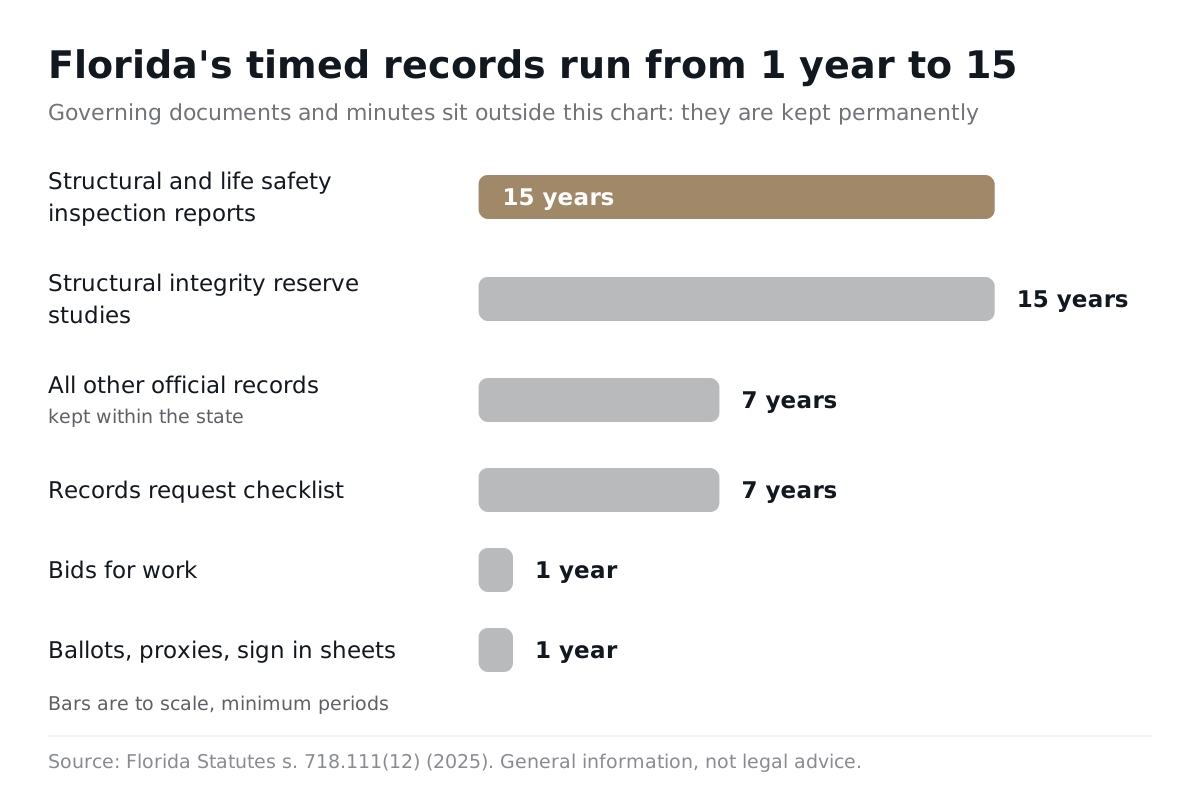
| Ballots and proxies | 1 year from the vote or meeting (s. 718.111(12)(a)12) | Preceding 12 months (605/19(a)(8)) | Held by the inspector until the challenge period ends, then the association; no disposal date stated (5125) |
| Bids | At least 1 year after receipt (s. 718.111(12)(a)11.e) | No period stated | No period stated in the sections reviewed |
| Structural and inspection reports | 15 years (s. 718.111(12)(a)11.d and 15) | Any reserve study must be kept, no end date stated (605/19(a)(10)) | Balcony and exterior elevated element reports: two inspection cycles (5551(i)) |
Sources: Florida Statutes s. 718.111 (2025), 765 ILCS 605/19, and California Civil Code sections 5210, 5125, and 5551.
Three details catch boards out.
- Florida keeps the records in the state. Official records outside the permanent tier "must be maintained within the state for at least 7 years," unless general law says otherwise.
- Illinois outlasts the usual seven. A board that shreds the books at year seven is three fiscal years short in Illinois.
- California's inspection window is not a shredding date. Section 5210(a) sets how far back owners may look. It says nothing that makes an older record safe to destroy.
Florida also treats destruction as a crime in one case. Willfully destroying required accounting records with intent to harm the association or its members is a first degree misdemeanor under s. 718.111(12), and it removes the person from office.
How long should a condo association keep tax records?
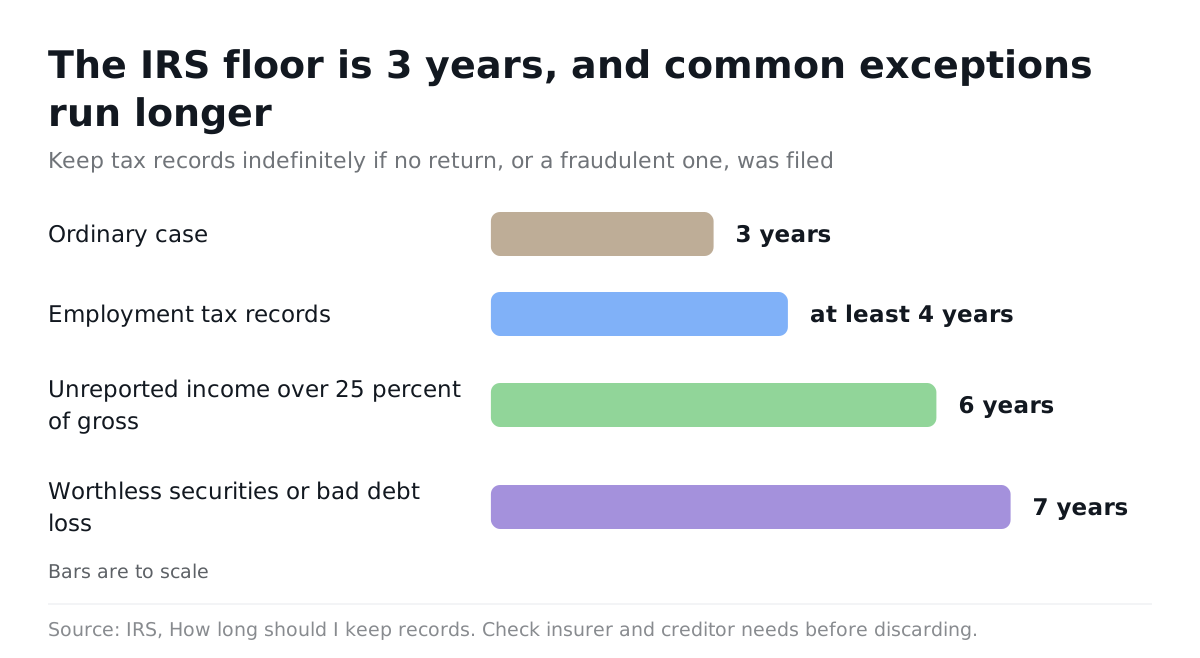
At least three years after filing, and longer in several common cases. The IRS record keeping page sets these periods:
- 3 years in the ordinary case.
- 6 years if income you should have reported was more than 25 percent of the gross income shown.
- 7 years if you claim a loss from worthless securities or a bad debt deduction.
- Indefinitely if no return was filed, or a fraudulent one was.
- At least 4 years for employment tax records, counted from when the tax was due or paid, whichever is later.
The IRS adds a warning boards should copy into their policy. Before you discard records you no longer need for tax, check whether an insurer or a creditor needs them longer. For a condo, the state statute is usually that longer rule.
Which condo records should a board keep permanently?
Keep the records that explain why the building is the way it is: governing documents, minutes, as built plans, and core financial history. CAI's sample schedule lists these as permanent:
- Governing documents
- As built specification plans
- Budgets
- Assessment information and status
- Board minutes
- Cash disbursement and receipt journals
- State and federal income tax returns
- State and federal unemployment and withholding records
That list is best practice, not law. It is longer than any statute requires. Florida is the only one of the three states that makes the core governing set permanent by statute. The same CAI article tells boards to run any schedule past the association's accountant and attorney before adopting it.
Keeping everything forever is not the safe answer either. Old files full of owner phone numbers, collection notes, and personnel matters are a privacy risk. They also bury the records that matter. The schedule exists so the board can let go of routine paper on purpose, with a log.
How do you use this retention schedule template?
Fill it in once, adopt it by board resolution, and review it every year. Four steps:
- Find your state's column. Each row cites the Florida, Illinois, or California section we read. If your condo is in another state, look up your condominium act and fill in the blanks.
- Take the longest rule that applies. State law, IRS rules, your declaration, your insurer, and any open dispute can all set a period. The longest one wins.
- Fill every "board policy: ______" blank. Those rows are where the statutes we reviewed are silent. The board sets the period and writes it down.
- Name a storage location and an owner for every row. A record with no owner is a record nobody can find.
What goes in the condo document retention schedule template?
Ten record types, each with a keep period, a legal basis or a best practice label, a storage location, and an owner. "FL", "IL", and "CA" mark the statute for each state. "Best practice" marks a period no statute we reviewed requires.
| Record type | Keep for | Legal basis or best practice | Storage location | Owner |
|---|---|---|---|---|
| Governing documents: declaration, bylaws, articles, rules, all amendments, plats | Permanently | FL: law, s. 718.111(12)(a)2 to 5. IL: law requires keeping, no end date, 605/19(a)(1) to (3). CA: best practice. | ______ | Secretary |
| Meeting minutes: owner, board, and committee meetings, plus video conference recordings | Permanently | FL: law, permanently, s. 718.111(12)(a)6. IL: law, at least preceding 7 years, 605/19(a)(4). CA: law, open to inspection permanently, Civil Code 5210(a)(2). | ______ | Secretary |
| Financial records: ledgers, bank statements, receipts, invoices, budgets, audits | The longest that applies: FL at least 7 years; IL current plus 10 prior fiscal years; CA board policy: ______ (owners may inspect the current plus 2 prior fiscal years) | FL: law, s. 718.111(12)(a)11. IL: law, 605/19(a)(9). CA: inspection window, 5210(a)(1). Budgets: best practice, permanently. | ______ | Treasurer |
| Tax returns and tax workpapers | Returns: permanently. Workpapers: at least 3 years after filing, longer for IRS exceptions. Employment tax: at least 4 years. | IRS record keeping guidance. Returns kept permanently: best practice. | ______ | Treasurer |
| Insurance policies and claims files | Current policies always. Expired policies: board policy: ______ | FL: official record, s. 718.111(12)(a)8, 7 year rule. IL: current policies, 605/19(a)(5). CA: board policy. | ______ | Treasurer |
| Contracts and bids: management agreement, leases, vendor contracts, bids received | Contracts: while in effect, then board policy: ______. Bids: at least 1 year after receipt. | FL: contracts, s. 718.111(12)(a)9, 7 year rule; bids, s. 718.111(12)(a)11.e. IL: contracts in effect, 605/19(a)(6). CA: board policy. | ______ | Manager |
| Ballots, proxies, sign in sheets, voter lists | At least 1 year after the vote. CA: board policy: ______ after custody passes to the association. | FL: law, 1 year, s. 718.111(12)(a)12. IL: law, preceding 12 months, 605/19(a)(8). CA: custody rule only, Civil Code 5125. | ______ | Secretary |
| Owner records and correspondence: owner roster, records requests and responses, owner letters | Roster: keep current. Records request checklist: FL 7 years. Correspondence: board policy: ______ | FL: roster, s. 718.111(12)(a)7; request checklist, s. 718.111(12)(c); other operating records, s. 718.111(12)(a)21. IL: current owner list, 605/19(a)(7). CA: board policy. | ______ | Manager |
| Maintenance and inspection reports: structural and life safety inspections, reserve studies, balcony inspections, work orders | Structural reports and reserve studies: at least 15 years (FL). Balcony reports: two inspection cycles (CA). Routine work orders: board policy: ______ | FL: law, s. 718.111(12)(a)11.d and 15. CA: law, Civil Code 5551(i). IL: reserve study must be kept, 605/19(a)(10). | ______ | Manager |
| Plans and permits: developer plans, as built plans, warranties, building permits | Permanently | FL: developer plans, permits, and warranties permanently, s. 718.111(12)(a)1; building permits, s. 718.111(12)(a)18. IL: plats, 605/19(a)(1). As built plans permanently: best practice. | ______ | Manager |
Yearly records review checklist
Run this once a year, ideally the month after your fiscal year closes.
- ☐ Confirm the schedule still matches current statute text, with the association's attorney.
- ☐ Check the declaration and bylaws for any longer retention rule.
- ☐ Ask counsel whether any lawsuit, claim, audit, or dispute is open or expected. If yes, place a hold on every related record.
- ☐ Confirm this year's minutes are approved, signed, and filed.
- ☐ Confirm the closed fiscal year's books, bank statements, and tax return are filed.
- ☐ Move expired contracts and policies to the archive with their expiry date noted.
- ☐ List records that reached the end of their keep period.
- ☐ Get board approval, in the minutes, for each batch to destroy.
- ☐ Destroy approved records securely and fill in the destruction log.
- ☐ Check who has access to each storage location and remove people who left.
- ☐ Confirm backups of the digital archive restore correctly.
Destruction log
| Date | Record type and date range | Keep period reached | Legal hold checked | Board approval (meeting date) | Method | Done by |
|---|---|---|---|---|---|---|
| ______ | ______ | ______ | ☐ Yes | ______ | ______ | ______ |
| ______ | ______ | ______ | ☐ Yes | ______ | ______ | ______ |
| ______ | ______ | ______ | ☐ Yes | ______ | ______ | ______ |
How should a condo board destroy old records?
Only after three checks: the keep period has passed, no legal hold applies, and the board approved the batch in its minutes. Then destroy the records securely and log it.
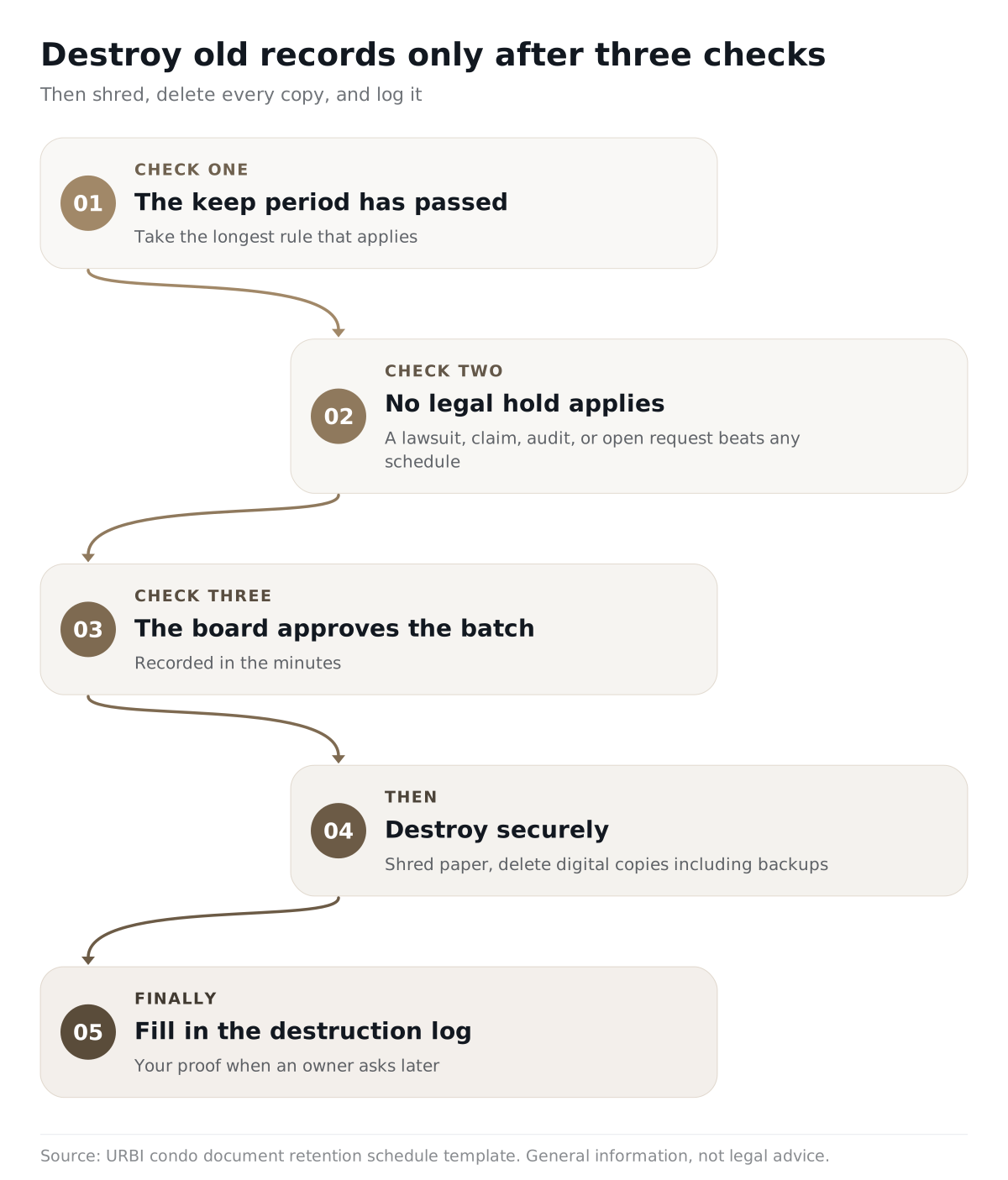
The hold check matters most. A schedule never overrides a lawsuit, a threatened claim, an insurance claim, an audit, or an owner's open records request. If any of those touch a record, it stays until counsel says otherwise.
The destruction log is your proof. If an owner later asks where the 2017 bank statements went, the answer is a dated board approval and a log line, not a shrug. Shred paper. For digital files, delete every copy, including backups the board controls. Our condo audit checklist shows which records auditors ask for first.
Where should condo records live so the schedule actually works?
In one system the association controls, with access set by role and a record of who did what. A schedule fails when records are scattered across a former manager's laptop, a treasurer's email, and a storage cage.
URBI gives the schedule a home without changing who decides:
- A document hub for bylaws, community rules, meeting minutes, budgets, and annual meeting packets, inside the same app residents and the board already use.
- Documents on each unit profile, so owner paperwork sits with the unit it belongs to.
- Property scoped, role based permissions, set per module down to create, read, update, and delete. Board only files stay board only.
- A permanent audit trail on every action, so a change to a record shows who made it and when.
- HERO, the manager facing AI, which answers questions from the property's documents and shows what it checked.
URBI does not decide what to destroy or when. Your board adopts the schedule, and people carry it out. If you are in Florida, the posting rules for associations with 25 or more units add a separate job, covered in Florida condo website requirements. For the day to day side of records, read condo document management.
Frequently asked questions
Can a condo board scan paper records and shred the originals?
Often yes, but check first. Florida's statute lets official records be made available electronically, and many boards keep scanned archives. Keep original signed and recorded documents, such as the recorded declaration and any amendments, unless counsel confirms a copy is enough. Before shredding any paper, make sure the scan is complete, readable, backed up, and stored where the right people can find it. Log the scan and the destruction the same way.
Does California require condo associations to keep records for only three years?
No. Civil Code section 5210 says owners may inspect records from the current fiscal year and the two before it, and minutes permanently. That is an inspection window, not a destruction date. Tax rules, contract claims, insurance, and balcony inspection reports under section 5551 can all require longer. A California board should set its own periods for the rows the statute leaves open.
What if our state is not Florida, Illinois, or California?
Use the template anyway and replace the statute column. Look up your state's condominium act for a records section, and ask the association's attorney which periods apply. Where your statute is silent, fill the "board policy: ______" blank with a period the board adopts by resolution. The IRS periods apply in every state, and so does the rule that a legal hold beats any schedule.
A retention schedule is a small document that saves a board from big arguments. Adopt it, review it yearly, and keep the records in one place. To see how URBI's document hub, permissions, and audit trail hold your records, email hello@myurbi.co. Boards comparing systems can start with the condo board guide to building software.


