



Property management AI and frontier AI are built for different goals. Frontier labs are working toward general intelligence, and now they are debating how fast to go. A building needs AI that reads its own records, asks before acting, and leaves a trail. URBI is built for that second job.
What is frontier AI, and what are the labs trying to build?
Frontier AI means the most capable general models, built by a handful of large research labs. Their goals are big on purpose. They are aiming at intelligence that works across almost every field, not at any one industry.
- OpenAI's charter defines its target as "highly autonomous systems that outperform humans at most economically valuable work".
- Google DeepMind states: "Our mission is to build AI responsibly to benefit humanity". The same page names artificial general intelligence as where the field is heading.
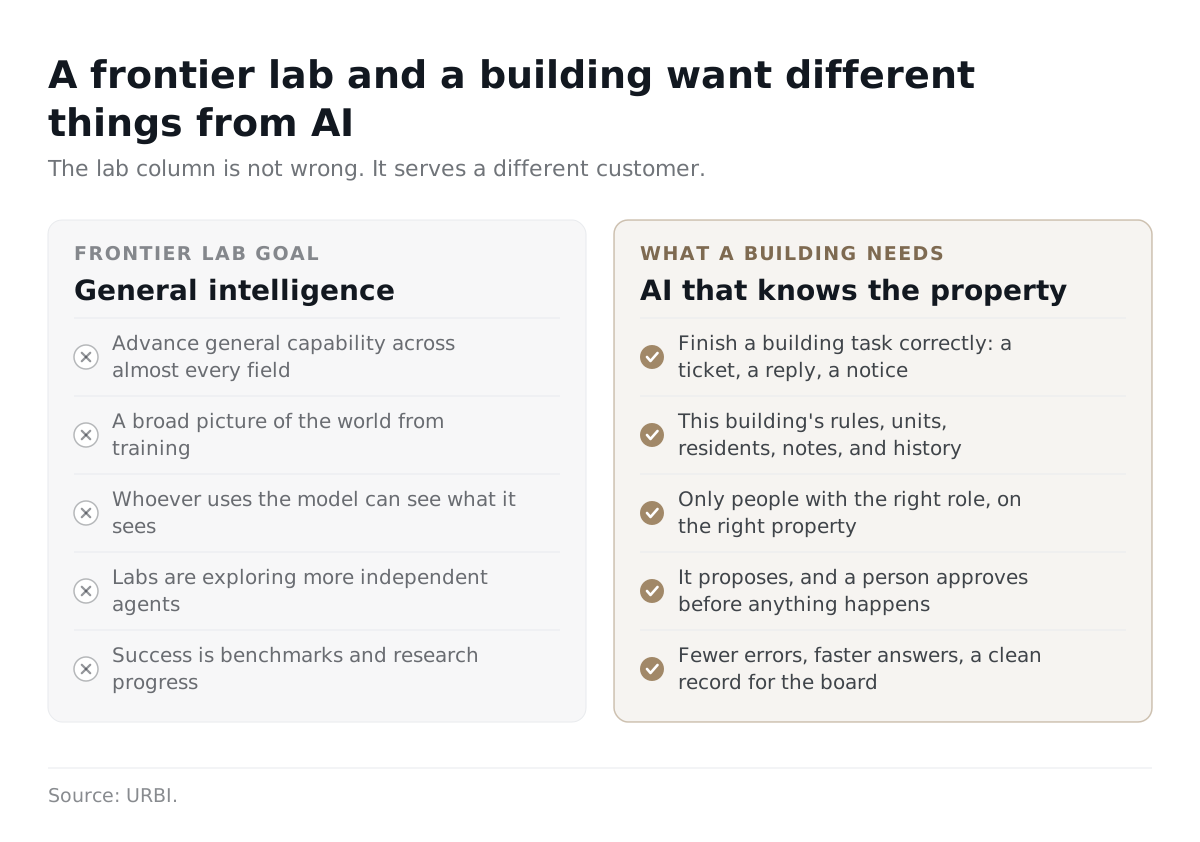
These are serious goals held by serious people. They are also not your goals. Nobody running a 250 unit condo tower needs a system that beats humans at most jobs. You need one that knows your building.
Why are frontier labs talking about slowing down in 2026?
Because some lab leaders now think capability is moving faster than the safety work around it. In September 2026, Anthropic CEO Dario Amodei published an essay on his own site titled We Must Pace the Frontier. His core line: "We must slow the pace at which we improve the capabilities of AI models."
His plan centers on outside evaluators with deep access inside labs, plus coordination between companies and governments. The plan is aimed at the pace of new, more powerful models. Using the tools that already exist is a separate question.
People who sell AI to businesses noticed the difference. Maya Mikhailov, CEO and cofounder of Savvi AI, told PYMNTS: "Enterprises won't stop adopting AI just because they don't have newer models to deploy." For more on what the pacing debate means day to day, read what the frontier AI slowdown means for property managers.
What does a property manager actually need from AI?
A property manager needs AI that does bounded, repeatable work on one set of buildings, correctly, with a person in charge. That list is short and concrete:
- Answer a resident's question from the building's own rules and records.
- Turn a messy email or call into a clean service ticket.
- Draft a notice, a reply, or a board update for a person to check.
- Find what happened in unit 1204 last spring without digging through five systems.
- Never touch money, access, or a resident's record without permission.
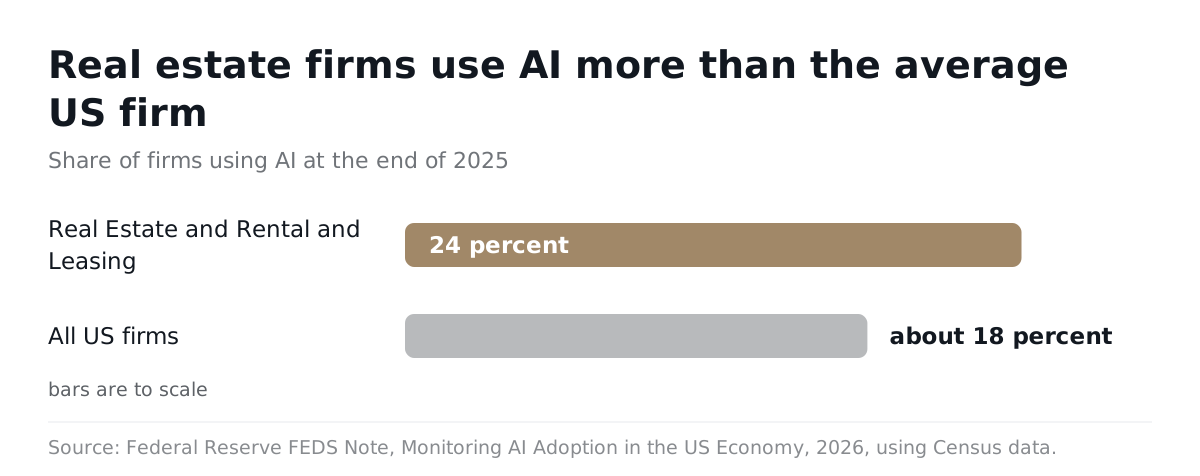
Real estate firms already use AI more than most. A Federal Reserve analysis of Census data put AI use at 24 percent of firms in Real Estate and Rental and Leasing at the end of 2025. That compares with about 18 percent of all US firms.
Inside property management, research from IREM and AppFolio found the share of property managers using AI tools rose from 21 percent to 45 percent between late 2023 and mid 2025. Most of them rely on general purpose chat tools, not tools built for buildings. That gap is the problem this article is about.
Frontier lab goal vs what a property manager needs: how do they compare?
They differ on almost every line that matters to an operator. The lab column is not wrong. It is built for a different customer and a different kind of success.
| Question | Frontier lab goal | What a property manager needs |
|---|---|---|
| What is it trying to do? | Advance general capability across almost every field | Finish a building task correctly: a ticket, a reply, a booking, a notice |
| What does it know? | A broad picture of the world from training | This building's rules, units, residents, notes, and history |
| Who can see what? | Whoever uses the model | Only people with the right role, on the right property |
| Can it act on its own? | Labs are exploring more independent agents | It proposes, and a person approves before anything happens |
| How is success measured? | Benchmarks and research progress | Fewer errors, faster answers, a clean record for the board |
| What does failure look like? | Capability outpacing safety work | A wrong notice, a wrong charge, or a private detail sent to the wrong unit |
| What keeps it in check? | Outside evaluators and coordination between labs and governments | Building records, role permissions, approvals, and an audit trail |
Which tests should a building use to judge AI?
Judge building AI by five tests, not by which model is smartest on a leaderboard. Ask a vendor to show each one live on a demo.
- Grounded. Does it answer from your building's records, and does it show where the answer came from? When it cannot find something, does it say so instead of guessing?
- Permissioned. Does it respect roles and properties? A concierge at one building should not see another building's residents through the AI.
- Approval before action. Does every action wait for a person to confirm? Drafting is fine. Sending, booking, charging, and refunding need a yes from someone accountable.
- Audit trail. Can you see who approved what, and when, months later when the board asks?
- Consistent. Does it handle the same kind of request the same kind of way on Monday and on Friday? Exact wording will vary. The steps and the rules it follows should not.
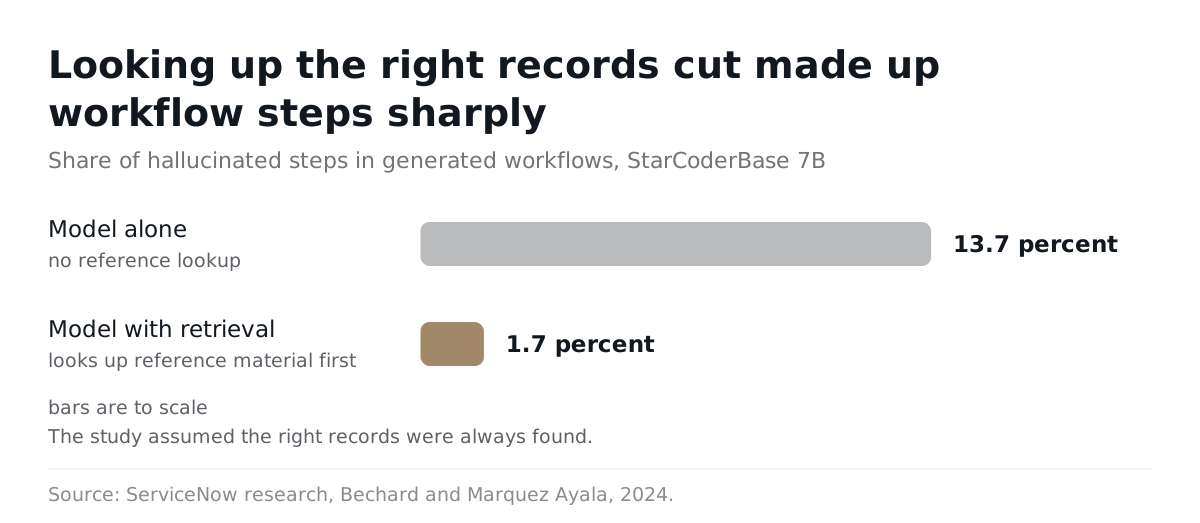
Grounding has measured effects. In a ServiceNow research study, letting one model look up the right reference material cut made up workflow steps from 13.7 percent to 1.7 percent. The authors also assumed the right records were always found, so a poorly organized building file still hurts.
The audit test lines up with public guidance too. The US government's NIST Generative AI Profile suggests that an organization's inventory of AI systems list "human oversight roles and responsibilities". It also asks for minimum criteria for reporting AI incidents. For a checklist you can use with your team, see what AI can do alone and what a person must approve.
Does the frontier slowdown change anything for your building?
Barely. A slower frontier means the most powerful models improve more slowly. It does not make your ticket queue longer or your residents less impatient.
The gains that matter for a building come from somewhere else. They come from clean records, clear permissions, good approval rules, and a team that actually uses the system. None of that waits on the next model release. If anything, a steadier pace makes it easier to test a tool and trust that it will behave the same way next quarter.
Isn't a smarter model always better for property management?
Not by itself. The fair counterpoint is that a capable general model handles odd questions and messy documents well, and many property managers already use one. That is true, and a smart model can sit inside a good building system.
The mistake is using the model alone. A general chatbot with no building records, no roles, and no approval step will write a confident answer about a pet policy it has never seen. The fix is a narrow system around the model: the building's data in, the building's rules applied, and a person approving what goes out. We covered the most common failures in property management AI mistakes.
How are URBI's HERO and Arthur built to pass these tests?
URBI's AI is built around the building. It comes in two parts. HERO works for the management team inside URBI Kore. Arthur is the concierge residents reach by phone, SMS, email, and in app chat.
- Grounded: HERO works through the property's records, documents, procedures, logged notes, and concierge messages. Every answer carries a "what I checked" panel listing the sources it tried. When it cannot find an answer, it says so instead of guessing.
- Permissioned: visibility is property scoped, and team permissions are set per module at create, read, update, and delete level. Arthur verifies a resident by PIN before anything sensitive.
- Approval before action: reads run instantly, and every action stays a proposal until a person confirms. HERO groups multi step work into a numbered plan where each step is approved or rejected, and a failed step stops the plan. Arthur can request a refund, but the property manager approves it.
- Audit trail: every action lands in a permanent audit trail.
- Consistent: staff save the questions they ask often, and HERO uses them as examples to answer faster and more consistently. When Arthur meets a question it cannot answer, it escalates to the manager with a summary, relays the reply, and saves it to the property's knowledge base. Managers can view, edit, and delete those entries, so the next resident gets the approved answer.
A building's data also stays with that building and never trains outside models. For the wider platform, start with what URBI is and URBI for residential buildings. If you are comparing vendors, our guide to the best AI property management software lists what to ask.
FAQ
What is the difference between property management AI and frontier AI?
Frontier AI is the general purpose model research done by large labs, aimed at broad intelligence across almost every field. Property management AI is a system built for one job: running buildings. It uses the building's own records, follows role permissions, waits for a person to approve actions, and keeps an audit trail. A property system can use a strong model inside it, but the goal and the guardrails are different.
Will the AI slowdown make property management software worse?
No. The slowdown debate is about how fast labs push the most powerful new models. Building software improves through better records, cleaner workflows, and tighter approvals, and none of that depends on the next frontier release. A steadier pace can even help, because the tools you test today are more likely to behave the same way next year. Judge a product on how it performs with your data now.
Can AI act on its own in a building?
It should not for anything that matters. Reading records and drafting replies are safe to automate. Sending notices, booking amenities, moving money, and changing a resident's record should wait for a person to confirm. In URBI, HERO and Arthur propose these actions and a person approves them. Ask any vendor to show you exactly where that approval step sits.
Will AI replace property managers?
Not the kind of AI buildings actually use. Building AI takes on lookups, drafts, and routine requests so the team spends more time with residents, vendors, and the board. Judgment, relationships, and accountability stay with people, which is why approval before action matters so much. We go deeper on this in will AI replace property managers, and boards can start with our condo board AI policy template.
Frontier labs will keep debating how fast to build. Your building does not have to wait for that answer. If you want AI that knows your building's records, asks before it acts, and keeps a record the board can trust, write to us at hello@myurbi.co and we will show you HERO and Arthur on a live demo.


