



The frontier AI slowdown changes very little for a property manager this year. Anthropic's CEO called for slowing how fast AI gets more capable, and new models shipped ten days later. Your building needs AI that knows its records and asks a person before acting. URBI is built that way.
What was actually announced in September 2026?
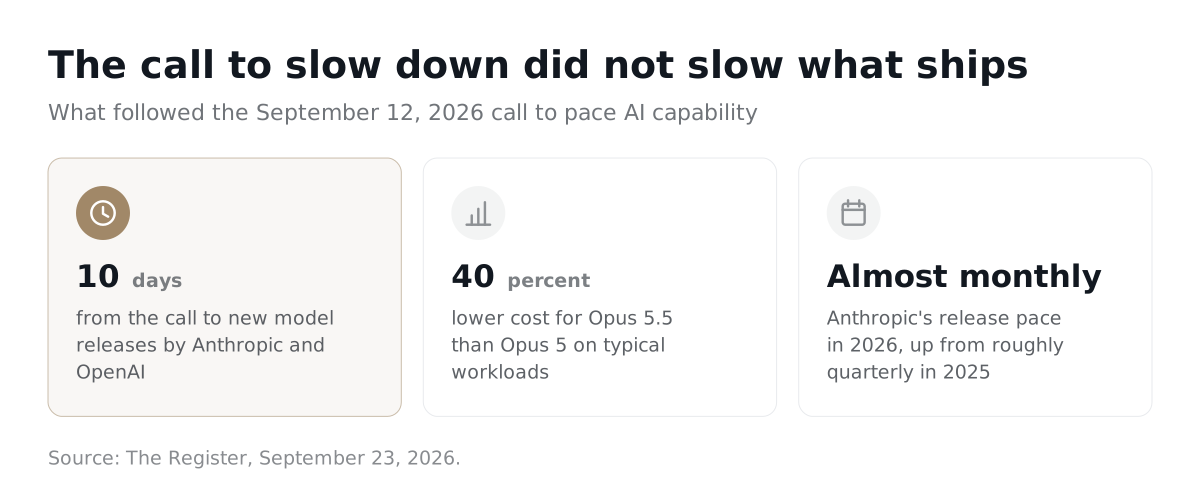
A call to slow down was announced, not a freeze. On September 12, Anthropic CEO Dario Amodei wrote that "We must slow the pace at which we improve the capabilities of AI models," as The Register reported.
Here is what happened next:
- On September 22, ten days after the call, Anthropic released Opus 5.5 and OpenAI released GPT-6 Sol and Luna.
- The Register reports that Anthropic's release pace sped up from roughly every quarter in 2025 to almost monthly in 2026.
- TechCrunch reported that Anthropic said stronger safety systems are being prepared for future models, with more details to come later.
None of the coverage we checked reported a delayed or cancelled release. The debate is real. It just has not slowed what ships.
What changed, and what did not?
The way AI labs talk changed. The tools on your desk did not.
| Area | What changed in September 2026 | What stayed the same |
|---|---|---|
| How labs talk | A lab CEO publicly asked to slow how fast AI gets more capable | Labs still compete to build more capable general models |
| New releases | Nothing slowed. Two companies shipped new models ten days later | The fast release pace, almost monthly at Anthropic in 2026 |
| Cost to run AI | The Register reports Opus 5.5 costs 40 percent less than Opus 5 on typical workloads | Prices keep moving, so fixed long term prices can age fast |
| Your legal duties | Nothing new came from the essay | Fair housing and consumer reporting duties still sit with you, whoever or whatever does the work |
| What your building needs | Nothing | Accurate records, clear permissions, and a person who approves actions |
Why does a frontier slowdown barely touch property management?
Because property management does not run on the frontier race. It runs on everyday tasks like answering residents, logging work orders, and booking amenities.
Experts interviewed by PYMNTS made the same point. Maya Mikhailov, CEO of Savvi AI, said most business customers are not using the most advanced models in the first place. Northeastern lecturer Chris Selland said it only makes economic sense for model makers to push the frontier as fast as the market can absorb it. USC professor Mayank Kejriwal warned that slowing the leading firms "will not stop progress globally."
Frontier labs are racing toward general intelligence, and now they talk about pacing that race. A property manager was never in it. You need AI that does four plain things:
- Knows your building's records, documents, and procedures.
- Uses your building's own tools, like tickets, bookings, and notices.
- Asks a person before it acts.
- Shows what it checked, so you can trust the answer.
We go deeper on this split in property management AI vs frontier AI.
Is AI adoption in property management still growing?
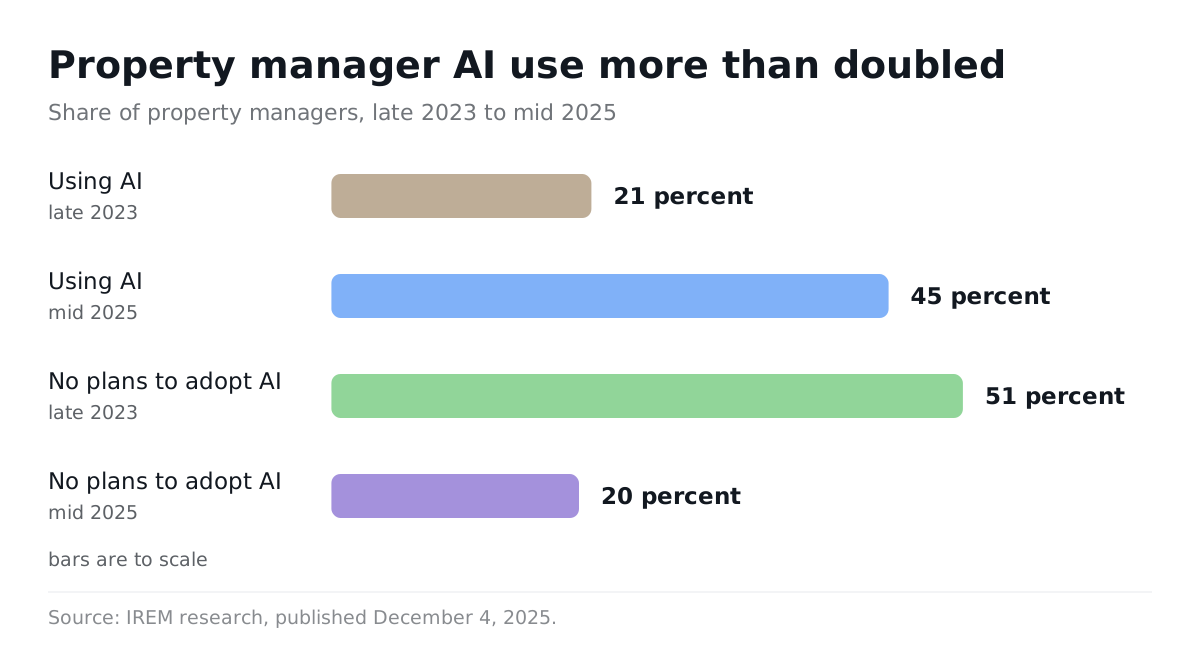
Yes, and it was growing well before this news. Research from IREM, published December 4, 2025, found AI use among property managers rose from 21 percent in late 2023 to 45 percent in mid 2025. Over the same stretch, the share with no plans to adopt AI fell from 51 percent to 20 percent.
So the useful question for 2026 is how to run the tools you already have, with clear rules. If you are worried about your job, read will AI replace property managers. The short answer is no.
What should a property manager do about AI this year?
Keep your AI projects moving, and put rules around them. Work through this checklist:
- List every place AI touches your work. Email drafts, phone answering, work order sorting, screening, and reports all count.
- Sort each one by stakes. Drafting a reply is low stakes. Screening, rent, deposits, and denials are high stakes. Keep a named person accountable for every high stakes decision.
- Require approval before AI acts. Ask each vendor a direct question: can anything send, book, charge, or post without a person confirming?
- Check what the AI can see. It should read only the properties and records a user is allowed to see.
- Ask for a trail. You should be able to see what the AI checked and what a person approved.
- Ask about model changes. Find out whether your vendor tells you when the AI underneath its product changes.
- Recheck cost at renewal. Running AI got cheaper this month, so compare cost per finished task, not a year old price.
- Pilot one workflow first. Pick one job, like work order triage, measure response time and corrections, then expand.
For the approval rules in detail, see AI agents in property management: what AI can do alone and what a person must approve. For the common traps, see property management AI mistakes.
How does URBI handle AI while the frontier debate goes on?
URBI's AI is built for the building, not the race. It works from your property's records, and people approve what it does.
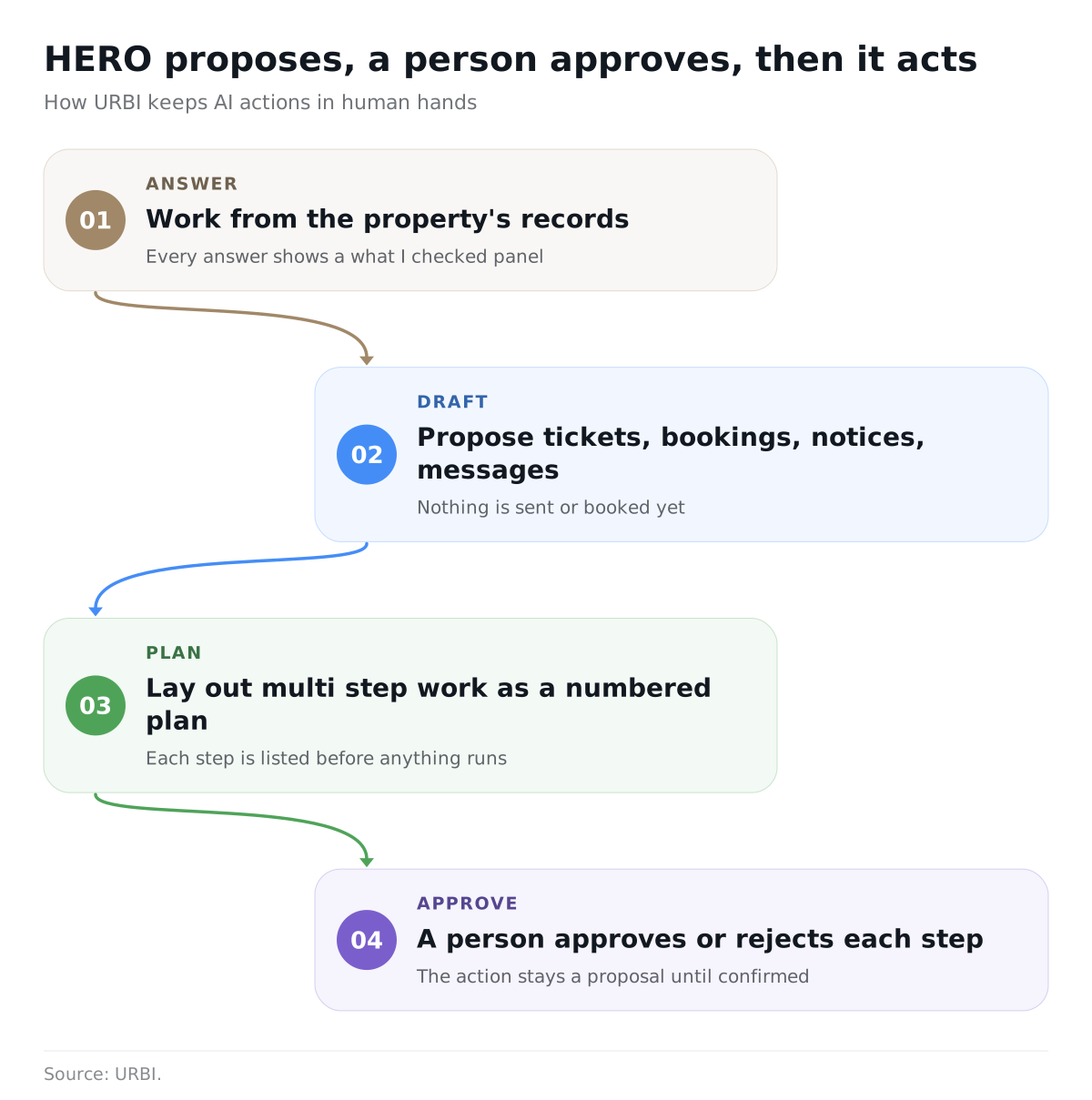
HERO is the AI for your team inside URBI. It answers plain language questions by working across the property's records, documents, and procedures. Every answer shows a "what I checked" panel. When HERO cannot find an answer, it says so instead of guessing. HERO can draft tickets, bookings, notices, and messages, but every action stays a proposal until a person confirms it. Multi step work comes as a numbered plan, and you approve or reject each step.
Arthur is the AI for residents. It answers by phone, SMS, email, and in app chat, in ten languages. When a resident asks something Arthur does not know, it sends the question to the manager with a summary. Arthur then relays the answer and saves it to that property's knowledge base, so the next resident gets the answer right away.
Two more guardrails matter here. Team permissions are role based and set per module, and visibility is scoped to each property, so each person sees only what their role allows. HERO also runs on a weekly usage allowance per property, with a visible meter and a hard stop, so spend stays predictable while model prices move around. Learn more in what is URBI and URBI for residential buildings, or compare options in the best AI property management software.
Frequently asked questions
Did any AI company delay a release after the September 2026 slowdown call?
No delay was reported in the coverage we checked. Anthropic's CEO called for slowing capability gains on September 12, 2026. Ten days later, Anthropic released Opus 5.5 and OpenAI released GPT-6 Sol and Luna. The Register also reports that Anthropic's release pace sped up to almost monthly in 2026. For now, pacing is a debate about the future, not a change to what ships.
Should I pause my building's AI project until the debate settles?
No. The tools a property manager uses today do not depend on the next frontier model. What matters is that your AI reads your own records, respects permissions, and waits for a person to approve actions. Pausing only delays the work of setting those rules. Start with one low stakes workflow, measure it, and grow from there.
Does the frontier slowdown change my fair housing duties?
No. The September essay did not change any law. Your duties under fair housing and consumer reporting rules apply to your decisions whether a person, a spreadsheet, or AI helped make them. Keep a person accountable for screening, pricing, deposits, and denials. This is general information, not legal advice, so confirm specifics with your attorney.
The frontier labs will keep arguing about speed. Your buildings need AI that knows the property and asks before it acts. To see how HERO and Arthur work in a real building, email hello@myurbi.co.


