



AI agents in property management can safely answer questions, log tickets, and book spaces under your rules on their own. Anything that moves money, changes a lease, or affects who gets housed needs a person. URBI sits on the careful side of that line: its AI proposes, and your team approves every action.
What is an AI agent in property management?
An AI agent is software that can take actions in your systems. A chatbot answers a question. An agent can open the ticket, reserve the room, or send the payment link.
NIST describes agentic AI as systems that work as autonomous agents "capable of independently making decisions." Once software can decide and act, your question stops being "is the answer right?" and becomes "what is it allowed to touch?"
So define an agent by its permissions, not by how friendly it sounds. Two tools can sound identical on the phone. One reads your pet policy aloud. The other can issue a credit to a resident's account. They need very different rules.
Why did the risk move from what AI says to what it does?
The risk moved because AI now has tools. A wrong answer from a chatbot is an awkward correction. A wrong action from an agent is a refund sent, a booking cancelled, or a lease note changed.
Security people already have a name for this. The OWASP GenAI Security Project calls it Excessive Agency, and it lists three root causes:
- Excessive functionality. The agent has tools it does not need for its job.
- Excessive permissions. Its tools can do more than the task requires, like editing records when it only needs to read them.
- Excessive autonomy. It can take high impact actions without anyone checking first.
OWASP's advice is practical. Require a person to approve high impact actions before they happen. Log what the agent does. And "implement authorization in downstream systems rather than relying on an LLM" to decide what is allowed. In plain words: the rule lives in the software's permissions, not in a polite instruction the AI might ignore.
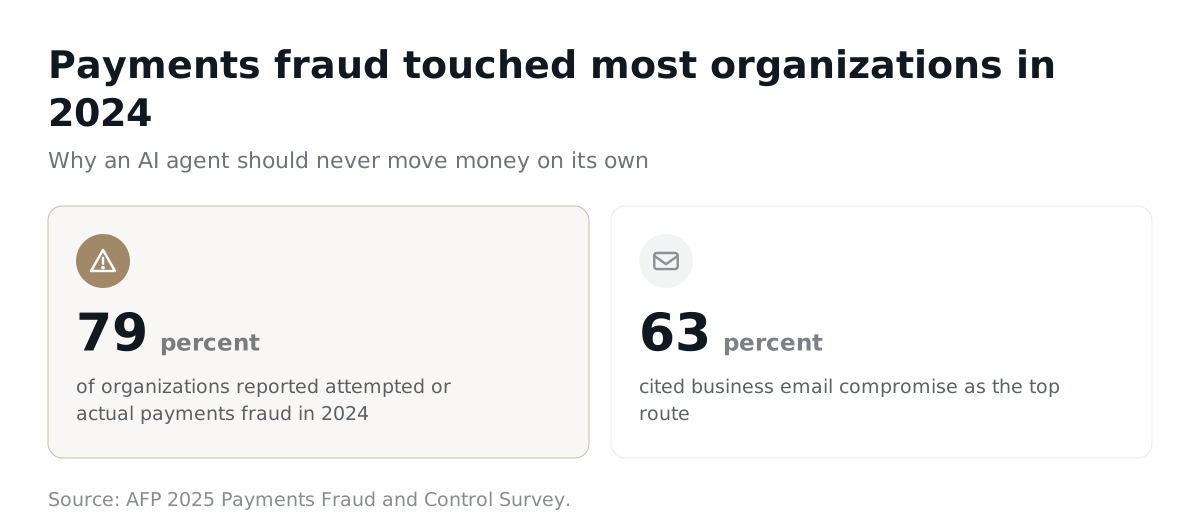
Money is where this bites hardest. In the 2025 AFP Payments Fraud and Control Survey, 79 percent of organizations reported attempted or actual payments fraud in 2024. Business email compromise was the top route, cited by 63 percent. An agent that can redirect a payment because a convincing email asked it to is a gift to those fraudsters.
Which property management tasks can AI do alone, and which need a person?
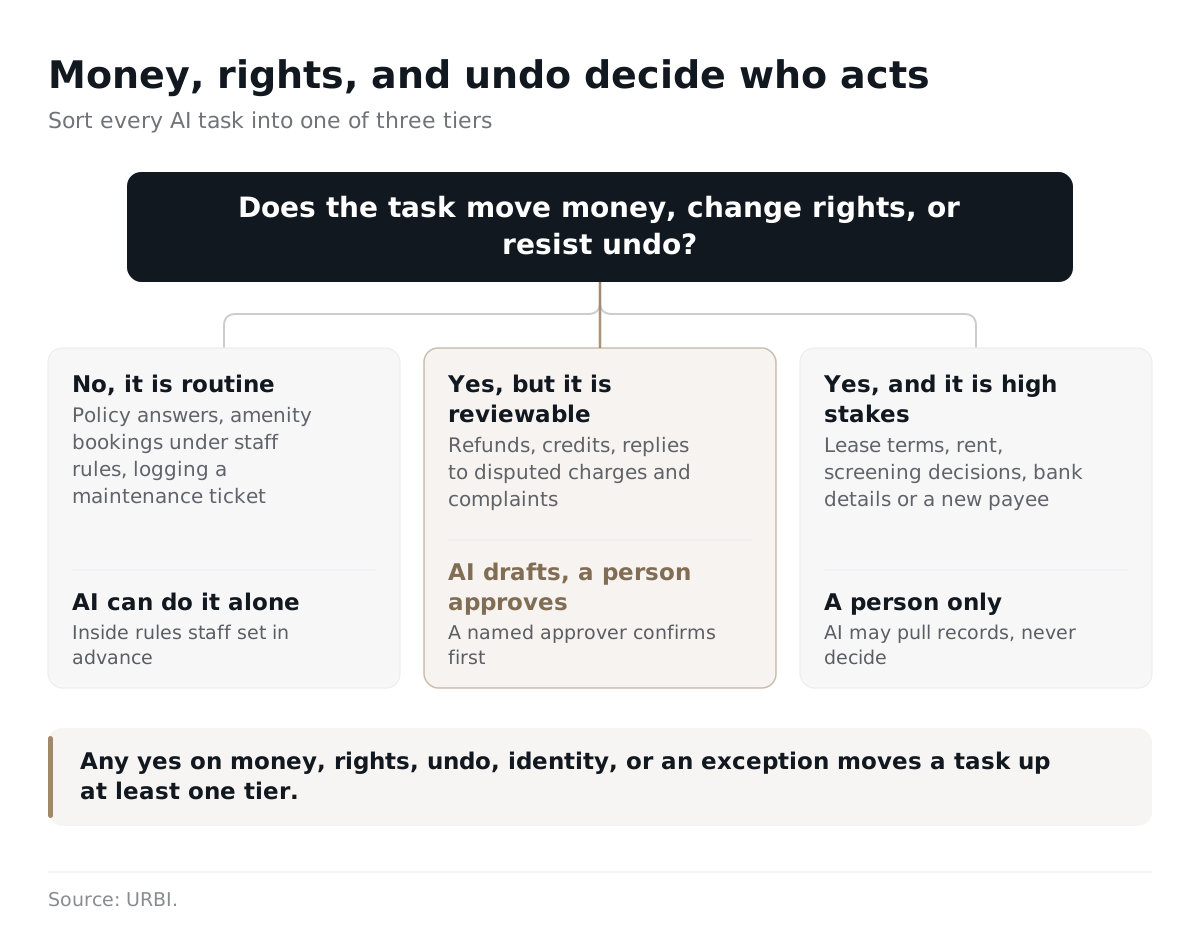
Sort every task into one of three tiers: AI can do it alone, AI drafts and a person approves, or a person does it only. The line between tiers is about money, rights, and whether you can undo it.
| Task | Tier | Why |
|---|---|---|
| Answering a policy question (quiet hours, pet rules, move in times) | AI can do alone | The answer comes from your approved documents. Nothing changes in your records. |
| Booking an amenity under the building's rules | AI can do alone | Capacity, hours, and deposits are set by staff in advance. The AI fills a slot the rules already allow. |
| Logging a maintenance ticket | AI can do alone | Easy to fix if the category is wrong. A person still decides what work gets done. |
| Sending a payment link for an existing charge | AI can do alone, with limits | Only to the verified resident, and only for a charge staff already created. The AI never sets the amount. |
| Issuing a refund or credit | AI drafts, person approves | Money leaves the building. Refunds are a common fraud target. |
| Replying to a disputed charge or complaint | AI drafts, person approves | The words can create a promise the association has to keep. |
| Changing a lease term, rent, or fee | Person only | It changes a resident's legal rights. AI may pull the records a person needs. |
| Tenant screening, approvals, and denials | Person only | Fair housing law applies to the decision, no matter which tool helped. |
| Changing bank details or adding a new payee | Person only | The classic fraud move. Verify by phone on a number you already have. |
Security leaders draw the same line. Ben Colman, cofounder and CEO of Reality Defender, described a bounded agent on the Cyber Sentries podcast in 2026: small, routine transactions are fine, but "it can't add someone as a wire transfer recipient."
How do you decide which tier a new task belongs in?
Ask five questions about the task. If the answer to any of them is yes, it moves up at least one tier.
- Does money move? Refunds, credits, fee waivers, and vendor payments all count.
- Does it change someone's rights? Leases, fees, access, and housing decisions.
- Is it hard to undo? A deleted record or a sent legal notice cannot be taken back.
- Does it rely on who someone says they are? Bank changes, key or fob resets, and account access.
- Is it an exception to a rule? Exceptions need judgment, and judgment belongs to a person.
The fair worry is that approvals slow everything down. They can. If a person has to approve every ticket and every answer, you rebuild the backlog you bought the AI to clear. Worse, people start clicking approve without reading.
The fix is to be strict about the few things that matter and relaxed about the rest. Let AI own speed on routine work. Keep people on the small set of actions where a mistake costs money or someone's home. The NIST AI Risk Management Framework points the same way: its Govern 3.2 item calls for policies that define roles for human and AI oversight, rather than one blanket rule.
Why are tenant screening and fair housing decisions person only?
Screening stays with people because the legal duty follows the decision, not the software. The Fair Housing Act applies whether a person or an algorithm made the call.
A US case shows how this plays out. In Louis v. SafeRent Solutions, filed in federal court in Massachusetts in 2022, two Black women with housing vouchers sued a tenant screening company and the property manager that used its scores. They alleged the scoring algorithm reinforced racial and economic discrimination. Under the 2024 settlement, SafeRent agreed to change its screening practices for at least five years. For voucher holders, it agreed to stop giving approve or decline recommendations unless civil rights experts validated the model for fairness.
Federal guidance is shifting, but the law is not. HUD withdrew a set of fair housing guidance documents in July 2026. The National Apartment Association's summary is clear that federal fair housing laws remain in effect, and state and local rules still apply. So let AI check an application for missing documents. Keep scoring, approvals, denials, and accommodation requests with a trained person. Our guide to AI leasing and fair housing compliance goes deeper.
This is general information, not legal advice. Confirm your screening process with your attorney.
How does URBI split the work between AI and people?
URBI follows one rule across the whole platform: AI proposes, people approve. Reads run instantly. Actions that change something wait for a person to confirm.
URBI has two AIs with two jobs. HERO works for your team inside the URBI Kore dashboard. Arthur works for residents by phone, text, email, and in app chat.
- Arthur prepares, a person confirms. When a resident asks, Arthur can log tickets, book amenities, register parking, pre schedule visitors, send forms, pull receipts, and send payment links once a person confirms. It checks a PIN before anything sensitive.
- Refunds wait for you. Arthur can request a refund, but a property manager approves it. That is tier two, built in.
- Escalation teaches. When Arthur does not know an answer, it escalates to the property manager with a summary. Arthur relays your answer in its own voice and saves it to the property's knowledge base, so the next resident gets it right away. Managers can view, edit, and delete those entries.
- HERO plans, you approve each step. For multi step work, HERO lays out a numbered plan. You approve or reject each step and watch it run. If a step fails, the plan stops instead of pretending it worked.
- HERO shows its work. Every answer lists what it checked, so a reviewer can see the source before approving.
- Permissions are set per person. Staff see only their properties, and each role has its own create, read, update, and delete rights by module. Every action lands in a permanent audit trail.
That puts URBI at the careful end of the three tiers. Arthur does the legwork on routine resident requests, and a person confirms each action. Anything with money or judgment gets a closer look from a named approver. For more on where AI goes wrong in buildings, read the most common property management AI mistakes, and see how the same approach works for AI work order triage and AI versus an answering service.
What goes in an AI approval policy for property managers?
A good AI approval policy fits on a few pages and answers four things: what the AI may do, who approves the rest, where the limits sit, and how you check it is working. The template below covers scope, the three tiers, approval owners, thresholds, audit and review, escalation, a resident disclosure line, and a sign off block.
Every threshold is a blank on purpose. No standard body publishes a universal approval limit, so set your own with your owners or board. Fill it in once, then review it every quarter.
1. Scope
- Organization or association: ______
- Properties covered: ______
- AI tools covered (name each one, resident facing and staff facing): ______
- Policy owner: ______
- Effective date: ______ Next review date: ______
2. The three tiers
| Task | AI can do alone | AI drafts, person approves | Person only |
|---|---|---|---|
| Answer policy questions from approved documents | ☐ | ☐ | ☐ |
| Book amenities under the building's rules | ☐ | ☐ | ☐ |
| Log maintenance tickets | ☐ | ☐ | ☐ |
| Send payment links for existing charges | ☐ | ☐ | ☐ |
| Issue refunds, credits, or fee waivers | ☐ | ☐ | ☐ |
| Reply to disputes and complaints | ☐ | ☐ | ☐ |
| Change lease terms, rent, or fees | ☐ | ☐ | ☐ |
| Screening, approvals, denials, accommodation requests | ☐ | ☐ | ☐ |
| Change bank details or add a payee | ☐ | ☐ | ☐ |
| Other: ______ | ☐ | ☐ | ☐ |
3. Approval owners
| Action type | First approver | Backup approver | Second approver needed? |
|---|---|---|---|
| Refunds and credits | ______ | ______ | ☐ Yes ☐ No |
| Dispute replies | ______ | ______ | ☐ Yes ☐ No |
| Vendor work orders | ______ | ______ | ☐ Yes ☐ No |
| Notices to all residents | ______ | ______ | ☐ Yes ☐ No |
4. Thresholds
- Refunds or credits the AI may request for a single resident: up to ______ per request, ______ per month.
- Above that, approval by: ______. Two approvers required above: ______.
- Daily limit across all AI requested refunds: ______.
- Always person only, at any amount: ☐ new payee ☐ bank detail change ☐ fee waiver ☐ lease change ☐ screening decision.
5. Audit and review
- ☐ Every AI action is logged with the time, property, request, action taken, and who approved it.
- ☐ Staff can see what sources the AI used before approving.
- Person who reviews a sample of AI answers: ______. How often: ______.
- Full policy review with owners or board: every ______ months.
6. Escalation
- Questions the AI cannot answer go to: ______ within ______ hours.
- After hours emergencies go to: ______.
- ☐ A resident can ask for a person at any time.
- ☐ Answers from staff are saved so the AI can reuse them, and a manager reviews saved answers every ______.
7. Resident disclosure line
"You are talking with ______'s AI assistant. It can answer questions and handle routine requests. A member of our team approves refunds and any changes to your account. Ask for a person at any time."
8. Sign off
- Prepared by: ______ Date: ______
- Approved by (owner, board president, or regional manager): ______ Date: ______
If your building runs on a condo board, pair this with our condo board AI policy template, which covers the questions a board should ask first.
FAQ
Can an AI agent approve refunds in property management?
It should not approve them on its own. A refund moves money out of the building, and payment fraud is common: 79 percent of organizations in the 2025 AFP survey reported attempted or actual payments fraud. Let the AI gather the booking, the receipt, and the reason, then send a proposed refund to a named person. In URBI, Arthur can request a refund, and a property manager approves it before anything is paid.
Is it legal to use AI for tenant screening in the US?
Using software to help with screening is not illegal, but the Fair Housing Act still applies to every decision. The SafeRent case shows a property manager can be named alongside the screening company. Keep AI to checking that an application is complete. Keep scoring, approvals, denials, and accommodation requests with a trained person. This is general information, not legal advice, so confirm your process with your attorney.
Will approvals make the AI too slow to be useful?
Only if you require approval for everything. Most resident requests are questions, bookings, and tickets, which the AI can handle inside rules your staff set. Approval belongs on the short list of actions that move money, change rights, or cannot be undone. Keep that list short and specific, and your team reviews a handful of items a day instead of every message.
Should residents be told they are talking to AI?
Yes. Tell residents plainly, tell them what the AI can and cannot do, and tell them how to reach a person. It builds trust and cuts down on arguments later. URBI's Arthur identifies itself as an AI assistant and hands off to a person when someone asks for one. The template above includes a disclosure line you can copy.
AI agents are worth having when they are fast on the routine work and careful on the rest. URBI gives your residents Arthur for the everyday requests and your team HERO for the work behind them, with people approving every action that matters. For the bigger picture, read what URBI is, why property management AI has different goals than frontier AI, what the frontier AI slowdown means for property managers, and how URBI works for residential buildings. To see the approval flow on your own properties, email hello@myurbi.co.


