



A package system for companies is the written procedure, people, log, and locked storage that move each parcel from the building's receiving point to the right employee, with a record at every handoff. URBI is built to run that procedure for commercial buildings. The free template is below.
What is a package system for companies, and what should it include?
A package system for companies is an inbound mail and parcel process, not a packing machine. Search for the phrase and you will find box makers and shrink wrap equipment. This article is about the other meaning: how an office building or a tenant company receives, logs, stores, and hands over the packages that arrive every day.
The volume behind it is large. The US Postal Service says it processed and delivered an average of 22.7 million packages a day in 2025, and that is one carrier among several. Some of those parcels land at your loading dock.
A complete package system has eight parts:
- A policy. What the building and each tenant will accept, including personal packages.
- A receiving point. One named place where carriers hand over parcels.
- Named people. Who receives, who logs, who releases, and who covers when they are out.
- A log. Paper, spreadsheet, or software, with the same fields every time.
- Notification. The recipient hears about the package the same day it arrives.
- Locked storage. A room, a cage, or lockers, with a key or credential list.
- Chain of custody. A signature or photo at every handoff, from carrier to recipient.
- Exception rules. Suspicious items, damaged parcels, perishables, and packages nobody collects.
The template in this article covers all eight. It works with a clipboard or with a platform.
Where should packages be received: the building dock or lobby, or the tenant suite?
Receive at one central point whenever you can, and deliver to suites from there. Central receiving gives you one log, one set of keys, and one place to look when a package goes missing. Suite delivery spreads custody across every floor.
The Postal Service leans the same way. Its 2018 update to the Postal Operations Manual says centralized delivery is the preferred mode for new residential and commercial developments. The same text says mail receptacles and their locations are approved by local postal officials before a new site is occupied. So talk to your local postmaster before you move or build a mailroom.
| Receiving model | Works best when | Main risk |
|---|---|---|
| Building dock or lobby desk (central) | Several tenants, a staffed desk or security team, mixed package sizes | The desk becomes a bottleneck at peak hours unless the log is fast |
| Tenant suite (direct to the office) | A single large tenant with its own reception and mailroom staff | Carriers wander the floors and nobody owns the record for the building |
| Hybrid: central for carriers, tenant runs its own internal delivery | Multi tenant towers where each company has an office manager | The handoff between building staff and the tenant is where packages vanish |
Most multi tenant office buildings end up with the hybrid model. That is fine, as long as the handoff between building operations and each tenant office manager is written down and signed. The roles table in the template makes that split explicit.
Mixed use buildings need one more rule. Commercial tenants and residents should have separate receiving paths, separate storage, and separate logs, even if the same desk takes the delivery. Different people, different access rights, different policies.
How do you use this office mailroom procedure template?
Use the template as the written standard for everyone who touches a package in your building. Building operations fills in the receiving, storage, and security sections. Each tenant office manager fills in the personal package policy and the list of people allowed to sign for the company.
- Fill in every blank line before you post the procedure. A blank left blank becomes an argument later.
- Walk the route once with the front desk, security, and one tenant office manager. Fix anything that does not match what really happens.
- Run the daily checklist for two weeks, then review the log. Count how many packages sat longer than three days.
- Review the whole procedure once a quarter, and after any incident.
What goes in the office mailroom procedure template?
The template has ten sections, from scope to checklists. Each one is shown in full below so you can copy it, adapt it, and hand it to your team.
Section 1: What does this procedure cover?
This procedure covers every parcel, letter, and courier delivery addressed to ______ (building name) or to any tenant in it. It applies to building staff, security, contracted mailroom staff, and tenant office managers. Receiving hours are ______ to ______, ______ (days). The procedure owner is ______, and the backup is ______.
Section 2: How are packages received at the building?
- All carriers deliver to ______ (receiving point). Post the carrier instructions at the door so drivers do not go to the floors.
- The receiver counts the parcels against the driver's scanner or manifest before the driver leaves.
- The receiver checks each parcel for damage, leaks, odors, or the warning signs in Section 6. Anything suspicious stops here.
- The receiver confirms the recipient is a current tenant or employee. Parcels for unknown names go to a hold shelf, not a suite.
- After hours deliveries go to ______, and security logs them at the next shift change.
Section 3: How is each package logged, and how is the recipient told?
Every package gets a log entry before it goes on a shelf. Use the same fields every time:
| Field | Why it matters |
|---|---|
| Date and time received | Starts the hold clock |
| Carrier and tracking number | Answers "the carrier says it was delivered" claims |
| Recipient name and tenant company | Routes the package and the notice |
| Package class (business, personal, accountable, oversized, perishable) | Decides the storage and release rule |
| Condition on arrival, with a photo if damaged | Protects the building if a claim follows |
| Storage location (shelf, cage, locker number) | Cuts search time at pickup |
| Received by (staff name) | First link in the chain of custody |
The recipient gets a notice the same business day, by ______ (email, text, app, phone). The notice says what arrived, where to collect it, and the hours. Perishables and accountable items also go to the tenant office manager at ______.
Section 4: What is the personal package policy?
Every tenant picks one of three positions and writes it down: accept personal packages, accept them with limits, or refuse them. There is no right answer. Some institutions refuse outright. Millersville University's mail services page says its mailroom and receiving departments are "not permitted to ship, transport, or receive personal packages for employees". Other employers accept them as a perk. What fails is having no policy at all.
Sample policy paragraph, with blanks to fill in:
______ (company name) [accepts / accepts with limits / does not accept] personal packages for employees at ______ (building address). Personal packages must be addressed to the employee's full name and "______ (company name), Suite ______". Each employee may receive up to ______ personal packages per week. Packages larger than ______ or heavier than ______, perishable items, alcohol, and anything requiring an adult signature are not accepted. Personal packages are held for ______ business days, after which they are returned to the carrier or donated as described in Section 7. The building and ______ (company name) are not responsible for loss or damage to personal packages. Questions go to ______ (office manager name and contact).
Have the tenant's own lawyer or HR lead review the liability sentence. This is a starting draft, not legal advice.
Section 5: Who can sign, and how is chain of custody kept?
Only people named in writing may sign for a company's accountable mail. Accountable mail is anything the carrier will only release against a signature, such as Certified Mail, Registered Mail, and Restricted Delivery. USPS describes Restricted Delivery as a way for the sender to "specify the person who can sign for and receive your item". The same page says USPS may ask the addressee or the person authorized to sign for a photo ID. If your front desk is not on that list, the item goes back to the post office.
- Each tenant files a signer list with building operations: names, titles, and a backup. Update it within ______ days of any staff change.
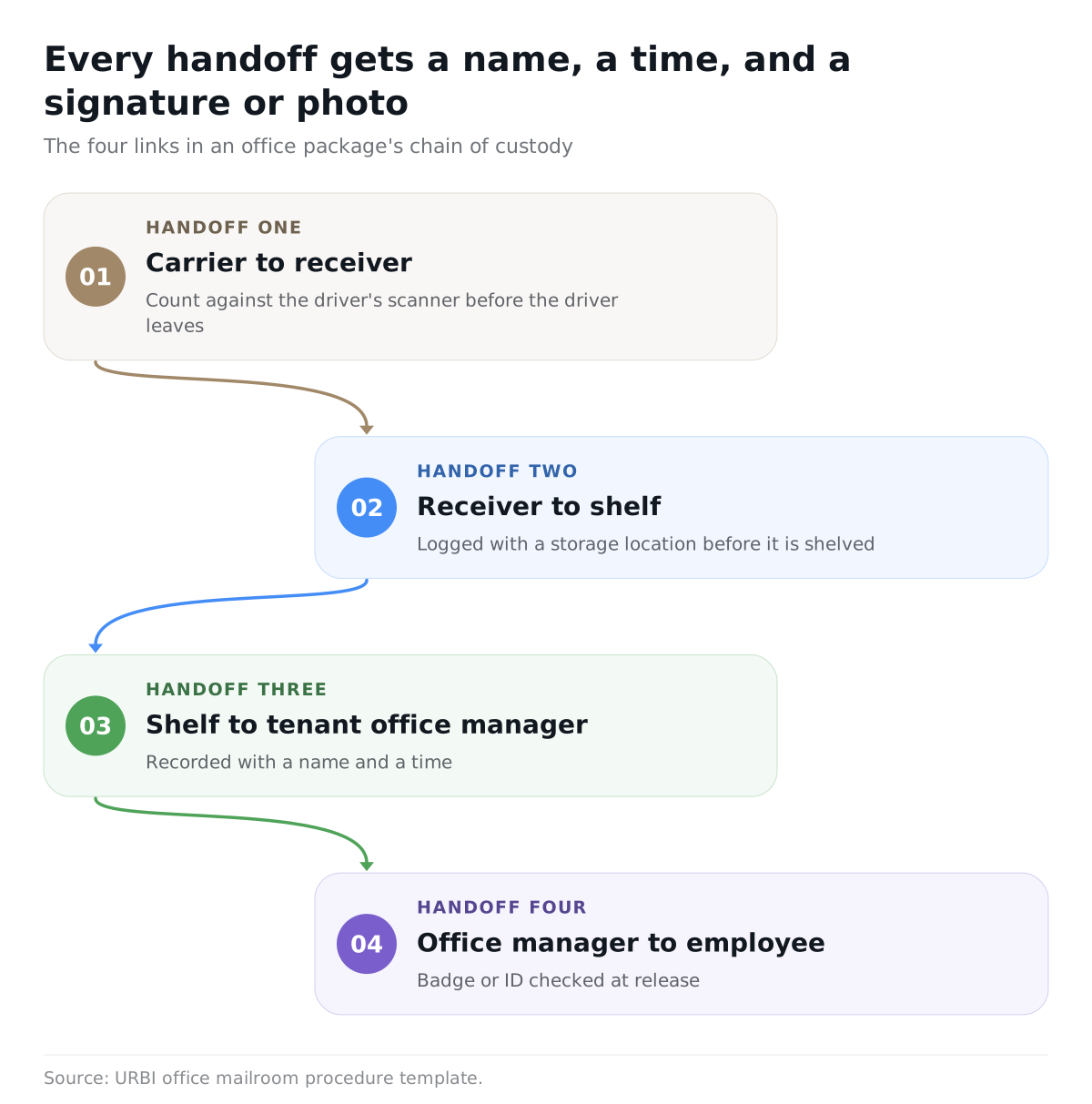
- Every handoff gets a name, a time, and a signature or photo: carrier to receiver, receiver to shelf, shelf to tenant office manager, office manager to employee.
- Release only to the named recipient, or to a person the recipient has authorized in writing. Check a badge or ID at release.
- Keep the log for ______ months. Pick the period with the tenant's records lead, since it is a company decision.
Section 6: What do staff do with suspicious mail?
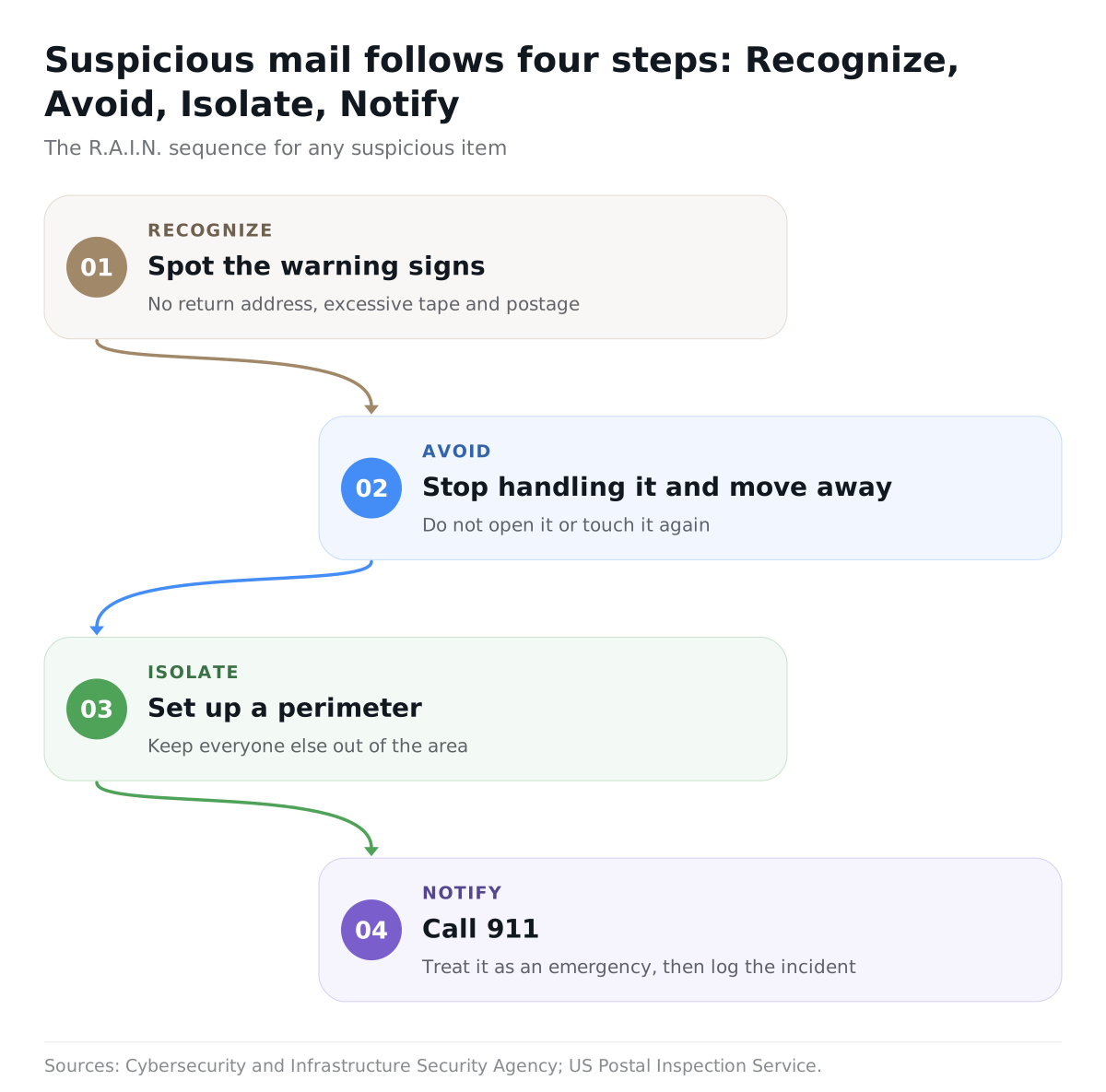
Staff stop handling the item, move away, keep others away, and call for help. They do not open it or keep touching it. The US Postal Inspection Service says suspicious mail often has no return address, excessive tape and postage, or badly written words.
For a suspected item, USPIS tells people to isolate the item, keep a safe distance, wash their hands, and call Postal Inspectors at 1 877 876 2455 and say "emergency". If anyone needs medical help, call local authorities right away. The Cybersecurity and Infrastructure Security Agency adds a simple sequence for any suspicious item, called R.A.I.N.:
- Recognize the warning signs.
- Avoid the area. Do not touch the item, and move people away.
- Isolate it by setting up a perimeter.
- Notify emergency services. CISA says a suspicious item should be treated as an emergency by calling 911.
Write the building's own contacts into the template: security desk ______, property manager ______, and the evacuation route from the mailroom ______. Log the incident the same day.
Section 7: How long are packages held, and what happens after?
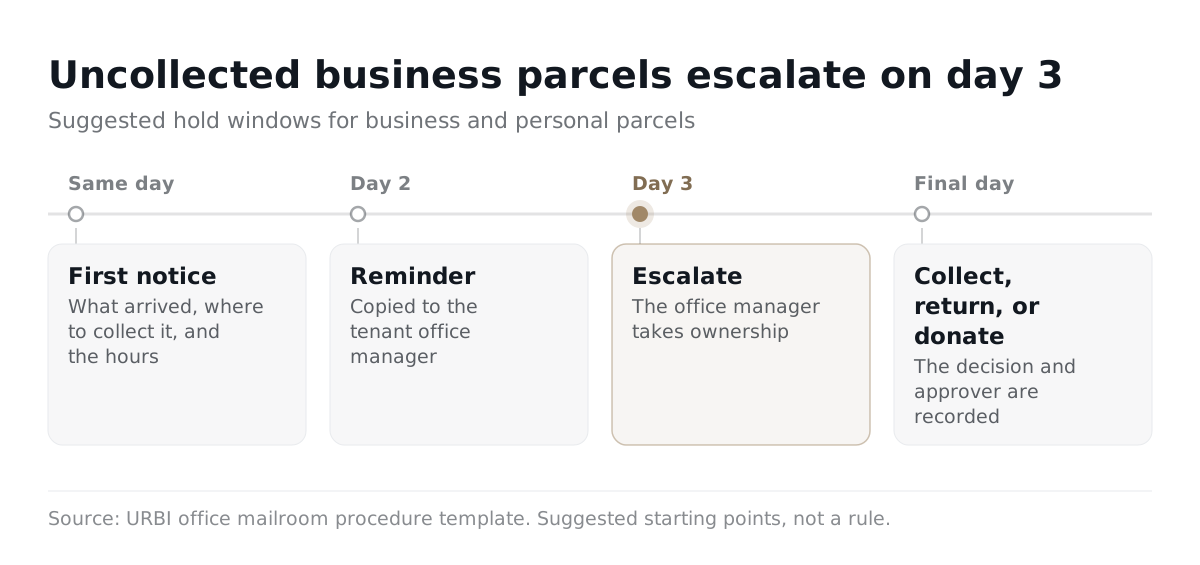
Set the hold windows in writing and tell every tenant. The numbers below are suggested starting points. Change them to fit your storage space and your tenants.
| Package class | First notice | Reminder | Escalate to office manager | Final action |
|---|---|---|---|---|
| Business parcel | Same day | Day 2 | Day 3 | Office manager collects by day ______ |
| Personal parcel | Same day | Day 2 | Day 3 | Return to carrier or donate after day ______ |
| Accountable item | Within ______ hours | Next day | Day 2 | Named signer collects, never left on a shelf |
| Perishable | Within ______ hours | Same day | Same day | Refrigerate if possible, discard by end of day ______ |
| Oversized | Same day | Day 2 | Day 2 | Tenant arranges freight elevator pickup by day ______ |
Before anything is returned, donated, or discarded, record the decision and who approved it. Follow the carrier's own process for returns.
Section 8: What happens when the recipient is not in the office?
The package waits under the normal hold rules, and the notices carry more of the load. Hybrid schedules mean a parcel can arrive on Monday for someone who comes in on Thursday. Plan for that as the normal case.
- Every notice should state the last day the package will be held.
- At the reminder stage, the notice also goes to the tenant office manager, who can collect for the team.
- Employees who work remotely full time should have business deliveries sent to them directly. Write that into the tenant's policy.
- A recipient who has left the company is flagged in the log. Their packages go to the office manager, not a hold shelf.
Section 9: Who does what in a multi tenant building?
Building operations owns the receiving point and the storage. Each tenant office manager owns everything that happens inside the suite. Write the split down so nobody assumes the other side has it.
| Task | Building operations | Tenant office manager |
|---|---|---|
| Carrier instructions and receiving hours | Owns | Informed |
| Intake, inspection, and logging | Owns | Informed |
| Recipient notification | Sends the first notice | Chases reminders inside the company |
| Personal package policy | Sets building limits (size, storage) | Sets the company policy within those limits |
| Authorized signer list | Keeps it on file | Writes it and keeps it current |
| Internal delivery to desks | Not involved | Owns |
| Suspicious item response | Owns, with security | Follows instructions, tells staff |
| Unclaimed package decisions | Enforces the hold windows | Approves returns for the company |
| Quarterly review | Runs it | Attends and signs off |
Section 10: What are the daily and weekly checks?
Daily checklist, for the receiver on each shift:
- ☐ Carrier instructions posted and readable at the receiving point
- ☐ Every parcel received today is in the log with a storage location
- ☐ Every recipient has been notified
- ☐ Shelf count matches the log count
- ☐ Accountable items are in locked storage, not on open shelves
- ☐ Perishables handled today
- ☐ Reminders sent for anything at day 2
- ☐ Storage room locked at the end of the shift
Weekly checklist, for the procedure owner:
- ☐ Packages older than day 3 escalated to the tenant office manager
- ☐ Expired holds resolved and the decision recorded
- ☐ Signer lists checked against any tenant staff changes
- ☐ Key or credential list for the storage room checked
- ☐ Any missing package claims reviewed and closed
- ☐ Incident log reviewed, including any suspicious items
- ☐ Week's volume recorded, with the number of packages held past day 3
When is a policy and a paper log enough?
A small office with one tenant, a staffed front desk, and a handful of parcels a day may not need software at all. A clear personal package policy removes much of the volume. A disciplined paper log handles the rest. That is a fair choice, and the template above works on a clipboard.
The paper log starts to crack when any of these show up:
- Several tenants sharing one receiving point.
- Packages regularly sitting past day 3.
- More than one missing package claim a month.
- Staff spending real time each day writing notices by hand.
- Accountable mail arriving often enough that signer lists matter.
Measure for two weeks before you buy anything. Count parcels, count the ones held past day 3, and count the claims. If the numbers are small, keep the clipboard. If they are not, automate the step that is breaking. Our comparison of package lockers vs package management software helps with that choice, and our guide to the best package management software for buildings covers the options.
How does URBI run this procedure for commercial buildings?
URBI puts the receiving log, the notices, and the record in one platform, in the words commercial teams use. Staff photograph a shipping label, and the AI scanner reads the tracking number, the carrier, and the recipient's suite. A person confirms the details before the package is posted. The recipient is notified on arrival. Small parcels can go to smart lockers that URBI integrates with, while the desk handles larger items.
The rest of the procedure fits around that record:
- Package history on each suite's profile, so a missing package claim starts with the log, not a search of the shelves.
- Typed notes (note, report, incident, action) for suspicious items and damaged parcels, tagged to the suite and the property.
- Role based permissions, so building staff, security, and tenant office managers each see only what they should.
- Tenant communication through the app, push, and email, which we cover in tenant communication software for commercial buildings.
URBI runs commercial buildings today on the same platform, shown in commercial terms. Our guide to URBI for commercial buildings explains how it works, and what URBI is covers the whole platform. If hybrid schedules are changing how you staff the desk, see our piece on turning office occupancy data into a service cadence.
Frequently asked questions
Should a company accept personal packages at the office?
It depends on your space, your staff, and your tenants. Some employers accept personal packages as a perk. Others refuse them, like Millersville University, whose mailroom does not receive personal packages for employees. The mistake is having no written rule. Pick accept, accept with limits, or refuse. Then put size limits, hold periods, and a liability line in the policy, and tell every employee before the first package arrives.
Can the front desk sign for Certified Mail addressed to a tenant?
Only if the tenant has authorized that person. Certified Mail and other accountable items need a signature. With Restricted Delivery, the sender chooses who can sign, and USPS may ask for photo ID from the addressee or the person authorized to sign. Each tenant should give building operations a written list of approved signers. If the desk is not on it, the carrier keeps the item.
How long should an office hold unclaimed packages?
There is no single rule, so set your own and publish it. A common pattern is a notice on arrival, a reminder on day 2, and escalation to the tenant office manager on day 3. After a written final day, the package goes back to the carrier, to the tenant, or to donation, with the decision logged. Perishables need a much shorter window than business parcels.
What should staff do if a package looks suspicious?
Stop handling it, move away, and keep others out of the area. Do not open it or touch it again. The US Postal Inspection Service says to isolate the item, wash your hands, and call Postal Inspectors, stating that it is an emergency. CISA says a suspicious item should be treated as an emergency with a call to 911. Then log the incident the same day.
A package system for companies works when named people own it and follow it every day. Download the template, fill in the blanks, and walk the route with your team this week. If you want the log, the notices, and the record in one place for your building, write to hello@myurbi.co and we will walk you through URBI live.


