



The Oregon rental fee disclosure law 2026 managers need to know is HB 3521: before taking a holding deposit, you must give the approved applicant a written statement of rent, fees, deposits, and refund terms. URBI helps keep the lease, payment portal, and staff answers matching that statement.
What does Oregon's rental fee disclosure law require in 2026?
HB 3521 requires a written statement of rent, fees, and deposits before an Oregon landlord accepts a holding deposit, and it only lets you take that deposit after you approve the application. The law amends ORS 90.297, the holding deposit statute. It is narrower than many summaries suggest.
- The act was approved and filed on June 24, 2025, and its changes apply to deposits received on or after January 1, 2026, according to the chapter law published by the Oregon Legislature.
- The Oregon Real Estate Agency's 2025 legislative round up summarizes it plainly: the law allows a landlord to collect hold deposits only after approving tenant applications.
The sponsor framed it as a safety question. Rep. Annessa Hartman, a Gladstone Democrat, told OPB in 2025 that "Tenants should not have to choose between signing a lease for an unsafe home" and losing money.
What must the written statement include?
The statement must describe three things: the money, the deal, and the refund rules. The enrolled text of HB 3521 lists them.
- The amount of rent, the fees the landlord will charge, and the deposits the landlord will require.
- The terms of the agreement to execute a rental agreement.
- The conditions for refunding or retaining the deposit.
The statement has to be in writing. A phone call or a text from a leasing agent does not count as the statement.
When can a landlord take a holding deposit?
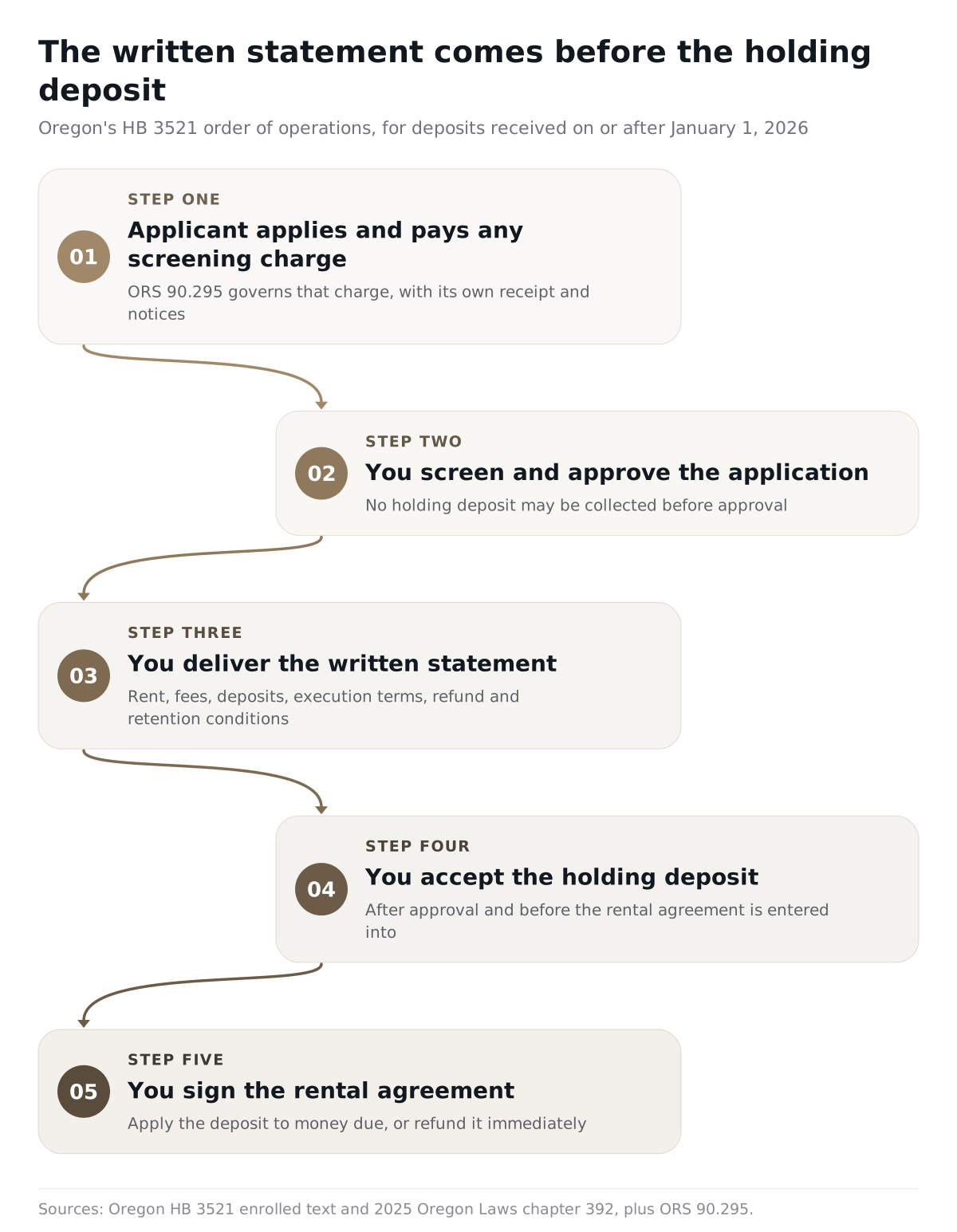
Only in the window after you approve the application and before you sign the rental agreement. That order matters. A deposit taken at showing time, or alongside the application, falls outside the rule.
The sequence looks like this:
- Applicant applies and pays any screening charge under ORS 90.295.
- You screen and approve.
- You deliver the written statement.
- You accept the holding deposit.
- You sign the lease, then apply the deposit to money due or refund it immediately.
Which fees does the statement have to cover?
The statement covers every fee the landlord will charge, not just rent. The statute does not list fee types by name. It uses the phrase "the fees the landlord will charge," so the safe reading is that any fee you plan to bill this household belongs in the statement.
Here is how we would sort the charges you likely use. The categories are our reading, not statutory text.
| Charge type | Goes in the HB 3521 statement? | Notes |
|---|---|---|
| Monthly rent | Yes | Named directly in the statute. |
| Recurring fees you bill every month (for example pet, parking, or utility charges) | Yes, if you will charge them | Label each one as mandatory or optional and say how often it recurs. |
| One time fees at move in | Yes, if you will charge them | List the trigger, such as a charge when keys are issued. |
| Security deposit and other required deposits | Yes | The statute covers the deposits the landlord will require. |
| The holding deposit itself | Yes, with its refund and retention conditions | State when you keep it and when you return it. |
| Applicant screening charge | Separate rule | Governed by ORS 90.295, paid earlier, with its own notices and receipt. |
How is the screening charge handled differently?
The screening charge runs on its own track under ORS 90.295, and it has its own clocks and paperwork. Keep it apart from the holding deposit.
- A landlord may require only one applicant screening charge within any 60 day period, no matter how many of that landlord's units the person applies for.
- The landlord must refund the charge within 30 days if it fills the unit before screening, or if the applicant withdraws in writing before any screening is ordered.
- The landlord must give a receipt, and must give written screening criteria and other notices before accepting the payment.
Treat these as two transaction types in your systems. One is a screening charge. The other is a holding deposit. They should never share a line item.
Where do Oregon rental fees need to be disclosed?
HB 3521 names only one place: a written statement given before you receive the holding deposit. It does not say public listing, application form, first page of the lease, or resident portal. Some vendor guides describe it as an all in price rule for listings. The statute does not say that.
Still, the same numbers show up in five or six places, and each one can drift. This table separates what the law requires from what good operations require.
| Where | Required by HB 3521? | What to show | Why it matters |
|---|---|---|---|
| Listing | No | Rent plus mandatory recurring fees, with optional fees labeled | First number the applicant sees; federal regulators are looking at advertised totals. |
| Application and screening notice | No (ORS 90.295 has its own notice rules) | Screening charge, criteria, rent and deposit information | ORS 90.295 requires notices before accepting the screening charge. |
| Pre deposit written statement | Yes | Rent, fees, deposits, execution terms, refund and retention conditions | This is the statutory trigger. |
| Lease | No, but it must match | The same rent and fee schedule as the accepted statement | A mismatch invites a dispute over which document governs. |
| Payment portal | No | Every charge with a clear label | Residents compare the bill to what they were told. |
| Staff and phone answers | No | The same values, read from the same record | Verbal answers should never override the written statement. |
Oregon landlord groups are giving members the same advice. The Portland area rental owners association PAROA says HB 3521 emphasizes written everything and tells members to revise their application packets.
What happens to the holding deposit, and what are the penalties?
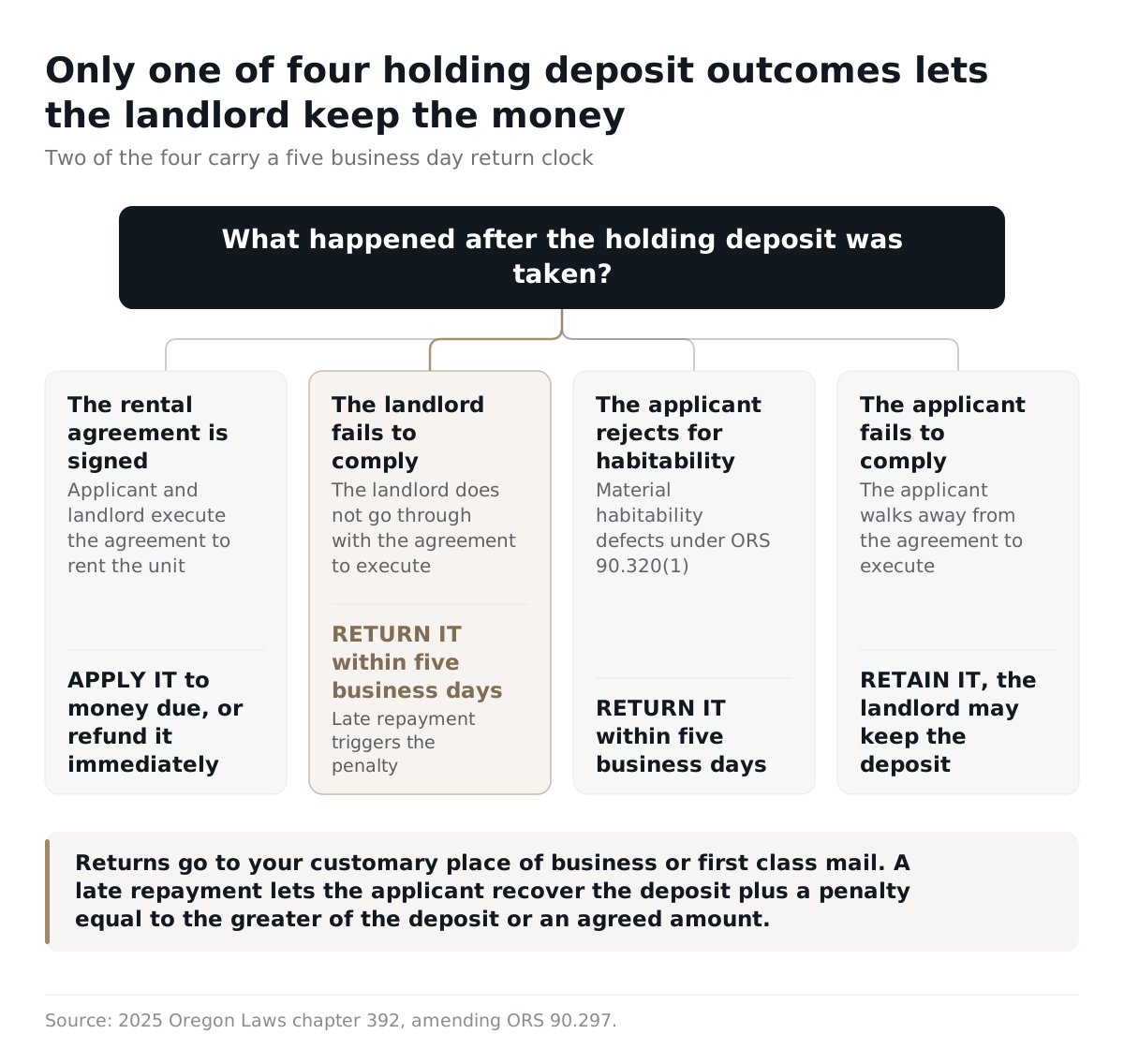
If the lease is signed, you apply the deposit to money due or refund it immediately. If the lease is not signed, what happens depends on who walked away and why. The chapter law spells out each case.
| Situation | What the landlord must do |
|---|---|
| Lease is signed | Apply the deposit to money due, or refund it immediately. |
| Landlord fails to comply with the agreement to execute | Return the deposit within five business days. |
| Applicant rejects because of material habitability defects under ORS 90.320(1) | Return the deposit within five business days. |
| Applicant fails to comply with the agreement to execute | Landlord may retain the deposit. |
The return must happen at your customary place of business or by first class mail. Build your process around those two methods and keep proof of either.
What are the penalties for missing the rules?
The applicant or tenant can recover the fee or deposit, plus a penalty if you repaid late. Under the chapter law, the penalty for an untimely repayment equals the greater of the deposit or an amount the parties agreed to. That can double what you owe on a single file.
For a portfolio, the risk is repetition. One wrong template can put every hold taken that month on the same footing.
Who enforces HB 3521?
Applicants and tenants do, through their own claims. The statute gives them the right to recover from the landlord. It does not name a state agency as the enforcer for this section. That makes your paper trail your defense. You need to show the statement was delivered, when, which version, and when the deposit came in.
How does Oregon compare with other 2026 fee transparency laws?
Oregon regulates one moment in the leasing process, while other states regulate the listing itself. The National Conference of State Legislatures tracks these bills in its 2026 pricing and junk fees tracker. It lists Oregon with no new 2026 bill, because HB 3521 passed in 2025.
| Measure | Status in the NCSL tracker | Where fees must appear |
|---|---|---|
| Oregon HB 3521 | Enacted 2025, applies from January 1, 2026 | Written statement before a post approval holding deposit |
| Illinois H 3564 | Enacted | Nonoptional fees in the listing or an accompanying weblink |
| Illinois H 3363 | Pending | Listing or link, plus the first page of the lease; an undisclosed recurring fee cannot be charged |
| Maryland H 80 | Failed, adjourned | Fee information to prospects; no undisclosed mandatory fee |
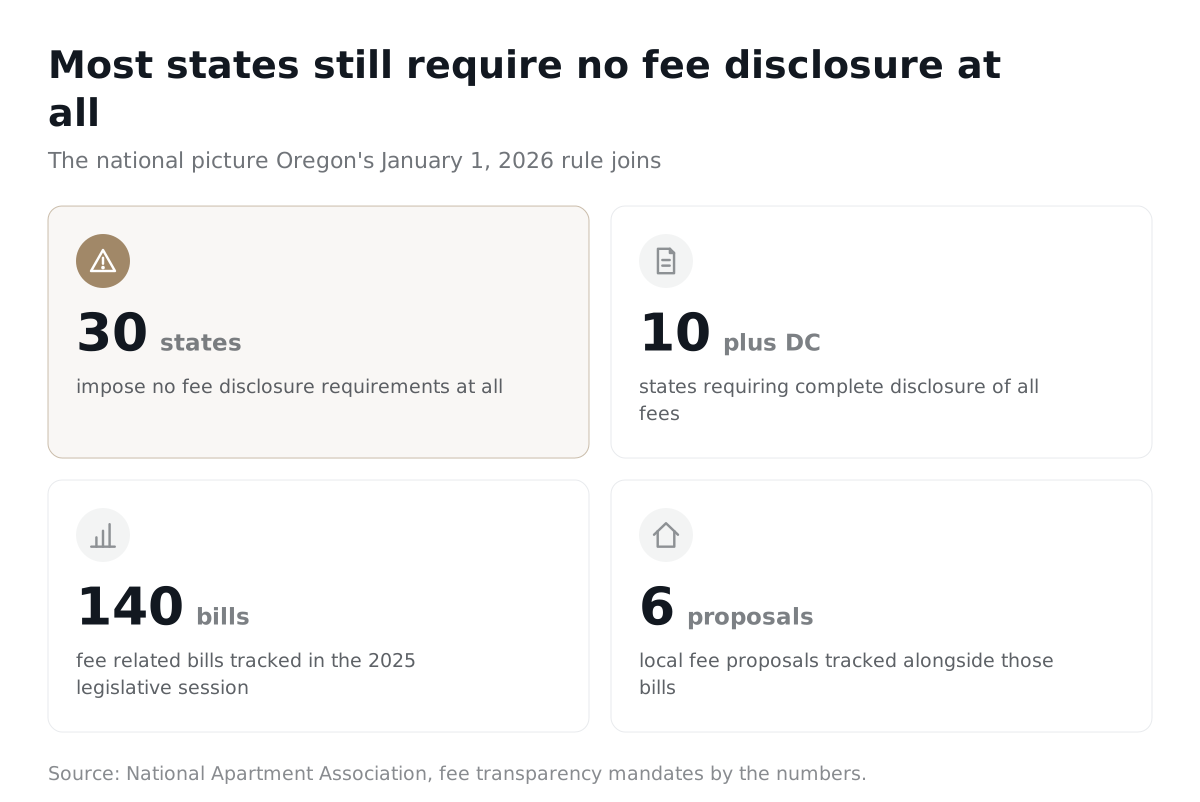
The broader map is uneven. The National Apartment Association's fee transparency count reports these figures:
- NAA tracked 140 fee related bills in the 2025 legislative session, plus 6 local proposals.
- 30 states impose no fee disclosure requirements at all.
- 10 states and Washington, D.C. require complete disclosure of all fees.
- NAA lists Oregon among the jurisdictions with a law taking effect January 1, 2026.
If you operate only in Oregon, you still want your fee data built for the stricter models. Illinois already requires fees at the listing stage, and a clean record makes that kind of change cheap.
Why keep fees consistent beyond what the statute requires?
Keep fees consistent because federal regulators are now looking at the whole lease, not only the moment Oregon's statute covers. A mismatch between the listing and the bill is exactly what they are asking about.
In March 2026 the Federal Trade Commission asked for public comment on a possible rental fee rule covering fees from application to moveout. It asked how providers disclose the nature, purpose, amount, refundability, optionality, and recurrence of each charge. Christopher Mufarrige, Director of the FTC Bureau of Consumer Protection, said pricing that is "neither clear nor transparent" undermines competition and harms consumers.
The industry has a fair counterpoint. In a May 2024 joint letter to Congress, NAA and NMHC argued that no one can know every fee a given renter will face when a listing goes up, since each household is different. The same letter said their first page "Know Your Costs" lease summary would apply to leases for 8 million renter households.
Both points lead to the same practice. Show mandatory charges up front. Label optional and conditional charges with their trigger. Then give each approved applicant a statement written for their household.
What does the operational checklist look like?
The checklist is one fee record feeding every surface, a hard gate before any holding deposit, and a timed refund queue. Copying numbers into five places by hand is how drift starts.
- Build one fee record per property. For each charge, store the name, amount or formula, mandatory or optional, one time or recurring, refundable or not, the trigger, and the effective date.
- Split the screening charge from the holding deposit. Different statutes, different clocks: 60 days and 30 days for screening, five business days for holds.
- Gate the deposit. No holding deposit until the application shows approved and the written statement shows delivered.
- Version the statement. Save which version each applicant received, when, and when the deposit arrived.
- Reconcile the lease. Before signing, compare the lease fee schedule line by line with the accepted statement. Send any mismatch for review.
- Script the staff. Leasing agents and front desk staff read fees from the same record. Anything unusual goes to a manager in writing.
- Run a refund queue. When a hold falls through on your side, or an applicant rejects for habitability, open a task with a five business day due date and the return method.
- Control changes. When a fee changes, update the listing, statement template, lease schedule, portal, and staff script together, and keep the old version for applicants already in process.
- Tell current residents. Fee changes that affect people already living in the building need a clear notice, not a surprise on the next bill.
The same discipline carries into move in. Pair it with your move in and move out checklist for managers so the deposit and condition records line up, and put the final fee schedule in your new resident welcome packet.
How does URBI help keep fee answers consistent?
URBI keeps the fee schedule, the bills, and the answers to fee questions in one system that residents and staff both use. It does not replace your screening or leasing system. It covers what happens once someone is your resident.
- Document hub. Post the current fee schedule and building rules where residents can read them, and replace the file when a fee changes.
- Payment portal. Residents open a secure web portal with a one time passcode, see their bills, pay one off or set up card autopay, and download PDF invoices and receipts. Payments run through each property's own connected Stripe account, so URBI never holds property funds. See URBI payments and transactions.
- Arthur, the resident facing AI (Premium). Arthur answers resident questions by voice, SMS, email, and in app chat. When it does not know an answer, it escalates to the property manager with a summary. The manager's answer is saved to a property knowledge base that managers can view, edit, and delete, so the next resident gets the same answer. Refund requests go to a manager for approval. Read more about building an AI knowledge base for property management.
- Announcements. When a fee changes, publish a notice with scheduled send, target it to the right units, and send it across multiple properties at each building's local time.
Deposits deserve their own care after move in too. Our guide to resident payments, deposits, and liability covers how to record and return them. When unpaid charges pile up, the steps in our guide to fee arrears collection apply just as well to rental fees.
For the full picture of how URBI runs in apartment and condo buildings, see URBI for residential buildings, or start with what URBI is.
FAQ: what else do Oregon managers ask about HB 3521?
Does HB 3521 require fees to appear in Oregon rental listings?
No. The statute requires a written statement before you receive a post approval holding deposit. It does not name the listing, the application, the lease, or the portal. Some summaries call it an all in price rule for listings, but that is not what the enacted text says. Showing the same numbers in your listing is still smart practice, because federal regulators are asking whether advertised rent reflects mandatory fees.
How fast must an Oregon landlord return a holding deposit?
Within five business days when the landlord fails to go through with the agreement, or when the applicant rejects the unit for material habitability defects. The deposit must be made available at your customary place of business or mailed first class. If the lease is signed, you apply the deposit to money due or refund it immediately. If the applicant backs out without a habitability reason, you may keep it.
Is the screening charge part of the HB 3521 statement?
No. The screening charge falls under ORS 90.295, a separate statute. You collect it before approval, give a receipt, and allow only one charge per applicant in any 60 day period. You must refund it within 30 days if you fill the unit before screening, or if the applicant withdraws in writing before screening is ordered. Keep it on its own line, separate from the holding deposit.
Who can sue over a holding deposit violation?
The applicant or tenant. The chapter law lets them recover the fee or deposit charged. If you repaid late without a valid excuse, they can also recover a penalty equal to the greater of the deposit or an amount you agreed to. The statute does not name a state agency as the enforcer for this section, so your own records are your main evidence.
Oregon's rule is narrow, but the habit it demands is broad: one set of fee numbers, written down, delivered before money moves, and repeated the same way everywhere a resident looks. This article is general information, not legal advice, so check your templates with Oregon counsel. If you want residents to see every charge clearly and get the same fee answer every time they ask, write to us at hello@myurbi.co.
Keep reading


