



The NYC gas detector requirement 2027 means owners of covered residential buildings must install approved natural gas alarms in units with gas appliances by January 1, 2027. The hard part is entering occupied apartments and proving each install. URBI gives you the tickets, notices, and records to run it.
What does the NYC gas detector requirement 2027 actually require?
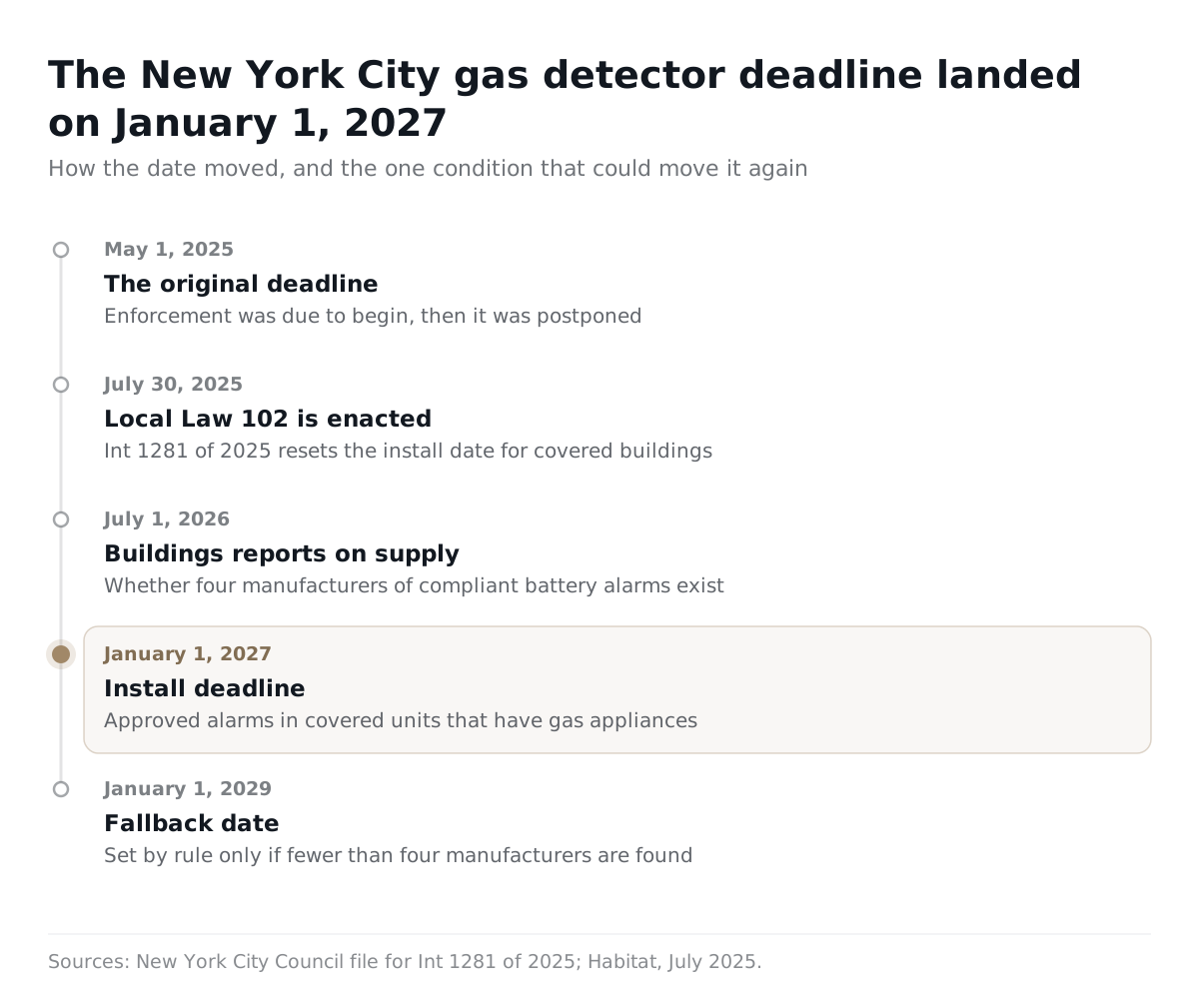
Owners must provide and install at least one approved, working natural gas detector in covered dwellings on or before January 1, 2027. The duty comes from Local Law 157 of 2016, and Local Law 102 of 2025 reset the date.
- The City Council record for Int 1281 of 2025 shows it was enacted on July 30, 2025 as Local Law 102, with Council Member Eric Dinowitz as prime sponsor.
- The amended Administrative Code detector section tells owners to "provide and install one or more approved and operational natural gas detecting devices" on or before that date.
- Habitat reported in July 2025 that the change pushed enforcement back from May 1, 2025.
Michael Wolfe, president of Wolfe Realty Services, told Habitat that "the original timeline wasn't feasible." The new timeline is here now. Four months is not much time for a portfolio.
Could the January 1, 2027 date still move?
Yes, it could, but plan as if it will not. Local Law 102 required the Department of Buildings to report by July 1, 2026 on whether it had found at least four distinct manufacturers of compliant battery powered alarms. If it found fewer than four, the law tells the commissioner to extend the date to January 1, 2029 by rule.
HPD's detectors page still says the date "may be extended" depending on product availability. HPD's own natural gas detector rule is listed as adopted with a January 1, 2027 effective date. Check both pages before you sign large purchase orders. Do not pause the survey and access work while you wait.
Which buildings and units are covered?
Covered stock is Class A and Class B multiple dwellings, plus one and two family homes that the owner does not live in, where the building has gas piping. HPD's detectors page sets that scope and says a building with no gas piping can be exempt.
The Department of Buildings narrows it further. Its natural gas detector FAQ says the rule applies only to the residential occupancy groups R1, R2 and R3. It also says alarms "are not required within the dwelling unit that do not contain any gas appliances."
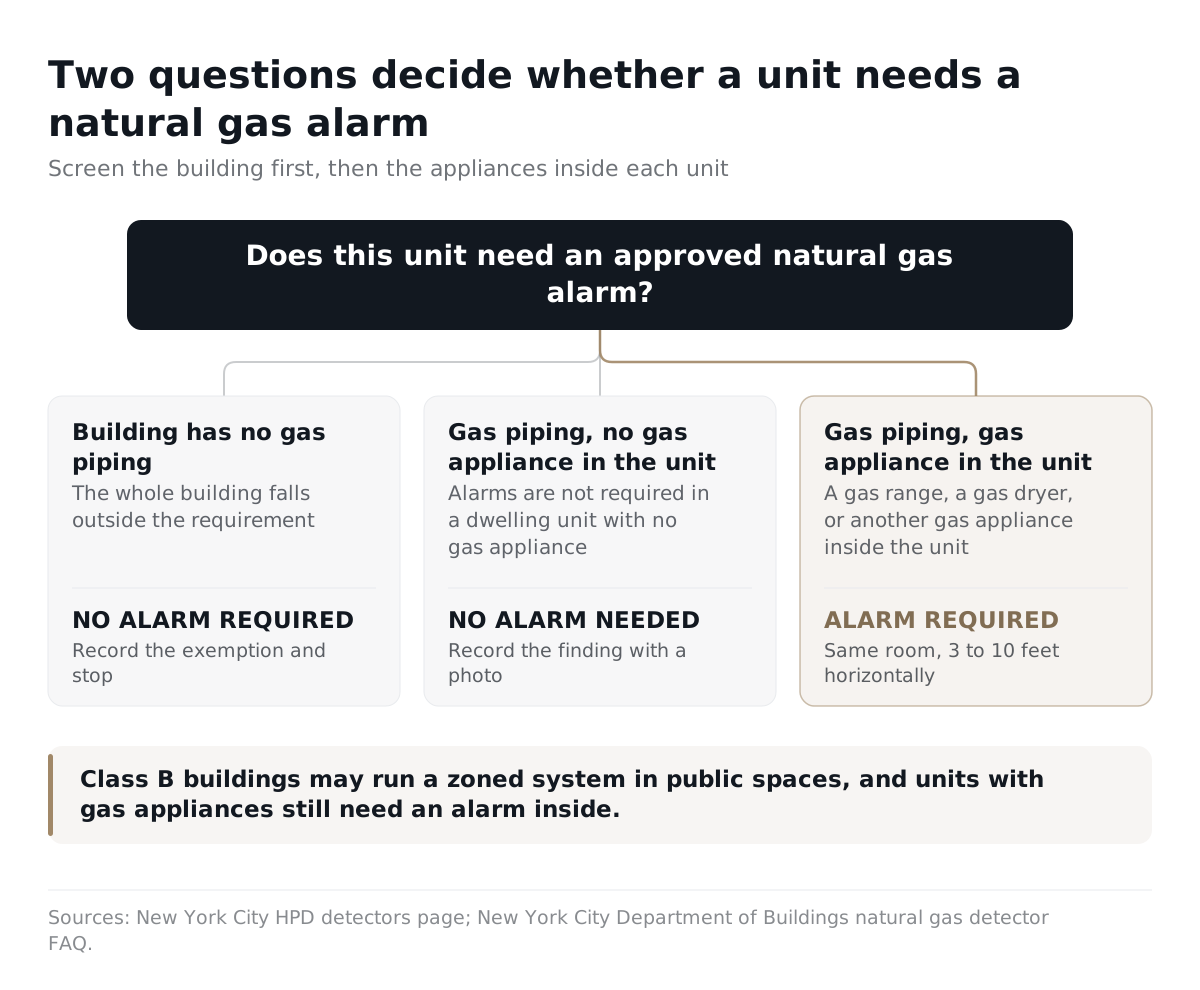
That gives you a two level test:
- Building level: Is the building residential, and does it have gas piping? If there is no gas piping, record the exemption and stop.
- Unit level: Does this apartment have a gas stove, gas dryer, or other gas appliance inside it? If not, record that finding with a photo and move on.
This matters for mixed portfolios. A gut renovated line of all electric units in an older gas building may need nothing. The unit next door with a gas range needs an alarm.
How many alarms does each unit need, and does Class B work differently?
In Class A buildings, the DOB FAQ says one or more alarms must go in each dwelling that has a gas appliance. Class B buildings may use a line operated zoned gas detecting system in public corridors and public spaces instead. That zoned system does not cover a unit with its own gas appliance. Per the DOB FAQ, that unit still needs an alarm inside it.
What counts as a compliant detector, and where does it go?
A compliant alarm is installed under NFPA 715 and is listed and labeled to UL 1484. The DOB FAQ states both points plainly. A cheap methane plug in from a hardware aisle with no UL 1484 label does not meet the rule.
Placement is specific. The alarm goes in the same room as the gas appliance. It must sit at least 3 feet and no more than 10 feet from the appliance, measured horizontally.
Power depends on the building's certificate of occupancy date:
| Building situation | Power pathway | Who may install |
|---|---|---|
| CO or TCO issued before January 1, 2027 | Monitored battery allowed as the primary power source | Owner, maintenance staff, or the occupant, for battery or plug in units |
| CO or TCO issued after January 1, 2027 | Primary AC power plus secondary backup power | A New York City licensed electrical contractor for hard wired work, with permits |
| Class B common areas | Optional line operated zoned system in corridors and public spaces | Licensed electrical contractor; units with gas appliances still need in unit alarms |
Source for every row: the DOB natural gas detector FAQ. For most existing buildings, the battery pathway means your own staff can do the work. That makes access and paperwork the real bottleneck.
Who pays for the detectors, and who installs them?
The owner buys and installs the alarm, and in Class A buildings the tenant owes a fixed reimbursement set by law. NYC311 says tenants have one year from the date of installation to pay it. Tenants in Class B multiple dwellings are not required to reimburse owners for any detector device.
Split the duties clearly in your records:
- Owner: provide, install, keep installation records, give tenants the required information, and replace the device at the end of its useful life.
- Occupant: maintain the device. A written report from the occupant that an alarm is missing or broken starts the owner's 30 day replacement clock.
- Licensed electrician: only for hard wired or central system work, with permits.
Track the reimbursement as its own line item per unit, with its one year due date. It is small money, but it is a legal receivable. Treat it like one.
How do you get into occupied units without a fight?
Give written notice at least one week before the installation, and schedule visits on weekdays between 9 a.m. and 5 p.m. HPD's owner access rule requires written notice "not less than one week in advance" for improvements or repairs required by law. It requires at least 24 hours of notice for an inspection.
The same rule sets the ground rules for the visit itself:
- Access is limited to 9 a.m. to 5 p.m. unless the tenant agrees otherwise.
- Tenants do not have to allow access on Saturdays, Sundays, or legal holidays unless they agree.
- A staff member or contractor acting for the owner must carry written authorization and show it when asking for access.
Plan the rollout as a campaign. Send notices by floor or line. Offer two or three windows. Log every failed entry with the date and reason. Then send a second notice for a new date. This is the same discipline you would use for a three notice water shutoff sequence: advance notice, reminder, and a clear record of what was sent to whom.
What are the penalties, and who enforces the rule?
Four agencies can enforce it: HPD, the Department of Buildings, the Fire Department, and the Department of Health and Mental Hygiene. That list is in the Administrative Code detector section. The DOB FAQ adds that enforcement is at HPD's discretion.
Be careful with any headline that promises a single fine per missing detector. The law we reviewed does not set a special flat fine for gas alarms. Plan around the practical exposure instead: open violations on your buildings, time spent clearing them, and the harder question of what your records show if a gas incident ever happens in a unit you never reached.
Do the duties end once the alarm is on the wall?
No. The Administrative Code requires owners to keep records on installation and maintenance and to replace each device when its useful life expires. NYC311 adds three details that shape your system:
- Useful life is counted from the original date of installation, following the manufacturer's instructions.
- A replacement device must be a model with an end of life alarm.
- After written notice that a device is missing or inoperable, the owner has 30 calendar days to replace it.
That means every install on day one creates a replacement date years out. If your install records live in a spreadsheet on one super's laptop, you will not find them when that date arrives.
What does a portfolio rollout checklist look like?
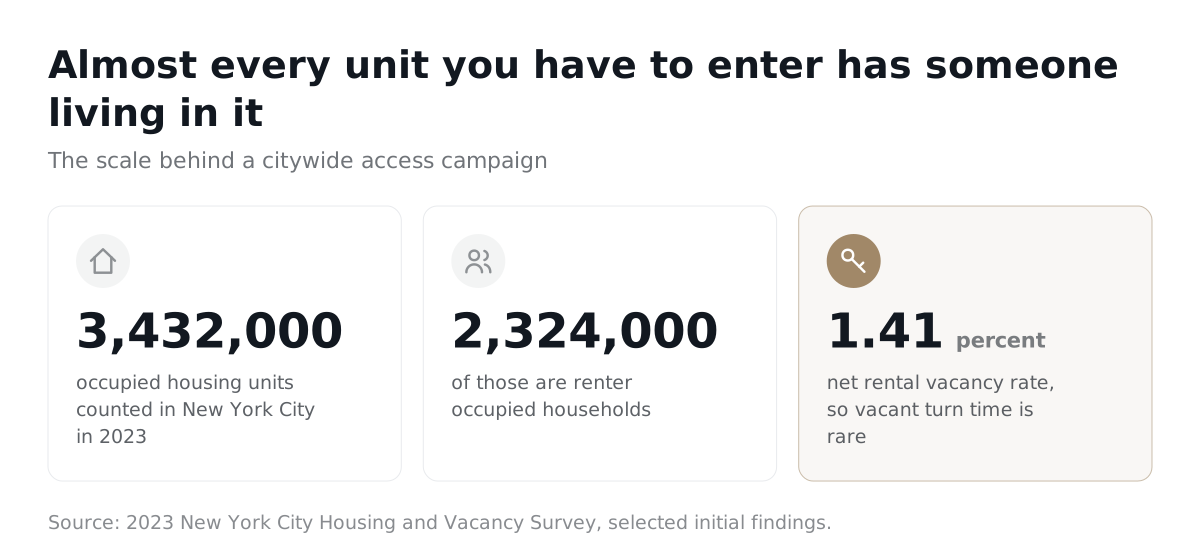
It is an eight step project that starts with inventory and ends with a replacement clock. Scale explains why. The 2023 New York City Housing and Vacancy Survey counted 3,432,000 occupied housing units, including 2,324,000 renter occupied households. The net rental vacancy rate was just 1.41 percent, so almost every unit you need to enter has someone living in it.
| Step | What to do | Proof to keep |
|---|---|---|
| 1. Screen buildings | Record building class, occupancy group, gas piping status, and CO or TCO date | Exemption note for any building with no gas piping |
| 2. Inventory units | List each gas appliance and the room it sits in, unit by unit | Photo of the appliance, or a "no gas appliance" note with a photo |
| 3. Pick the pathway | Split battery or plug in units from hard wired and Class B zoned work | UL 1484 listing evidence for the model you buy |
| 4. Stage procurement | Order in waves that match your access schedule | Order records and model numbers |
| 5. Schedule access | Send written notice at least one week ahead with weekday windows | Copy of each notice and who received it |
| 6. Install and capture proof | Mount in the same room, 3 to 10 feet horizontally from the appliance | Photo, measured distance, model, install date, installer |
| 7. Close the loop with residents | Give the required safety and maintenance information; log any reimbursement due | Delivery record and the one year reimbursement date |
| 8. Start the replacement clock | Set a future replacement task from the install date; open a 30 day queue for reported failures | Scheduled task per unit and a failure log |
Run steps 1 and 2 now even if you hold off on large purchases. The survey is useful no matter which date holds. Fold the replacement dates into your preventive maintenance checklist so they sit next to smoke and carbon monoxide detector checks.
What should the timeline look like from here?
Work backward from January 1, 2027 and leave December for failed access and exceptions.
| Window | Milestone |
|---|---|
| September 2026 | Building screen and unit inventory; confirm the live DOB and HPD deadline status |
| Early October 2026 | Pick device models with UL 1484 evidence; place the first order wave; brief staff on placement |
| October to November 2026 | Written access notices one week ahead; install in waves by building, floor, or line |
| Early December 2026 | Second notices for failed entries; finish any hard wired work that needs permits |
| Late December 2026 | Exception review: every unit is installed, exempt with proof, or documented as refused access |
| January 1, 2027 onward | Deadline; handle written failure reports within 30 days; track reimbursements and replacement dates |
How can URBI run the rollout across buildings?
URBI turns each unit's install into a tracked ticket with photos, a targeted notice, and a note on the unit's record. Here is how the pieces map to the checklist:
- Unit inventory: bulk CSV import sets up units across properties. Staff add typed notes tagged to each unit, with photo attachments, to record appliances or a "no gas appliance" finding.
- Access notices: news and announcements support per unit and access level targeting and scheduled publish, so a notice reaches only the floors in this week's wave. Residents get a push alert in the resident app. Email replies land in the staff inbox as a threaded conversation, so a tenant's reschedule request is not lost.
- Install proof: service tickets carry photos and show in list, kanban, and calendar views. One ticket per unit gives you the photo, the date, and who did the work.
- Vendors: for hard wired jobs, an electrician works from an emailed link with no login, and vendor auto assignment by category sends the ticket to the right contractor. Our guide to vendor management for property managers covers the setup.
- Replacement clock: service tickets support recurrence, so each unit's replacement visit can sit on the calendar from the day of install.
- Exceptions and follow ups: notes typed as "action" flag failed entries and refusals, and pinned notes keep the open ones in front of the team. Full text search pulls every unit still open.
Residents see progress on their own ticket. If you are weighing tools for a self managed building, our look at condo maintenance request software explains what to ask for. For the ops side, see URBI operations and workflow features.
HERO, the manager facing AI inside the Kore dashboard, can help draft the notices and propose tickets. Every ticket and notice it suggests waits for a person to confirm it.
How does this fit your gas emergency plan?
Your emergency plan should tell residents what to do when the alarm sounds, and HPD's adopted detector rule has owners give occupants information on the risks of gas leaks, testing and maintenance, and what to do if a device sounds an alert. Put gas leak steps into your building emergency preparedness plan, and use URBI's emergency alerts to reach every resident fast during a real event.
FAQ
Do co ops and condos have to comply with the NYC gas detector requirement?
Yes, if the building is a covered multiple dwelling with gas piping and units contain gas appliances. HPD's scope covers Class A and Class B multiple dwellings, and ownership form does not create an exemption. Boards should assign the job to the managing agent, confirm who holds the install records, and decide how shareholder or owner reimbursement will be handled. Check the proprietary lease or bylaws for who maintains in unit equipment.
Can our building staff install the detectors?
Usually, yes. The DOB FAQ says battery powered or plug in alarms may be installed by the owner, maintenance staff, or the occupant. Hard wired alarms need a New York City licensed electrical contractor who pulls the required permits. For most existing buildings with a certificate of occupancy dated before January 1, 2027, the battery pathway is allowed. Train staff on the same room rule and the 3 to 10 foot horizontal distance before they start.
What if a tenant will not let us in?
Document it and try again. Send written notice at least one week ahead, offer weekday windows between 9 a.m. and 5 p.m., and have staff carry written authorization. Record each failed attempt with the date, time, and what happened. Send a second notice with a new date. A clean record of repeated, proper notices is your evidence that the gap is an access problem, not neglect. Talk to counsel about persistent refusals.
How long does a detector last before it must be replaced?
It depends on the model. NYC311 says useful life follows the manufacturer's instructions and is counted from the original date of installation. Replacement models must have an end of life alarm. If a tenant reports in writing that an alarm is missing or broken, you have 30 calendar days to replace it. Record the model and install date for every unit so you can schedule replacements before the end of life alarms start chirping.
The deadline is a date, but the work is a unit by unit project that keeps going for years. Inventory now, send notices in waves, and make every install leave a photo and a replacement date behind. If you want to run your gas detector rollout in URBI, email us at hello@myurbi.co. Learn more about what URBI is and how URBI works for residential buildings.
Keep reading


