



Amenity utilization tells you which shared spaces residents actually use, which is often different from what they say they want. Compare booked hours with open hours and check attendance. Then keep, combine, convert, or close each room. URBI gives you the booking and event data to make that call.
Why is amenity utilization different from what renters say they want?
Renters rate amenities on a survey one way and use them another way. The gap is real, and the fitness center shows it best.
- In the 2022 NMHC and Grace Hill renter survey of more than 221,000 renters, 70 percent said they were interested in a fitness center or would not rent without one. Yet 49 percent of respondents whose community had one said they rarely or never used it, and only 6 percent used it daily, according to Multifamily and Affordable Housing Business.
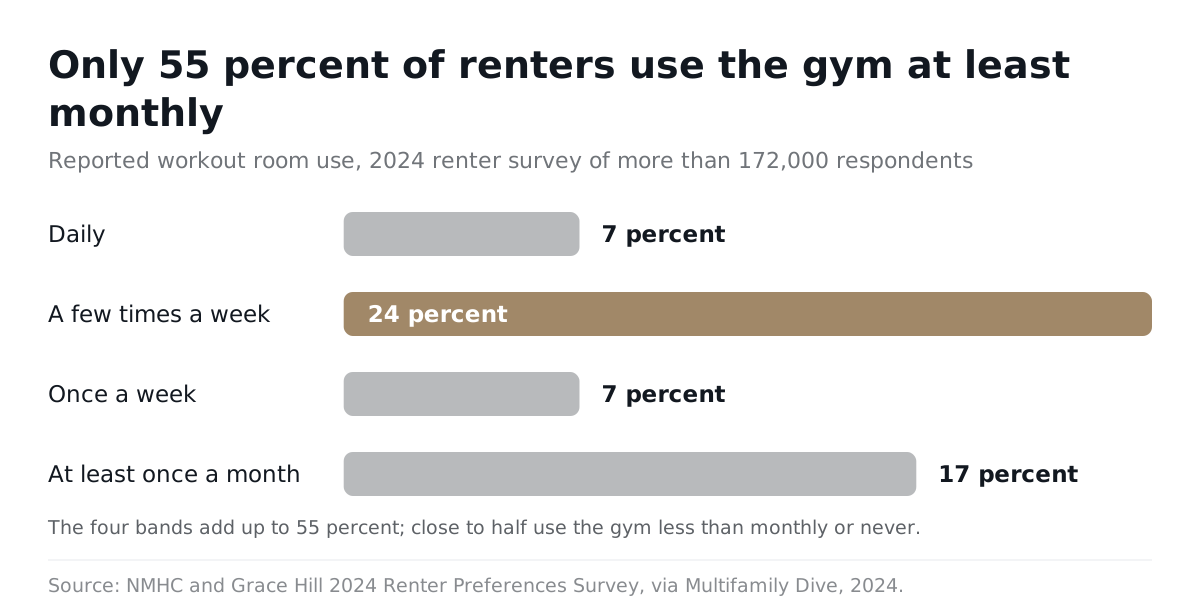
- The 2024 edition drew more than 172,000 respondents. Of them, 93 percent had a workout room on site. Reported use was 7 percent daily, 24 percent a few times a week, 7 percent once a week, and 17 percent at least once a month, per Multifamily Dive.
Add those 2024 bands together and you get 55 percent using the gym at least monthly. That also means close to half use it less than once a month, or never. Both numbers are true at once. A space can win leases and still sit empty most of the day.
Be careful how you quote the older figure. It does not say 70 percent want a gym and 49 percent use it. It says 49 percent of people with access rarely or never go. That difference matters when a board member repeats it in a budget meeting.
Does low use mean residents do not value a space?
No. Some residents value the option to use a space even if they rarely do.
Pools are the clearest case. In the same 2024 survey, 76 percent of respondents were interested in a pool and 23 percent called one essential, per the same Multifamily Dive report. The survey gives no figure for how often people swim. So appeal and foot traffic are separate measurements. You need both before you touch a room. For a wider view of what renters rank highest, see what residents want from their building.
Can low use be a design problem instead of a demand problem?
Yes, and the fitness data shows it. Many people who skip the gym are telling you the gym itself falls short.
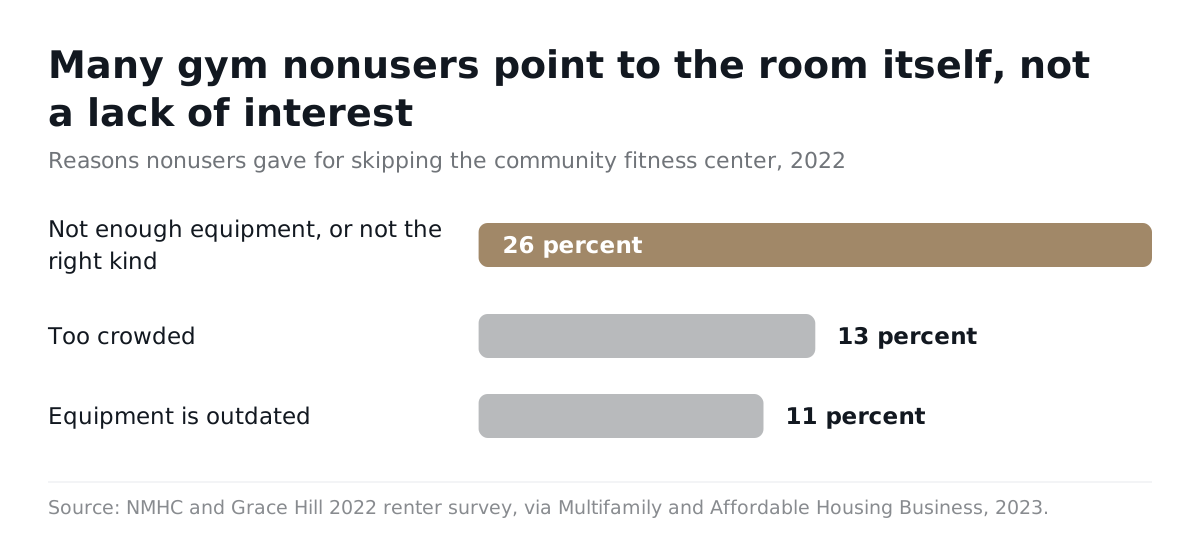
Among nonusers in the 2022 survey, the same report lists these reasons:
- 26 percent said there was not enough equipment, or not the right kind.
- 13 percent said the room was too crowded.
- 11 percent said the equipment was outdated.
Closing that gym would treat a fixable problem as missing demand. Crowding is the opposite of low demand. It means the room is too small at the hours people want it.
Which amenity spaces are losing the footprint test in 2026?
Big, single purpose rooms are losing. Designers now favor smaller spaces that can change use without a renovation.
A January 2026 roundup in Multifamily Executive named large lounges, minimalistic gyms, and inflexible coworking areas as spaces that no longer justify their footprint. Megan Valentine, director of sustainability at KTGY, told the publication that flexible spaces "consistently outperform" hyper specific ones over the life of a building. The same piece reports these shifts:
- The large conference room with one table is giving way to smaller rooms and quiet pods.
- Coworking areas are adding enclosed work pods for one to three people.
- Resort style pools are being replaced with lap pools, saunas, and cold plunges.
- Built in fixtures are giving way to plug and play units that can be swapped as tastes change.
KTGY principal Kyle Millar made the rightsizing case in the same article. His point was that fewer amenities done well beat many rooms that are too small or too big.
Does "flexible" mean an empty multipurpose room?
No. Flexible means a room whose contents can change, not a room with nothing in it.
Look at the examples above again. Every one is specific: a pod, a booth, a lap lane, a sauna. What makes them flexible is the shell around them. A pod can be moved. A booth can become storage. A generic lounge with a sofa and a TV gives residents no reason to walk in. So the 2026 lesson is specific functions inside a space you can rearrange.
The broader market agrees on the direction. Mike Whaling, president of 30 Lines, told Multi Housing News in December 2025: "In 2026, we're moving into an era of more precision." Precision needs data.
How do operators measure amenity utilization?
Operators measure it in layers, because no single data source sees everything. Bookings show intent. Check ins show attendance. Presence counts show who was really there. Surveys show whether the visit was any good.
| Layer | Question it answers | Core metric | Blind spot |
|---|---|---|---|
| Bookings | What did residents try to reserve? | Booked hours divided by open hours; unique households; repeat bookers; denied or waitlisted requests | No shows, and walk in spaces that never get booked |
| Check ins | Did the booked use happen? | Checked in bookings divided by total bookings | Group size and people who follow someone in |
| Presence counts | How many people were actually there? | Peak headcount; person hours divided by capacity hours | Says nothing about satisfaction |
| Surveys and requests | Was the space useful and working? | Post use rating; complaints; downtime; repeat requests | Only some people answer |
| Cost | What does each real use cost to run? | Operating cost divided by active households | Leasing appeal is hard to put a number on |
Pick the denominator that fits the room. Use hours for a party room, seat hours for a work lounge, nights for a guest suite, and people per time slot for a gym or pool. A number with the wrong denominator will mislead a board faster than no number at all.
When is booking data enough on its own?
Booking data is enough for spaces residents must reserve, as long as you also track no shows. Party rooms, guest suites, courts, and work booths fall in this group.
For walk in spaces like a gym or pool, bookings see almost nothing. A busy gym can have zero reservations. There you need door counts, periodic headcounts, or a simple staff tally at fixed times. If the space is reservable, start with bookings. If it is walk in, start with presence.
A reservable work lounge is a good example. If booths are booked solid at 10 a.m. and empty at 3 p.m., you have a timing problem, not a size problem. Our guide to apartment coworking space booking software covers the booth rules that fix it.
Is there a good amenity utilization rate to aim for?
There is no credible national target, so do not adopt one. You will see confident percentages on vendor pages. Ask for the sample, the definition, and the denominator before you repeat any of them.
Here is what published data actually covers, by space:
| Space | Best published figure | What it does not tell you |
|---|---|---|
| Gym | 55 percent of renters use it at least monthly (2024 NMHC and Grace Hill) | The right rate for your building or resident mix |
| Pool | 76 percent interested, 23 percent call it essential (2024) | How often anyone swims |
| Work lounge | Interest in shared workspace rose from 35 to 48 percent (2024 survey) | How many seats are filled on a Tuesday |
| Guest suite | HUD caps for covered properties only (see below) | An occupancy target |
| Party room | No national figure found | Anything; you build your own baseline |
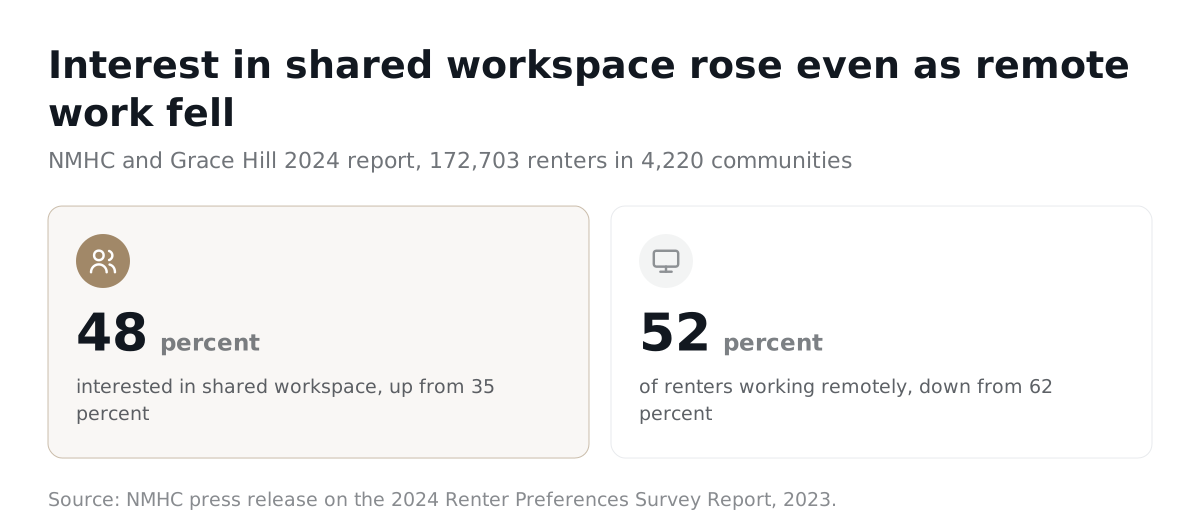
The work lounge number comes from the NMHC press release for the 2024 report, which covered 172,703 renters in 4,220 communities. The same release says the share of renters working remotely fell from 62 to 52 percent. Interest rose while remote work fell. Treat it as a preference signal only.
Guest suites have federal rules in some buildings, but no usage benchmark. For FHA insured and HUD held multifamily projects, HUD guidance caps guest suites at 2 percent of units and limits each resident to two reservations and seven reservation days a year. Those limits apply only to covered properties. They tell you nothing about whether a suite in a private condo is busy enough.
Office data is no shortcut either. CBRE's 2026 workplace report puts office utilization at 53 percent, up from 38 percent in 2024 and 35 percent in 2023. That describes corporate desks, not apartment amenities. The same report says 55 percent of respondents named data quality and lack of expertise as their biggest technology hurdles. Bad data is a problem everywhere.
So compare each space against itself. Track the same metric month over month and season over season. For a pool, use a full summer, not a cold week in May.
Should you keep, combine, convert, or close an amenity?
Make the least permanent change the data supports. Fix operations first, combine second, convert third, and close only when both use and value stay low.
This is URBI's editorial decision rule, not an industry standard. It weighs two things: verified use and resident value. Value comes from surveys, leasing feedback, and requests.
| Decision | What the data shows | What to do |
|---|---|---|
| Keep and fix | High use or high value; crowding at peak; waitlists or denied bookings | Change hours, booking windows, capacity, cleaning, or equipment before adding space |
| Combine | Moderate use; two spaces with different peak times and compatible uses | Share one room with movable dividers, pods, or bookable zones; measure each zone on its own |
| Convert | Low verified use and low value for a full cycle; no blocked demand; a fix was tried and failed | Test the proposed new use against the same metrics before approving construction |
| Close | Low use and low value persist; upkeep, downtime, or safety burden is high; a nearby substitute exists | Document the evidence, tell residents early, and review leases and governing documents with counsel |
How long should you measure before deciding?
Measure for one full cycle of the space. For a seasonal amenity, that is a full season. For everything else, use three periods.
- Baseline. Announce that you are tracking, then record current use without changes.
- Test. Change one thing, such as hours, equipment, booking rules, or programming.
- Compare. Look at the same metrics after the change and see if use moved.
Fair booking rules are often the cheapest test. If a few households hold every Saturday slot, the room looks full while most residents feel shut out. Our post on amenity booking fairness rules lays out limits you can try during the test period.
What should a board or asset manager see before approving a conversion?
They should see a one page summary with the same metrics for the old use and the proposed new one. Keep it short and consistent.
- Booked or occupied hours as a share of open hours, by month.
- Unique households who used the space, and how many came back.
- No show rate and denied or waitlisted requests.
- Resident comments and service requests tied to the space.
- What was tested, and whether use changed after the test.
Tie these to the broader numbers you already report. Our guide to resident experience metrics shows how amenity use fits alongside response times and satisfaction.
How does URBI turn booking data into a space decision?
URBI puts amenity bookings, event attendance, and adoption signals in one place, so the data for each room is ready when the decision comes. Here is what staff and boards can use in the URBI amenities feature and the Kore dashboard today:
- Booking analytics on calendar and list views. See which rooms fill, at what hours, and which sit empty.
- Capacity aware scheduling with conflict detection. Capacity is set per space, so booked seats can be compared with real limits.
- Cancellation flows and deposits with an audit trail. Cancellations and deposit decisions are recorded, not lost in email.
- Event check in data. On site QR scanning with group check in shows who actually showed up to programming in a space.
- Post event surveys. Ask attendees whether the space worked for them.
- Dashboards. A drag and drop widget grid puts the numbers you care about on one screen.
- Building Health Score. A live 0 to 100 adoption and operations score per property shows whether residents are using the app at all.
Adoption deserves a close look. If adoption is low, low bookings may mean residents do not know how to book. Fix adoption before you blame the room. Event check ins help with walk in spaces too. A programmed yoga class in an underused gym tells you whether the problem is the room or the lack of reasons to visit.
If you are comparing tools, see our roundup of the best amenity booking software and our guide to amenity management software for pools, spas, and gyms. For a plain overview of the platform, start with what URBI is, or see how it fits apartments and condos in URBI for residential buildings.
FAQ: what else do operators ask about amenity utilization?
What is amenity utilization?
Amenity utilization is the share of a shared space's available capacity that residents actually use. For a party room, that is occupied hours divided by open hours. For a gym, it is visits or peak headcount over time. It differs from amenity interest, which surveys measure. A space can score high on interest and low on utilization. You need both numbers before deciding whether a room earns its footprint.
How do you calculate amenity utilization for a party room?
Divide the hours the room was actually used by the hours it was open for booking in the same period. Start with booked hours, then subtract no shows if you can confirm them. Track unique households too, since one resident booking every weekend can make a room look busy. Compare month over month rather than against a national number, because no credible national benchmark exists for party rooms.
Should a condo board close an underused gym?
Usually not first. Survey data shows many nonusers skip the gym because of too little equipment, outdated machines, or crowding. Those are fixable. Run a baseline period, change one thing, and measure again. Close only if use and resident value both stay low after a fair test, and review your governing documents with counsel before any closure.
Are booking numbers enough to judge amenity utilization?
Only for spaces residents must reserve. Bookings show intent but miss no shows, and walk in spaces like gyms and pools can be busy with zero reservations. Pair bookings with check ins or headcounts, and add a short survey. Also check app adoption first. Low bookings in a building where few residents use the app may reflect awareness, not demand.
Every square foot of shared space should earn its keep, and you can prove which ones do. Track use honestly, test before you tear anything out, and let the data pick the least permanent fix. To see how URBI's booking analytics, event check ins, and Building Health Score support that work, email hello@myurbi.co.
Keep reading


