



Apartment guest suite booking software has to run a resident amenity. It checks who is eligible, enforces night limits, holds a deposit, schedules the cleaning turn, and registers the guest. URBI covers the core of it: multi day bookings with a cleaning buffer, conflict detection, deposits, waivers, and visitor registration.
What is a guest suite in an apartment or condo building?
A guest suite is a furnished room or unit that residents reserve so their family and friends can stay overnight. The public cannot book it. The resident sponsors the stay and answers for it.
The clearest US definition comes from HUD. A 2018 HUD mortgagee letter lets FHA insured multifamily properties set aside a limited number of guest suites "as an amenity for residents." The same letter says guest suites are not available to the public and are limited to residents' friends and family.
Nobody publishes a reliable national count of buildings with guest suites. So we will not guess at one. What we can show is how real buildings write the rules, and what those rules demand from software.
How is a guest suite different from a hotel room?
A guest suite has no front desk, no daily housekeeping, and no public price list. The building cleans it before and after the stay, and the resident is on the hook for everything in between.
HUD's letter spells this out for covered properties. The project "does not provide cleaning, linens, or other customary hotel services to the guest during their stay," according to the HUD guidance. The only charge it describes is a one time cleaning and laundering fee, billed to the resident at cost.
So in a covered property, the suite earns no rent. The software has to earn its keep through less staff time and fewer disputes, not room revenue.
What rules do buildings set for guest suites?
Guest suite rules usually cover six things: who can book, how far ahead, how long, how often, what it costs to hold, and who stays. Holidays usually get their own rule.
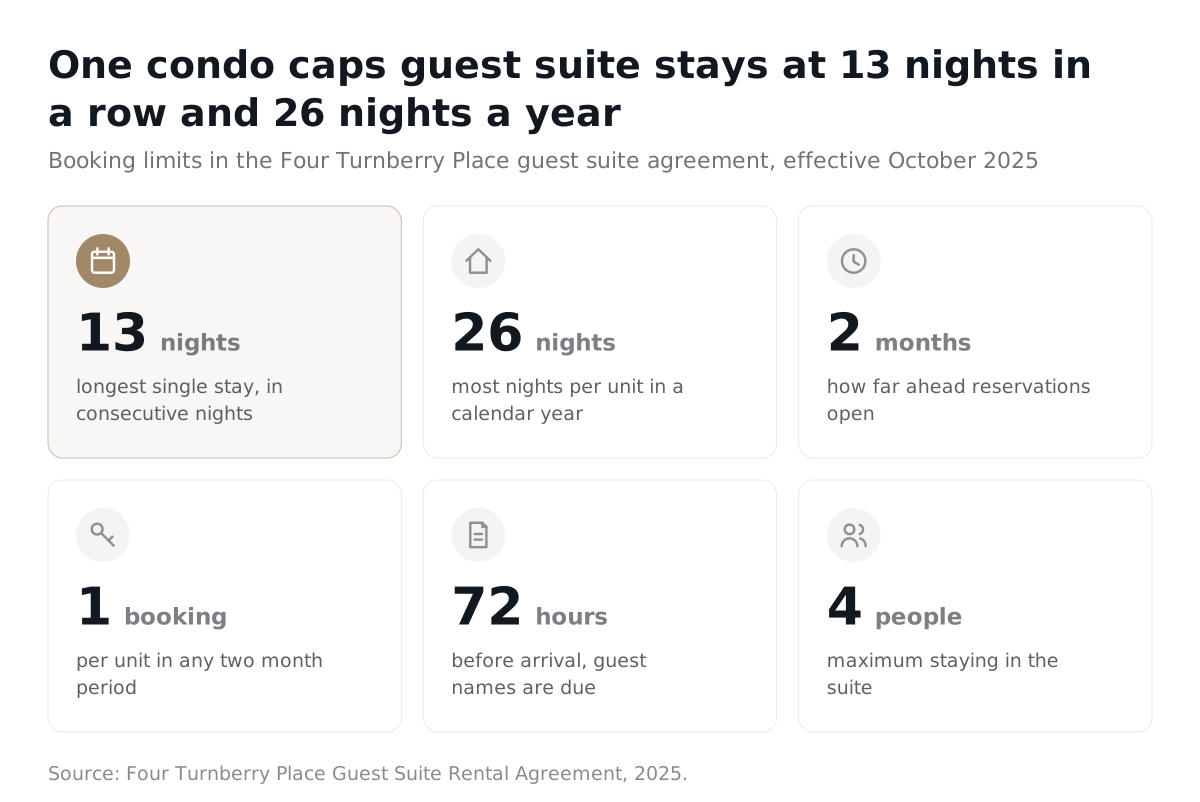
One public example is the 2025 guest suite agreement at Four Turnberry Place, a Las Vegas condominium. Amended in July 2025 and effective October 2025, it sets these limits:
- Only a current resident whose unit account is current may book.
- Guest names are due at least 72 hours before arrival.
- No more than four people may stay.
- Reservations open no more than two months ahead.
- A stay may not exceed 13 consecutive nights.
- Each unit is capped at 26 nights per calendar year.
- Each unit may book only once in any two month period.
- Thanksgiving, Christmas, New Year's Eve, Formula 1, and Super Bowl weekend go to a lottery with one winner and two alternates.
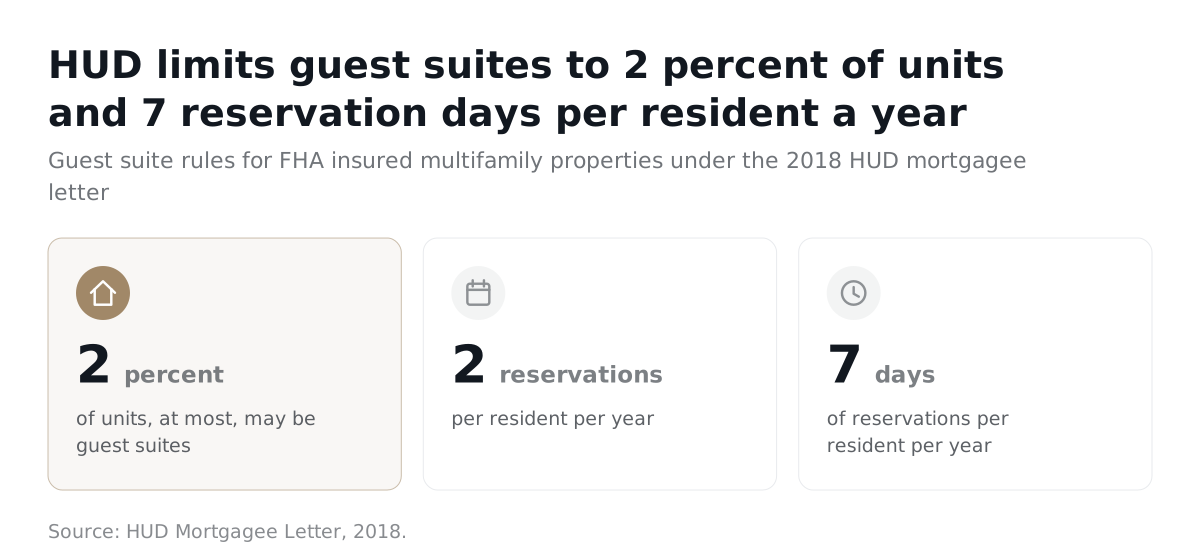
HUD's model is tighter still. Covered properties may devote no more than 2 percent of units to guest suites. Residents get two reservations and seven reservation days per year, per the HUD letter.
What does a sample guest suite rules table look like?
A good rules table fits on one page and answers every question a resident asks before booking. Here is a starting template. Adjust each value to your bylaws and your demand.
| Rule | Sample setting | Why it exists |
|---|---|---|
| Eligibility | Resident in good standing, unit account current | Keeps the suite tied to someone accountable |
| Booking window | Opens 60 days ahead | Stops early birds from locking up the year |
| Minimum stay | 1 night | Keeps short family visits possible |
| Maximum stay | 7 to 14 consecutive nights | Stops the suite from becoming a second apartment |
| Annual cap | A set number of nights per unit per year | Spreads a scarce room across households |
| Frequency | One booking per unit per rolling window | Prevents back to back rebooking |
| Blackout and holiday dates | Lottery or rotation | Makes peak dates fair |
| Guest registration | Names due 72 hours before arrival | Lets the front desk know who belongs |
| Occupancy | Posted maximum per suite | Matches beds, safety, and insurance |
| Check in and check out | Afternoon arrival, late morning departure | Creates a cleaning window |
| Deposit | Refundable, held until inspection | Covers damage and lost keys |
| Cleaning | Building cleans after every stay | Resets the room to a known standard |
| Cancellation and no show | Cutoff date, then a set penalty | Frees dates for the next household |
| Waiver and house rules | Signed at booking | Records what the resident agreed to |
Caps and lotteries only work if residents believe they are applied the same way to everyone. Our guide to amenity booking fairness rules covers how to set limits that hold up at a board meeting.
Why doesn't hotel or vacation rental software fit a guest suite?
Hotel and vacation rental software is built to sell rooms to strangers. A guest suite is a shared amenity lent to people who already live in the building.
Search for this topic and you mostly get hotel systems and short term rental tools. Those products focus on listing rooms across travel sites, changing rates by channel, and filling nights. That is the right job for a hotel, and almost none of it helps a condo board.
The mismatch shows up in the basics:
| Question | Resident amenity software | Hotel or rental software |
|---|---|---|
| Who is the customer? | A known resident sponsoring named guests | A public traveler |
| What identity does a booking attach to? | A unit and its account | A guest profile and a credit card |
| What limits demand? | Board rules: caps, windows, lotteries | Price and availability |
| Where do charges land? | The resident's unit record | A guest folio |
| Who settles a damage dispute? | Management, then the board | The hotel and the card company |
| Does it know the rest of the building? | Yes: residents, visitors, parking, tickets | No |
Hotel software is fine if you really run a hotel. If your suite is resident only, it adds features you will never use and misses the ones you need.
Can't a shared calendar do the job?
A shared calendar can show which nights are taken, but it cannot enforce a single rule. It does not know who is eligible, how many nights a unit has used, or whether the deposit came back.
Every rule in the table above becomes a manual check someone at the front desk must remember. That works for a few bookings a year. It breaks when the suite is busy, staff change, or a resident challenges a decision.
What does multi day booking software need to handle?
Multi day booking needs to treat a stay as a chain of steps, not a single time slot. A party room booking starts and ends on the same day. A guest suite booking runs for days and has work before and after it.
Here is the chain in order:
- The resident requests dates, and the system checks eligibility, caps, and blackouts.
- Staff approve, or the system approves if the rules allow it.
- The resident signs the waiver and house rules.
- The deposit and any charges are collected or recorded.
- The resident registers guest names before the deadline.
- Keys or access are handed over at check in.
- The guest checks out and keys come back.
- Staff inspect and clean.
- The deposit is returned, kept in part, or kept in full, with a reason.
Each step can fail. The software should show which step a booking is on and who owns the next move.
How much turnover time should a guest suite have?
Enough to inspect, clean, restock linens, and reset keys before the next arrival, and the software should block that time automatically. If it does not, two stays can land on top of each other.
At Four Turnberry Place, stays end at 12:00 PM and begin at 3:00 PM. That leaves a three hour window on a same day turn. The agreement also says there is no daily housekeeping during a stay.
Three hours is tight if the cleaner is also covering the gym and the lobby. You may want a longer buffer after long stays. Whatever you choose, write it into the booking rules so no one has to remember it.
Why does the suite's condition matter beyond one stay?
Because guests and prospects read the suite as a sample of how the whole building is run. A dirty room tells them something about management.
Writing about retirement communities, myLifeSite noted in April 2025 that an unkempt guest suite can make visitors question the care and quality of the entire community. The same logic holds in a condo tower. A resident's parents notice the stains, and so does a buyer on a tour.
That is why the cleaning task belongs inside the booking, not on a separate sticky note.
How should deposits work for a multi day stay?
Take the deposit before arrival, hold it until inspection, and record the outcome with a reason. Keep the deposit separate from the nightly charge and the cleaning charge, so residents can see what each one covers.
Four Turnberry requires the fees and the deposit to be paid by separate checks. That is a paper version of the same idea: never blur money that is earned with money that is held. Our post on condo party room deposits walks through how to set deposit rules residents accept.
How do guests get registered and let in?
The resident should submit guest names before arrival, and the front desk should see them on the same screen as the booking. Otherwise the concierge is left guessing who belongs in the suite.
Guest suite stays often bring cars and luggage too. That ties the booking to visitor parking and, in some towers, to the service elevator. See our guides on condo visitor and guest parking management and elevator booking software for condos for how those pieces fit together.
How should buildings handle damage, disputes, and no shows?
Write the timeline down before anything goes wrong: when you inspect, when you refund, what gets charged, and who decides an appeal. Then make the software follow that timeline for every booking.
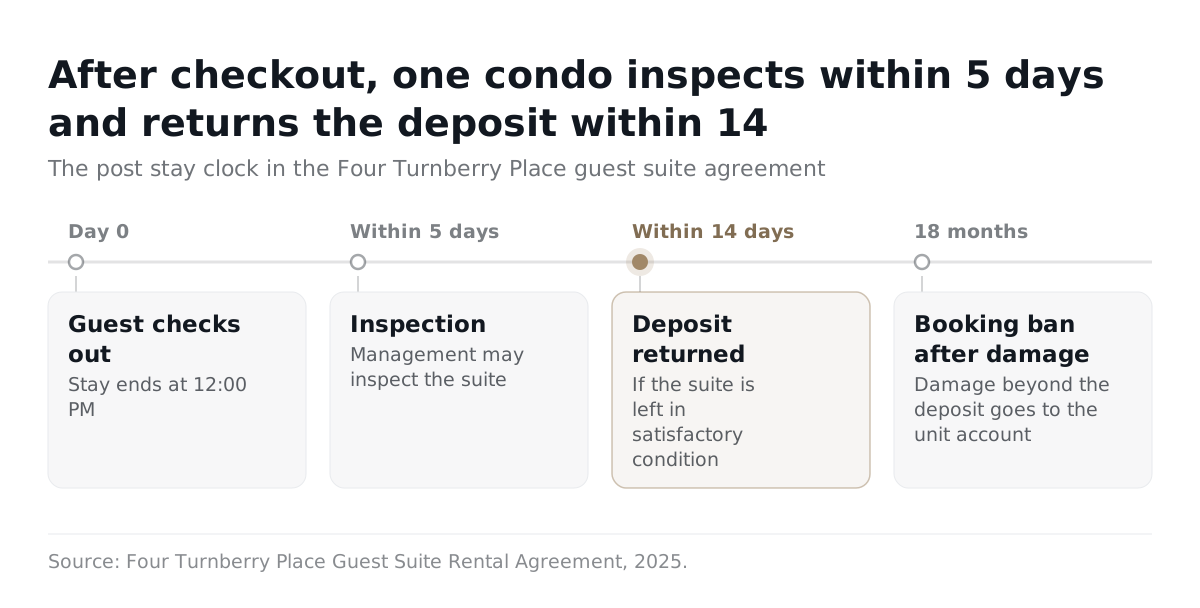
The Four Turnberry agreement is a useful model:
- A booking that is not cancelled and ends as a no show is charged a one night penalty.
- Management may inspect within five days after departure.
- A satisfactory deposit is returned within 14 days.
- Damage beyond the deposit is charged to the resident's unit account.
- A resident who damages the suite loses booking rights for 18 months.
- Any dispute over damage goes to the board, and its decision is final.
Every one of those steps needs evidence. Photos at check in and check out, the signed waiver, and a timestamped log of who changed the deposit status are what settle an argument. Our article on amenity booking waivers covers what a waiver should say and when to collect it.
What causes most guest suite disputes?
Disputes usually start with money that was not explained or rules that were not applied evenly. A resident who sees a cleaning charge, a deposit, and a nightly rate lumped together will assume the worst.
The fix is boring and it works. Itemize every charge. Apply caps from the system, not from memory. Keep a record of every exception and who approved it. When the board reviews a complaint, it should see the booking history, not a stack of emails.
Does every building need guest suite software?
No. A building with one suite, a handful of stays a year, and steady staff can run it on a form, a binder, and a clear procedure.
Software earns its place when manual control starts to crack. Watch for these signs:
- Holiday dates spark complaints every year.
- Staff cannot say how many nights a unit has used.
- Deposits sit unreturned because no one logged the inspection.
- Two stays have been booked with no cleaning gap.
- The board is asked to settle disputes with no records to review.
It is also worth asking whether the room should stay a guest suite at all. Kyle Millar, principal at the design firm KTGY, put it plainly in the firm's January 2026 amenity trends article: "Fewer amenities executed well are preferable to many undersized or oversized spaces." One suite run well beats two run badly.
How does URBI handle guest suite bookings?
URBI treats the guest suite as one more amenity in the same booking system that handles the gym and party room. What sets the suite apart is multi day stays and the work around them, and URBI supports both.
Here is what URBI covers for a guest suite, mostly through its URBI amenity booking features:
- Multi day bookings with an after service buffer. Each stay reserves cleaning time after checkout, so the next arrival cannot collide with the turn.
- Conflict detection. The calendar is capacity aware and blocks overlapping requests.
- Deposits with keep or return. Staff mark each deposit returned or kept, and every change sits in an audit trail.
- Cancellation and refund flows. Cancellations and refunds follow a set path instead of a string of emails.
- Waivers. Residents sign the suite's terms as part of booking.
- Visitor registration. Guests are registered with live pass counts, and guest parking QR passes are available.
- Manual payment recording. If your building still takes checks, staff can record the payment against the booking.
- Analytics. See how often the suite is actually booked.
Residents book from the free iOS and Android app. Staff and boards work from the URBI Kore web dashboard. If you are comparing tools, our roundup of the best amenity booking software lays out what to look for. For the wider picture, read what URBI is and how URBI works for residential buildings.
Frequently asked questions
How many nights can a resident book a guest suite?
It depends on your rules, but most buildings cap both single stays and yearly totals. Four Turnberry Place allows 13 consecutive nights and 26 nights per unit per year. HUD's model for covered properties allows two reservations and seven reservation days per resident per year. Pick a cap that fits your demand, publish it, and have the booking system enforce it so staff do not have to count by hand.
Should a guest suite have a cleaning fee and a deposit?
Four Turnberry Place uses both, and they should stay separate. The cleaning charge pays for the turn. The deposit is held against damage or lost keys and comes back after inspection. HUD's model for covered properties allows only an at cost cleaning and laundering fee charged to the resident. Whatever you charge, itemize it on the booking so residents can see what each amount covers.
Who is responsible if a guest damages the suite?
The resident who booked it. Rule sets like Four Turnberry's make the sponsoring resident answer for their guests. At Four Turnberry, damage beyond the deposit is charged to the resident's unit account, the resident loses booking rights for 18 months, and the board has the final word on disputes. Record photos before and after each stay so any charge rests on evidence.
Can we use hotel software for our guest suite?
You can, but it is a poor fit for a resident only amenity. Hotel and rental tools focus on public listings, travel channels, and pricing. They do not know which unit a resident lives in, whether their account is current, or how many nights they used this year. Resident amenity software ties the booking to the unit, enforces board rules, and sits beside visitor and parking records.
Apartment guest suite booking software should make a scarce room fair to book and easy to settle when a stay goes wrong. That means rules the system enforces, a cleaning buffer after every stay, deposits with a clear record, and guests the front desk can see. If you want to see how URBI runs a guest suite next to the rest of your amenities, email hello@myurbi.co.
Keep reading


