



Delivery drivers ignoring the package room is almost always a process problem you can fix. Couriers skip the room when getting there costs them time, the door does not open, or nobody told them where it is. Fix the path, then measure it. URBI helps by logging every parcel that reaches the room, so the ones that did not stand out.
Why do delivery drivers ignore the package room?
Drivers skip the room because the lobby floor is faster and the room is often hard to reach. A courier who cannot get through a second door in under a minute will usually leave the parcel by the mailboxes and move on. Four things cause most of it.
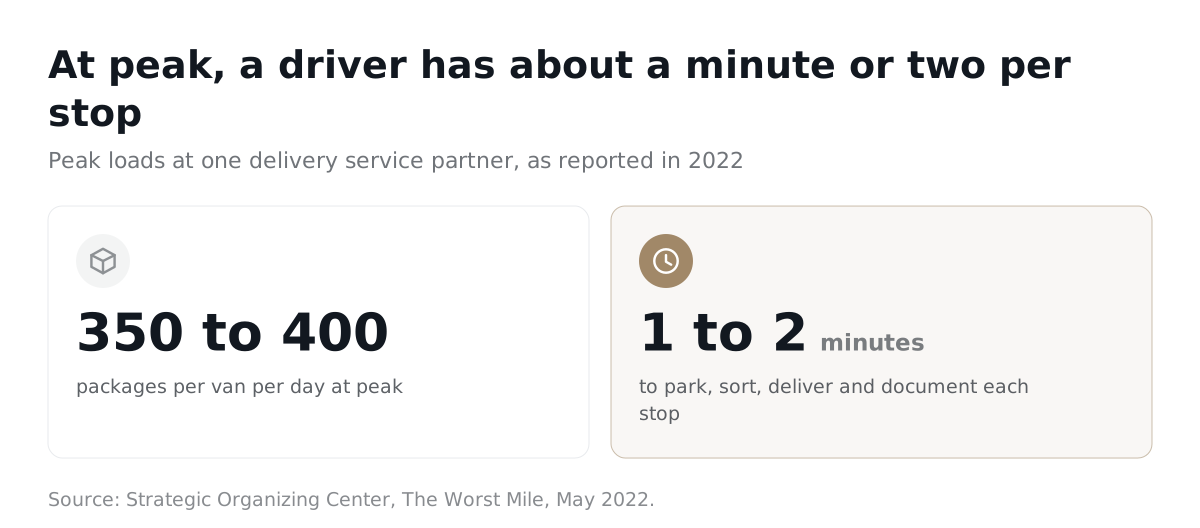
- Time per stop. A May 2022 report by the Strategic Organizing Center, a labor coalition, describes peak loads of 350 to 400 packages per van per day at one Amazon delivery partner. It says drivers would need to park, sort, deliver and document a stop roughly once every one to two minutes. A locked inner door eats that minute.
- Access friction. The street door opens with a code, but the package room needs a fob, a call to the desk, or a staff member who is on break. Every extra step is a reason to stop at the lobby.
- Unclear signage. A driver new to the route sees three hallways and no arrow. The room might be behind the elevators or down a level. If it is not obvious, it does not exist.
- Bad labels. A parcel with no unit number cannot go to a unit shelf or a locker. The driver has nowhere specific to put it, so it lands in the pile.
Drivers do get building notes. Amazon's Flex blog for drivers says delivery notes can include parking details, access codes and a safe place to leave the package, and calls them especially useful for apartment complexes. The notes only help if someone wrote good ones.
Is it always the driver's fault when a parcel misses the room?
No. Some lobby drops follow carrier rules, and some "missing" parcels were never misplaced by the driver at all.
- The Postal Service's delivery policy, section 617 says that in buildings with more than three floors and no working elevator, items that do not fit the mailbox go to one authorized location on the first floor, or the carrier leaves a notice. If that location is your lobby, the carrier is following the rule.
- The USPS Office of Inspector General's May 2025 paper on package theft states plainly that telling theft apart from loss remains a persistent difficulty.
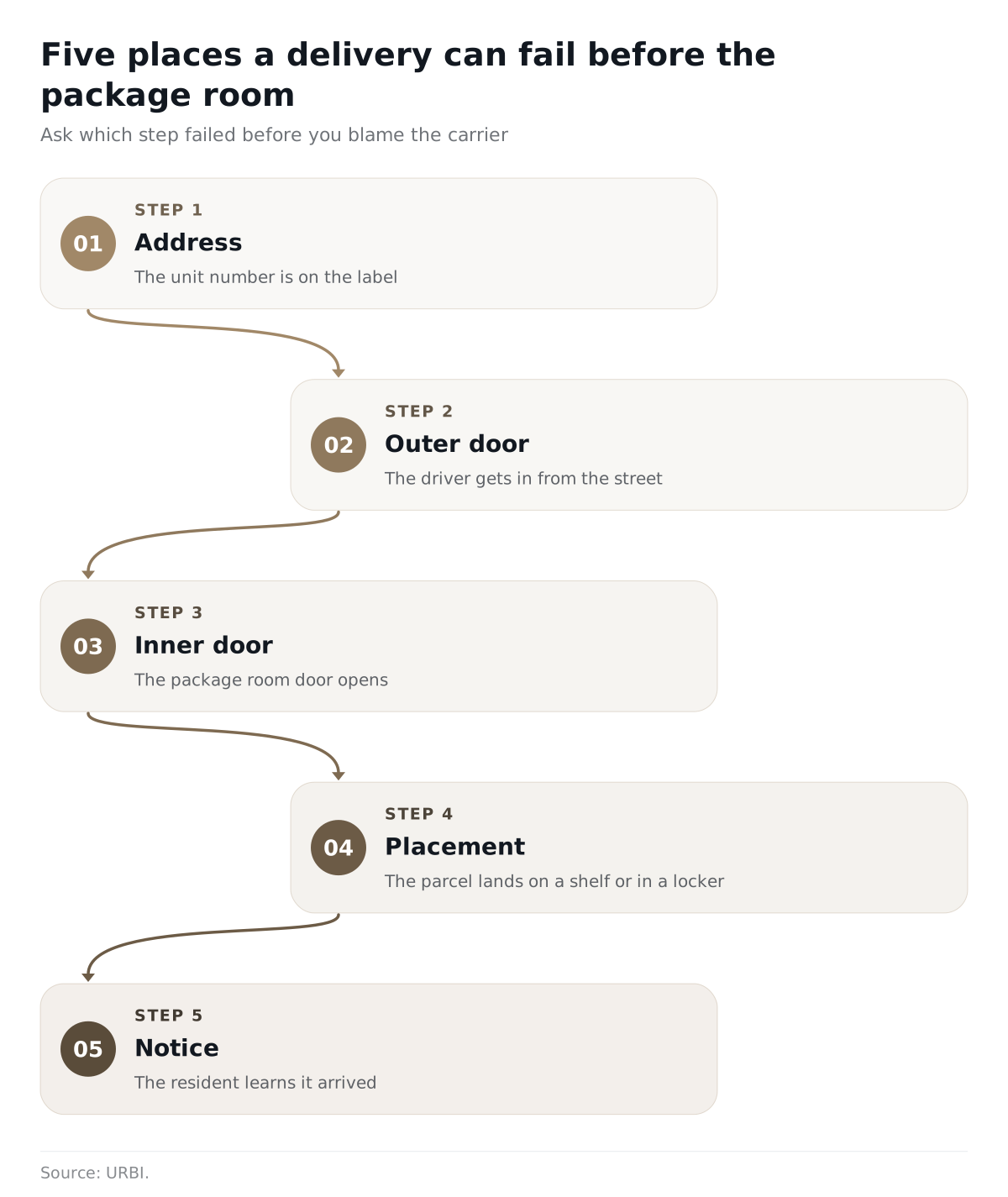
So before you blame a carrier, ask which step failed. Was it the address, the outer door, the inner door, the placement, or the notice to the resident? That one question turns a complaint into something you can fix.
Which fixes actually work, ranked?
The fixes that remove steps work best. The fixes that only ask drivers to try harder work least. Here is the order we would follow.
| Rank | Fix | What it solves | Effort |
|---|---|---|---|
| 1 | Courier access programs and a working intercom | Drivers cannot get through the door | Medium, one time setup |
| 2 | One clear set of access instructions | Drivers do not know the route | Low |
| 3 | Signs at every decision point | Drivers cannot find the room | Low |
| 4 | Correct address and unit labels | Parcels with nowhere to go | Low, ongoing reminders |
| 5 | Resident delivery instructions | Each carrier gets the same request | Low per resident |
| 6 | Published front desk hours and an after hours plan | Drivers arriving to a locked desk | Low |
| 7 | Measuring misdeliveries | Knowing which fix is working | Low with a logging tool |
Fix 1: can couriers actually get through both doors?
Start here, because nothing else matters if the door stays shut. Some carriers run access programs that let approved drivers open the building door through their delivery app. An intercom that reaches staff, or that issues a time limited entry, covers the drivers those programs miss.
Two cautions. First, a program covers only the carriers enrolled in it, so plan a path for everyone else. Second, opening the street door is not the same as reaching the room. Test the whole chain: street door, intercom answer, package room door, shelf. The URBI intercom integrates with existing access control systems, so it works with the doors you already have.
Fix 2: does every courier get the same access instructions?
Write one short set of directions and put it in every place a driver will read. That means the carrier notes residents submit, the intercom directory, and the sign at the door. Keep it to the entrance to use, how to get in, and where the room is. Never print a permanent master code on a public sign. Use the access method each carrier supports instead.
Fix 3: can a stranger find the room without asking?
Walk the route as if you have never been in the building. Put a sign wherever a driver has to choose a direction: the entrance, the lobby, the elevator bank, the corridor. Use the same words on every sign ("Package room") and an arrow.
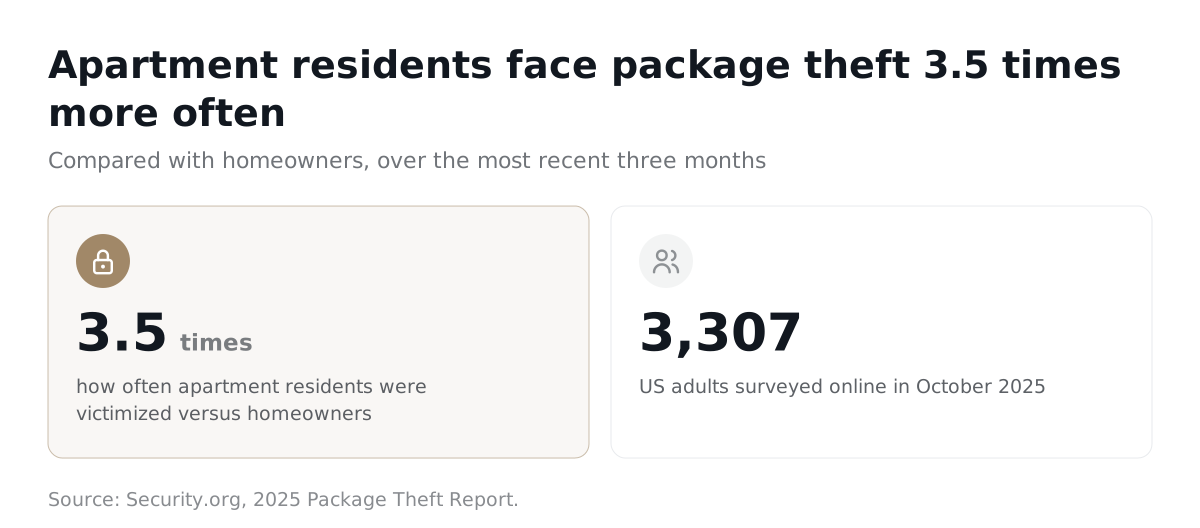
The room also protects parcels from theft, which is a bigger risk in apartments. Security.org's 2025 package theft report, an online survey of 3,307 US adults in October 2025, found apartment residents were victimized 3.5 times more often than homeowners over the most recent three months. Gene Petrino, a former SWAT commander and police sergeant, put it simply in that report: "Thieves can't steal what they can't see."
Fix 4: is the unit number on every label?
The unit number belongs in the shipping address, not just in a note. The Postal Service's addressing standard, Publication 28, says secondary unit designators like APARTMENT or SUITE are required on mail for addresses that have them, preferably at the end of the street address line. Remind residents at move in, and again before busy seasons, to check their saved addresses in every shopping account.
Fix 5: what should residents paste into their delivery instructions?
Give residents one line to copy and paste into each carrier's instructions field. Fill in the brackets for your building before you send it.
APT [unit]. Please deliver to the PACKAGE ROOM, not the lobby. Use the [name] entrance. Buzz [directory name] if the door does not open. The room is [short directions].
Each carrier has its own place for this, and each has limits.
- USPS: USPS Delivery Instructions lets you request delivery to a specific location at your address at no cost. It does not work once a parcel is out for delivery, so residents need to set it before delivery day.
- UPS: UPS My Choice lets a recipient tell the driver where to leave the package.
- FedEx: FedEx Delivery Manager lets recipients provide delivery instructions, but notes that some shippers may restrict certain delivery options.
- Amazon: residents add the line to the delivery instructions on their saved address.
Fix 6: what happens when a driver arrives after the desk closes?
Post the front desk hours where drivers and residents can see them. Then decide what happens outside those hours: an intercom path to the room, a locker, or a clear note that the room is closed. A driver facing a dark desk and a locked room will leave the parcel in the lobby every time.
Fix 7: are you counting the misses?
You cannot tell which fix worked unless you count. The next section covers how.
How do you measure whether the fixes are working?
Track one number: parcels that reached the room, divided by all parcels meant for the room. A failed entry counts as a miss, not an exception.
- Record the carrier, arrival time, and where the parcel was actually found for every miss.
- Write down the failed step: address, outer door, inner door, placement, or notice.
- Agree up front on fair exceptions, like the USPS first floor rule above.
- Count a parcel that went missing after it reached the room separately from one that never arrived.
- Change one thing at a time, then compare a few weeks before and after.
If one carrier or one door causes most of the misses, start there.
How does URBI help with package room problems?
URBI handles the part after the driver: knowing exactly what arrived and where it went. Staff photograph the shipping label, and the AI scanner reads the tracking number, carrier and unit for staff to confirm. Small parcels can go to integrated smart lockers. The resident gets an alert when the parcel arrives and reminders while it waits, and URBI records who picked up each parcel and when.
That record is what makes Fix 7 practical. Staff can log a lobby drop as an incident note on the unit, and notes are searchable, so you can pull every miss for one carrier or one door. The URBI intercom works with your existing access control, which covers Fix 1. For the full workflow, read our package room workflow guide, see how the package notification system handles residents who do not pick up, and use the package room procedure template to write it down. Busy season makes every one of these problems worse, so plan with our guide to the holiday package surge. To see the whole platform, start with what URBI is or the residential guide.
FAQ
Can a building make delivery drivers use the package room?
Not directly. Drivers work for carriers, not for your building, and carriers follow their own rules. What a building can do is make the room the easiest choice. That means a working way in, clear signs, correct unit labels, and instructions from residents. When the room is easier than the lobby, most drivers use it. Then measure the misses and raise repeat problems with the carrier.
Who is responsible when a parcel left in the lobby goes missing?
It depends on your lease, your building rules, your state, and where the carrier says it left the parcel. Many buildings state that they are not responsible for parcels left in common areas, but the details matter. Our guide on who is liable for stolen packages in an apartment covers the common cases. This is general information, not legal advice.
Should we post the package room door code for drivers?
No. A permanent code on a public sign is a code for anyone who walks by. Use access methods built for couriers instead: a carrier access program, an intercom that reaches staff, or time limited codes given through carrier instructions. Change any shared code on a schedule, and log who comes in so you can trace a problem back to a time and a door.
Ready to stop the lobby pile?
Delivery drivers ignoring the package room is a path problem, and paths can be fixed. Remove the steps, label everything, and count what still goes wrong. If you want every parcel logged, every resident reminded and every pickup recorded, URBI does that for condo and apartment buildings today. Email us at hello@myurbi.co or visit myurbi.co to see it on your building.


