



A package room procedure template is a written routine that tells staff exactly what to do with every parcel, from the carrier's drop to the resident's pickup. This one is free, printable, and has blanks for your building's own rules. URBI keeps the record behind each step.
Why does a package room need a written procedure?
A package room needs a written procedure because every staff member otherwise invents their own, and the gaps between those habits are where parcels go missing. The room works on a quiet Tuesday. It breaks on a peak week, a new hire's first shift, or the day a resident says "tracking shows delivered."
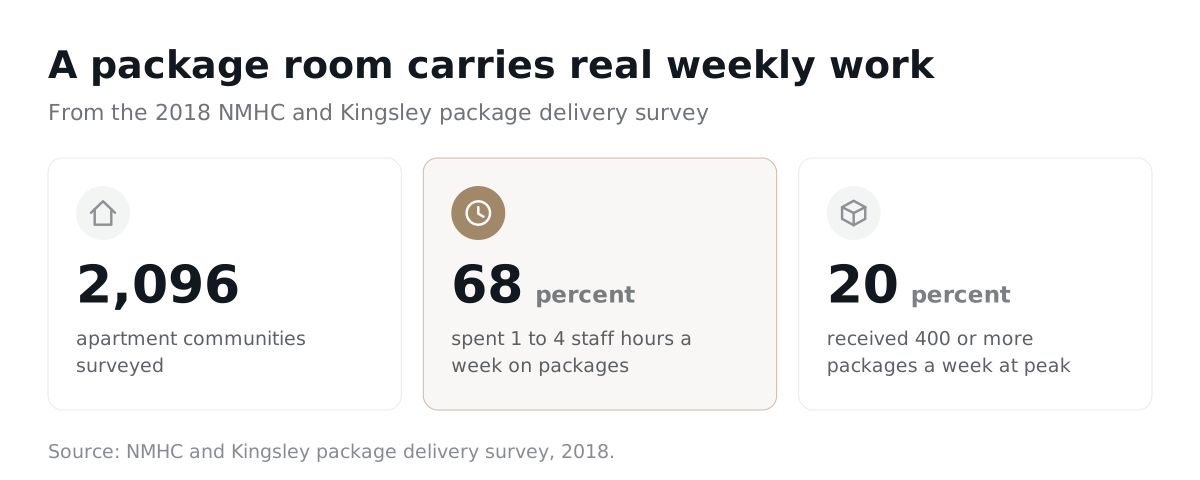
The numbers show how much work a package room carries.
- In the 2018 NMHC and Kingsley package delivery survey of 2,096 communities, 68 percent spent 1 to 4 staff hours a week on packages.
- The same survey found 20 percent of communities received 400 or more packages a week during peak periods.
- In an October 2025 poll of 3,307 adults, Security.org found apartment residents were victimized 3.5 times more often than homeowners over the most recent three months.
A procedure does not stop every loss. It does make every loss traceable. When the record shows who took the parcel in, where it sat, who was told, and who took it out, most disputes end in one lookup.
This post is the procedure itself. For the thinking behind each stage, read our package room workflow guide. For shelf codes and aging reports, see package room inventory software.
Should your building accept packages at all?
Most staffed buildings should accept packages under a tight procedure, because refusing them rarely makes the parcels go away. Carriers leave them somewhere anyway. Refusal only works when every carrier has controlled access to lockers or a room with enough space, including oversized items and peak weeks.
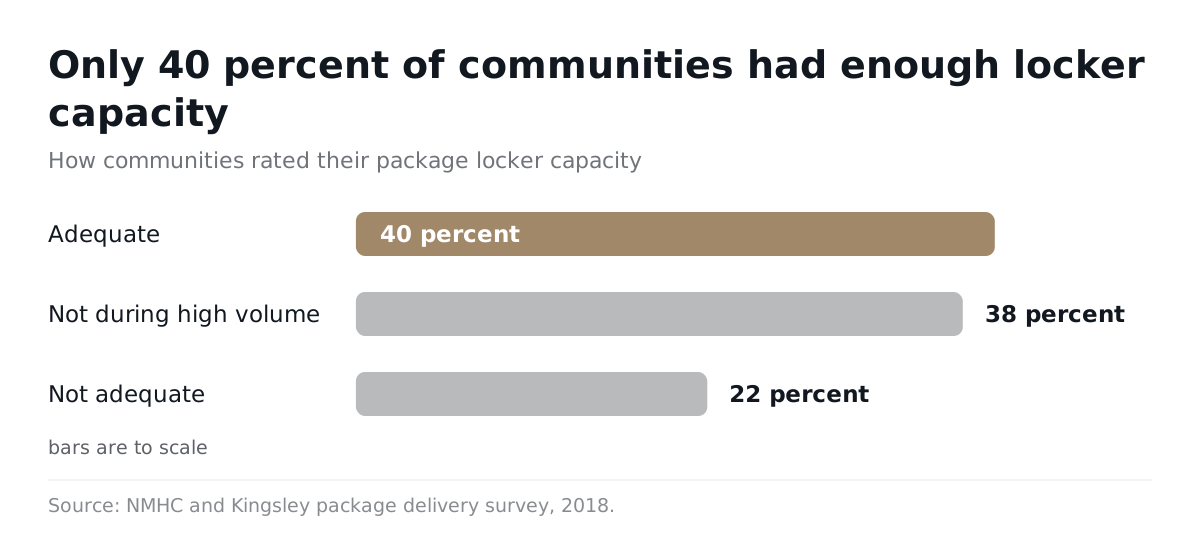
The NMHC survey shows why. Package lockers had adequate capacity at only 40 percent of communities. Another 38 percent said capacity fell short during high volume periods, and 22 percent said it was not adequate at all. When there was no room, carriers improvised.
| What carriers did when lockers were not an option | Share of communities |
|---|---|
| Left packages at the leasing office | 49 percent |
| Left packages in the lobby | 47 percent |
| Left packages in the locker area without using a locker | 30 percent |
A lobby pile has no record at all. So pick your model on purpose, write it in the resident rules, and give every model a lane for what it cannot hold.
| Model | Good at | Needs a backup lane for |
|---|---|---|
| Staffed desk or concierge room | Oversized, perishable, and damaged items; judgment calls | After hours pickup and peak week labor |
| Access controlled room, resident self pickup | Capacity and evening pickup | Proof of who took which parcel |
| Smart lockers | Small parcels and code based pickup | Oversized items, full lockers, refrigerated items |
| Hybrid: lockers plus a staffed room | The widest range of parcels | One shared record, so staff never check two places |
Not sure how much locker space you need? Our guide on how many package lockers a building needs walks through the math.
Is a package room covered by USPS mailroom rules?
No, a private package room runs on your building's rules, not postal rules. The Postal Service regulates the mail receptacles. Its PO-632 handbook requires new or remodeled apartment houses to install approved centralized mailbox equipment, with at least one parcel locker for every five mailbox compartments.
That ratio is a floor for mail, not a plan for every delivery. Anything a carrier hands to your staff, or leaves in a room you control, is covered by your procedure, your lease or declaration, and your state's law. That is why the template below leaves blanks for the choices only your building can make.
How do you use this package room procedure template?
Fill in every blank line with your building's own value, have the board or owner approve it, then post the daily checklist inside the package room. Train every person who touches a parcel, including relief staff. Review the whole document once a year and after any serious incident.
- Blanks are decisions. Hold periods, pickup hours, and oversized limits differ by building. Decide them once, in writing.
- Keep it short enough to follow. Delete any section that does not apply to your building rather than leaving it half true.
- Legal check. Hold periods, disposal of unclaimed items, and liability language touch state law and your governing documents. This template is general information, not legal advice. Confirm those sections with your association's attorney and your insurer.
What does the full package room procedure template include?
The full template has fourteen sections, from building settings to a daily checklist. Each one answers a question staff will face at the desk. Copy it as it stands, or download the printable version above.
1. Building settings: what are this building's rules?
Every other section refers back to these values, so set them first.
| Setting | Your building's value |
|---|---|
| Building name | ______ |
| Package room location and access method | ______ |
| Staffed desk hours | ______ |
| Resident self pickup hours (if any) | ______ |
| Carriers accepted | ______ |
| Items the building does not accept | ______ |
| Oversized limit (weight or size) | ______ |
| Standard hold period (days) | ______ |
| Perishable hold period (hours) | ______ |
| Refrigerator available for packages | ☐ Yes ☐ No |
| Staff sign for signature required items | ☐ Yes ☐ No |
| Package procedure owner (name and role) | ______ |
| Date approved and approved by | ______ |
2. Receiving: how does a parcel get checked in?
A parcel is received only when it has a record, a unit, and a shelf location. Until then, it is still the carrier's parcel.
- Carrier check in. Meet the carrier at ______. Note the carrier and the number of pieces handed over. Do not let carriers leave parcels anywhere else.
- Count before they leave. For a bulk drop, count the pieces and compare with the carrier's number before signing anything. Write any difference on the log.
- Check condition. Look for crushing, leaks, or open tape. If damaged, follow section 10 before shelving.
- Scan or log. Record the tracking number, carrier, recipient name, unit, date and time, and your initials. Take a photo of the label if your system allows it.
- Label with the unit. Write or stick the unit number on the parcel where it can be read on the shelf. Do not cover the carrier label.
- Assign a shelf location. Place the parcel and record its shelf code, such as ______. A parcel with no location in the record is lost, even if it sits on a shelf.
- Unknown recipient. If the name or unit does not match the resident list, put it in the "unmatched" bin at ______ and check with the manager by end of day.
3. Resident notification: when and how is the resident told?
Notify the resident only after the parcel is logged and shelved, so they never walk to an empty shelf.
- Send the first notice through ______ (app, email, or text) within ______ minutes of logging.
- Include the number of parcels, where to collect them, pickup hours, the ID rule, and the date the hold period ends.
- Send a reminder on day ______ and a final notice on day ______ that names the deadline.
- If a notice cannot be delivered, flag the parcel for a phone call or door note by ______.
4. Perishables and refrigerated items: what happens to food and medicine?
Perishables get handled first and held the shortest time, because they spoil on a clock, not on a calendar. Guidance published by Clemson Cooperative Extension says food that arrives above 40 degrees Fahrenheit should not be eaten, and the recipient should notify the company.
- Identify perishables by label, insulated packaging, or "keep refrigerated" markings.
- Notify the resident right away by ______, marked as perishable.
- If the building has a package refrigerator, store it there and record the shelf. If not, write "no refrigeration" in the notice so the resident knows to come quickly.
- Never promise to refrigerate if the building has no refrigerator.
- After ______ hours uncollected, call the resident. Disposal of uncollected perishables follows the rule the board approved: ______.
- Prescriptions follow the same fast lane. Do not open or inspect them.
5. Oversized items: where do big parcels go?
Anything over the oversized limit in section 1 goes to a named floor spot, never a hallway, stairwell, or exit route.
- Oversized holding area: ______. Floor spots have codes, such as FLOOR.1.
- Log the floor code like any shelf.
- Furniture and freight that need a delivery appointment go straight to the unit with the resident present. Book the elevator if needed.
- If the oversized area is full, call ______ before accepting more. Do not stack parcels in common areas.
6. Signature and ID at pickup: how do you release a parcel?
Release a parcel only to the person on the record, or to a proxy authorized under section 7, and record the release every time.
- Ask for the unit number and name. Check photo ID or ______ (app code or fob) against the record.
- Find the parcel by shelf code, not by searching the room.
- Record the release: who collected, date and time, how identity was checked, and the staff member's initials.
- Ask the resident to sign or confirm on screen if your process uses signatures.
- If the resident says a parcel is missing from their notice, do not guess. Follow section 12.
- Signature required deliveries: staff ☐ do ☐ do not sign for them. If not, the carrier leaves a notice and the resident arranges redelivery.
7. Proxy pickup authorization: who else can collect a parcel?
Someone other than the resident may collect a parcel only with written permission sent before pickup.
- The resident sends authorization through ______, naming the proxy, the parcels or date range, and whether it is one time or ongoing.
- Staff check the proxy's photo ID against the name in the authorization.
- Record the proxy's name on the release, plus "proxy" and the authorization date.
- Ongoing authorizations expire on ______ or at move out, whichever comes first.
- A phone call from the proxy is not authorization.
8. Hold periods and reminders: how long does a parcel stay?
Standard parcels stay for the hold period in section 1, counted from the first notice. There is no single national rule for apartment or condo buildings, so each building picks one. As one published example, University of Georgia Housing gives owners 10 calendar days from the first notification.
| Day | Staff action |
|---|---|
| Day 0 | Log, shelve, send first notice |
| Day ______ | Send reminder |
| Day ______ | Send final notice with the deadline; call if a phone is on file |
| Day ______ | Move to the unclaimed area, update the record, start section 9 |
Residents travelling can ask for a longer hold of up to ______ days, approved by ______.
9. Return to sender: what happens to parcels nobody collects?
Unclaimed parcels go back through the carrier when the carrier allows it, and every step is written down.
- Check the resident list and move out records. Former residents with a forwarding contact get one notice at ______.
- Arrange return through the carrier or sender where possible. Record the date, carrier, and tracking number of the return.
- Some carriers do not collect returns. Parcels that cannot be returned follow the disposition rule approved by the board or owner: ______.
- Never open, keep, or quietly discard a resident's parcel.
- Keep the return and disposition record for ______ months.
10. Damaged and suspicious packages: what do staff do first?
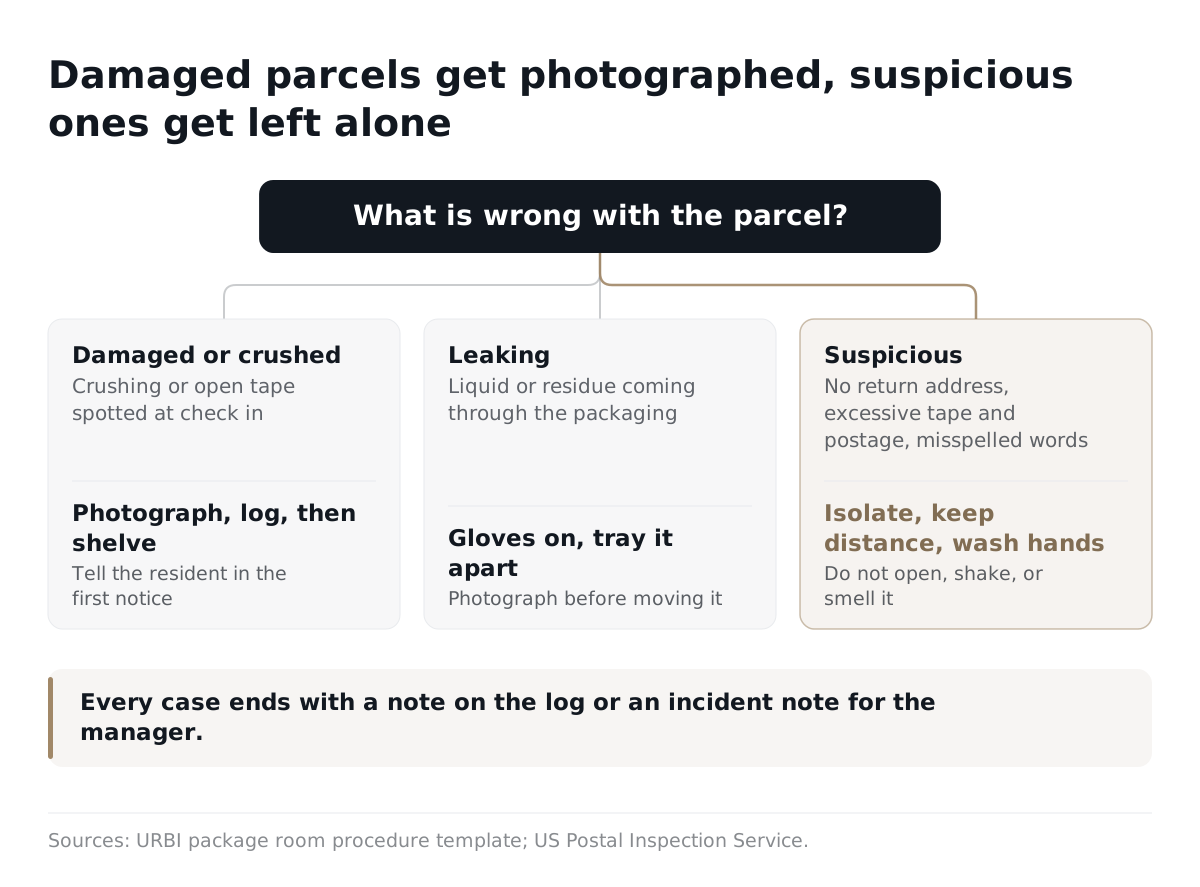
Damaged parcels get photographed before anyone touches the contents. Suspicious parcels get left alone.
Damaged, crushed, or leaking parcels
- Photograph the parcel and label before moving it. Note the damage on the log.
- If it arrived damaged, note it with the carrier before they leave, if possible.
- Leaking items go in a tray or bag in ______, away from other parcels. Wear gloves.
- Tell the resident about the damage in the first notice.
Suspicious parcels
The US Postal Inspection Service lists warning signs such as no return address, excessive tape and postage, and misspelled words. Its guidance is to isolate the item, keep a safe distance, and wash your hands.
- Do not open, shake, or smell it.
- Leave it where it is, clear the area, and keep others out.
- Wash your hands.
- Call 911 if anyone feels ill or there is an immediate threat. For suspicious mail, the Postal Inspection Service asks you to call its emergency line, listed on the same page.
- Notify the manager at ______ and write an incident note.
11. End of day count and audit: how do you know the record matches the shelf?
The closing staff member checks that every open parcel in the record is on its shelf, and every parcel on a shelf is in the record.
- Print or open the list of open parcels.
- Walk the shelves and floor spots and check each one off.
- Any parcel on a shelf but not in the record: log it now and note the time found.
- Any parcel in the record but not on its shelf: search the next shelves, then the unmatched bin, then report to ______ before leaving.
- Write the day's totals: received ______, released ______, open ______, exceptions ______.
- Weekly, the manager reviews the aging list and any open exceptions.
12. Lost package claim steps: what happens when a resident says a parcel is missing?
Staff check the record first, then help the resident take it to the right party.
- Ask for the tracking number and the carrier's delivery photo or scan time.
- Search the record by tracking number, unit, and name.
- No record found: the building likely never received it. Check the unmatched bin and the lobby, then tell the resident to open a claim with the carrier or the seller.
- Record shows released: share who collected it and when, following your privacy rules.
- Record shows on shelf but it is gone: report to the manager at once. Keep door access logs and any camera footage for that window.
- Offer the resident a written summary of the record for their claim or police report. Security.org's 2025 report found fewer than one in four theft victims reported it to local police.
- Close the case with a note on what was found and any fix to the procedure.
Who pays for a stolen parcel depends on your lease, your state, and whether staff took custody. We cover that in who is liable for stolen packages in an apartment. Do not promise a resident compensation at the desk.
13. Staff roles: who owns each part of the procedure?
Every step has one named owner, so nothing falls between shifts.
| Role | Name | Owns |
|---|---|---|
| Package procedure owner (manager) | ______ | Approves rules, reviews weekly aging and exceptions, handles claims and incidents |
| Concierge or front desk lead | ______ | Receiving, notices, releases, end of day count |
| Relief and weekend staff | ______ | Same as front desk, trained on this template before a first shift |
| Security or night staff | ______ | Room access overnight, suspicious item response, camera requests |
| Maintenance | ______ | Package refrigerator, shelving, oversized moves |
| Board or owner | ______ | Approves hold periods, disposition rules, and resident rules |
14. Daily checklist: what does the desk check every day?
Post this inside the package room and initial it each shift.
- ☐ Opening: open parcel list loaded, scanner or log working, refrigerator at a safe temperature
- ☐ Every carrier drop counted and matched before the carrier left
- ☐ Every parcel logged with unit, carrier, tracking number, and shelf code
- ☐ Perishables notified right away and stored per section 4
- ☐ Oversized items on coded floor spots, exits and hallways clear
- ☐ Notices sent for every parcel logged today
- ☐ Reminders and final notices sent for parcels on the aging list
- ☐ Every release recorded with name, ID check, time, and initials
- ☐ Proxy pickups matched to a written authorization
- ☐ Damaged or suspicious items handled per section 10 and noted
- ☐ Unmatched bin checked with the manager
- ☐ End of day count done and totals written down
- ☐ Room locked and access secured at close
Shift initials: ______ Date: ______
How does URBI run this procedure?
URBI keeps the record that every section of this template depends on, in the same platform the building uses for messaging, tickets, and notices. The template sets your rules. URBI holds the evidence.
- Receiving. Staff photograph the shipping label. The AI scanner reads the tracking number, the carrier (nine carriers are recognized), and the recipient unit, and staff confirm the match before the record posts. A scan widget sits on the Kore dashboard.
- Notification. The resident is notified on arrival with a push alert, open packages show on the app home screen, and reminders go out while a parcel waits.
- Lockers. Smart locker integration handles small parcels, while the desk handles the larger ones.
- Chain of custody. Each unit profile has a packages tab, and URBI records who picked up each parcel and when, so a missing parcel question starts with one lookup.
- Incidents. Staff write typed notes, including incident notes, tagged to the unit and the property, with photos attached.
- Roles. Team permissions are set per module, so each role in section 13 gets the access it needs and no more.
Compare the options in our roundup of the best package management software for buildings, and see how packages sit next to amenities and notices in URBI for residential buildings.
Frequently asked questions
How long should a package room hold a package?
Pick a number, publish it, and apply it the same way to everyone. No single national rule sets a hold period for apartment or condo buildings. University of Georgia Housing uses 10 calendar days from the first notification, which is a clear published example. Perishables need a much shorter clock. Before you finalize the disposal step, confirm it with your association's attorney against your state's law and your lease or declaration.
Can a building refuse to accept packages?
Yes, if the lease or rules say so, but refusal only works with a real alternative. In the 2018 NMHC survey, carriers who could not use lockers left parcels at the leasing office or in the lobby at many communities. If you stop accepting, make sure every carrier has controlled access to lockers or a room with enough space, including oversized items and peak weeks.
What should a package log record?
At minimum: tracking number, carrier, recipient name, unit, date and time received, staff initials, condition, and shelf location. At release, add who collected it, how identity was checked, the time, and the staff member's initials. Proxy pickups also note the authorization. With those fields, most missing parcel questions end with one search instead of a room search.
A package room runs on a written routine, not on memory. Fill in the blanks, post the daily checklist, and give every parcel a record from the carrier to the resident. To see how URBI's AI scanner, arrival alerts, and per unit package tabs would run this procedure in your building, email hello@myurbi.co.


