



An apartment package notification system alerts a resident the moment a parcel is logged, reminds them on a fixed schedule, and follows a written rule when nobody comes. URBI covers the core with an AI scanner that reads the label, an instant push alert, and photo proof of handoffs.
How should an apartment package notification system tell residents a package arrived?
Send one alert the moment the package is logged, on at least two channels. A push notification in the resident app should go first. Text or email should back it up for residents who have not installed the app or turned off notifications.
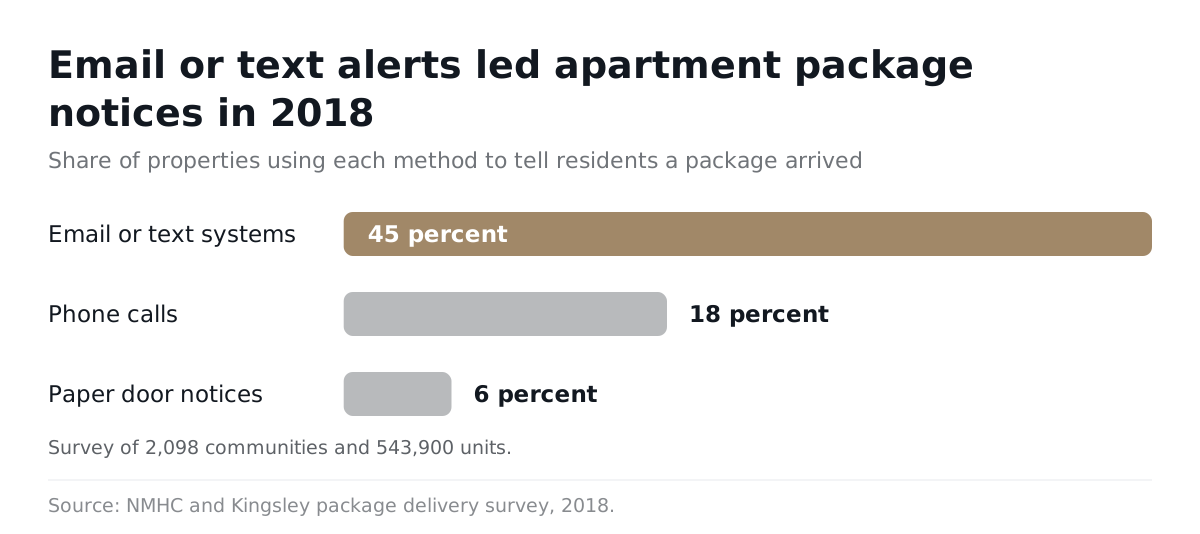
Electronic alerts are already the norm. In the 2018 NMHC and Kingsley package survey, 45 percent of properties used systems that email or text residents when packages arrive. Only 18 percent relied on phone calls, and 6 percent on paper door notices. That survey covered 2,098 communities and 543,900 units. It is old, but it is the largest neutral apartment survey on parcels we found.
Each channel has a job. The table shows where each one fits.
| Channel | Best use | Main weakness |
|---|---|---|
| App push | First alert, with unit and carrier details | Fails silently if the app is missing or muted |
| Text message | Backup for residents without the app | Needs consent and a current phone number |
| Backup, and a searchable record for the resident | Easy to miss in a crowded inbox | |
| Phone call | Perishables, medication, or a final warning | Takes staff time for every single call |
| Paper door notice | Residents with no phone or email on file | No delivery record and no reminder |
If you plan to text residents, collect consent at move in and keep numbers current. A text that goes to a dead number is worse than no text, because staff assume it arrived.
Which channel gets a package picked up fastest?
Nobody has published a neutral answer for apartments. The public surveys count which channels buildings use. They do not compare how fast residents collect after a push, a text, or an email. Vendor pages claim speed, but vendor pages are not evidence.
So measure it at your own building. Track these numbers for one month:
- Alert delivery rate: the share of alerts that actually reached a device or inbox.
- Median pickup time: hours from alert to release, split by the first channel that got through.
- Slow tail: the pickup time for the slowest one in ten packages.
- Overdue rate: the share of packages still on the shelf at your holding limit.
The slow tail matters more than the average. A handful of forgotten parcels is what fills the shelf.
How long should packages sit, and what reminder cadence works?
A good starting policy is a seven day routine hold, 48 hours for perishables, and three reminders before the deadline. No law sets a national apartment holding limit. Your number is a property policy, so write it down and apply it the same way to every unit.
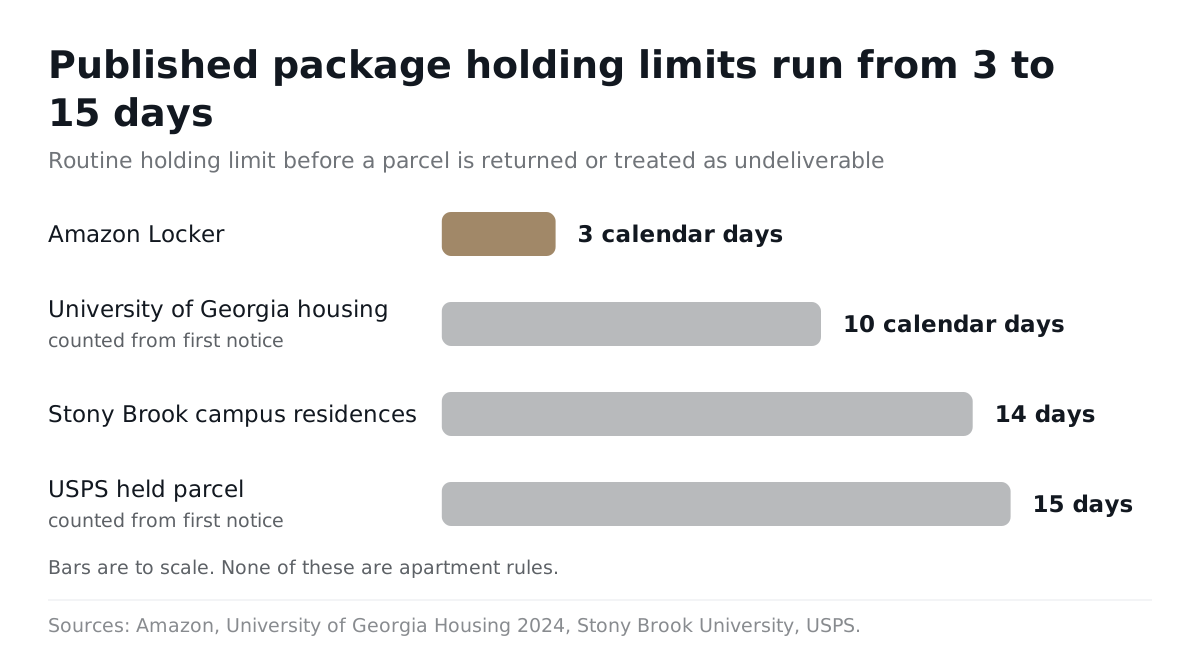
Published policies from carriers and campus housing show the range:
| Operator | Holding limit | What happens next |
|---|---|---|
| Amazon Locker | Three calendar days | Item is returned and the buyer refunded |
| University of Georgia housing (2024 policy) | 10 calendar days from first notice | Packages that cannot be returned are donated |
| Stony Brook campus residences | 14 days, or 48 hours for perishable food | Returned to sender; spoiled food discarded |
| USPS held parcel | 15 days after first notice | Treated as undeliverable |
None of these are apartment rules. They show that short, published deadlines are normal, and that perishables get a shorter clock wherever a policy mentions them. The USPS rule covers mail the Postal Service holds. It does not tell a landlord how long to keep a box.
Here is a reminder cadence you can pilot for a seven day hold:
| When | Message | Channel |
|---|---|---|
| At intake | Package arrived, with carrier, location, and pickup hours | Push, with text or email backup |
| 24 hours | First reminder | Push |
| Day 3 | Second reminder, naming the deadline date | Push and email |
| Day 6 | Final notice: returns to the carrier tomorrow | Push, text, and email |
| Day 7 | Staff call or note before return | Phone or in app message |
| Perishables | Alert at intake, reminder at 24 hours, final notice at 40 hours | All channels |
How many reminders are too many?
You have too many when residents start muting the alerts. Watch complaint and opt out rates during the pilot. If they rise, drop the 24 hour reminder first and keep the final notice. The final notice is the one that protects you if a resident later says they were never told.
Also send reminders at sensible hours. A reminder at 11 at night trains people to ignore the next one.
What happens when a resident does not pick up a package?
You follow the written policy: final notice, a personal contact attempt, then return to the carrier, all logged. The key word is written. Staff should never decide case by case, because that is where favoritism complaints and liability disputes start.
Campus policies show what a clean ending looks like. Stony Brook returns mail to the sender after 14 days. The University of Georgia donates unclaimed packages that cannot be returned. Washington University's mailroom says its preferred action is to return unclaimed research packages to the sender, and it disposes of perishables left for 24 hours. Every one of them names the deadline and the outcome in advance.
Your package policy, and the lease addendum that points to it, should cover these points:
- The routine holding limit, counted from the first notice.
- A shorter limit for perishables, and a line saying the building does not refrigerate.
- How travel, hospital stays, or disability extensions are requested.
- Who may pick up for a resident, and how that person is authorized.
- What happens at the deadline: return to carrier, or disposal if return is impossible.
- Items the desk will not accept, such as oversized furniture or items needing a signature.
Have local counsel review the language before it goes into a lease. State and city rules differ. Fees for storage are the part most likely to draw pushback, so think hard before adding one.
Who pays when a parcel disappears is a separate question. We cover it in who is liable for stolen packages in an apartment, so we will not repeat it here.
Should the front desk scan packages or log them by hand?
Scan them, and keep a person in the loop to confirm the match. Scanning is faster and leaves a photo record. Manual entry stays as the backup for torn, handwritten, or ambiguous labels.
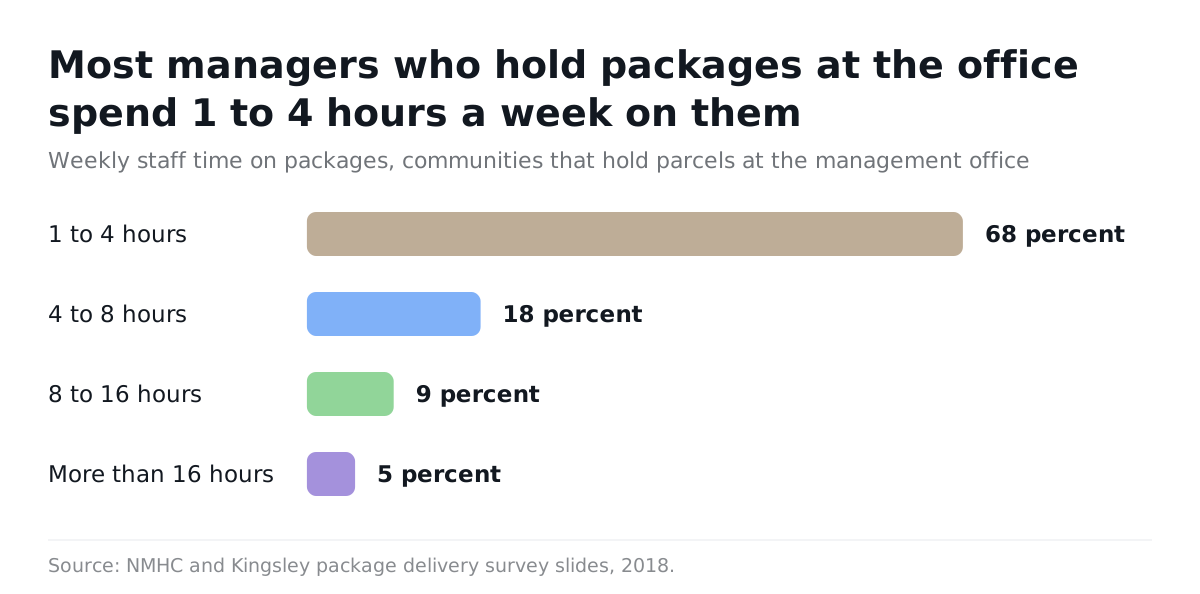
The workload is real. The NMHC survey found that 68 percent of community managers spent one to four hours a week managing packages. Among communities that hold packages at the management office, the survey slides show 18 percent spent four to eight hours, 9 percent eight to 16, and 5 percent more than 16. For the full labor math, read our breakdown of package handling costs in apartment buildings.
| Intake method | How it works | Strength | Risk |
|---|---|---|---|
| Manual log | Staff type or write the name and unit, then message the resident | Handles any odd label | Slow, and a busy shift skips the message |
| Barcode scan | Staff scan the tracking code, then pick the resident from a list | Captures carrier and tracking cleanly | The barcode does not name the unit, so staff still choose |
| AI label scan | A photo of the label is read for tracking, carrier, and unit | Fast, and the photo becomes evidence | Glare or damage needs a human check |
The weak point in every method is the package nobody logs. A parcel that skips intake never triggers an alert. Treat a carrier drop that bypasses the desk as an exception to fix, not a rare accident.
Scanning also works best inside a fixed desk routine. Our package room workflow guide lays out the steps from carrier to shelf.
What does the AI scanner in URBI actually do?
Staff photograph the shipping label, and the AI scanner reads the tracking number, the carrier, and the recipient unit. It recognizes nine carriers. Staff confirm the match on screen, and the resident gets a push alert immediately. The photo stays attached to the package record. A scan widget on the dashboard keeps intake one tap away during a delivery rush.
What counts as proof of pickup?
Proof of pickup is a record that shows who received the package, when, and from whom. If a resident says a package never arrived, you want to answer with a record, not a memory.
A complete package record should hold:
- The label photo taken at intake.
- Carrier, tracking number, and the unit it was matched to.
- The time it was logged and where it was stored.
- Every alert and reminder sent, with delivery status.
- The person who collected it, and how they were verified.
- The release time, and the staff member or locker that released it.
- The final outcome if it was returned or disposed of.
URBI keeps a full chain of custody for each package, with the label photo attached. Each unit has its own package tab, so staff can pull a resident's history while they stand at the desk.
What do residents complain about most, and how do you prevent it?
Residents complain about alerts that never came, packages that went missing, deadlines that felt too short, and pickup hours that do not fit their day. Almost every complaint traces back to a gap in intake, reach, or policy.
- No alert: the package was never logged. Fix intake coverage first.
- Alert went nowhere: the app was deleted or the number changed. Keep a backup channel.
- Missing package: no photo or release record. Keep a custody trail for every parcel.
- Deadline surprise: the policy was never shared. Put the deadline in every reminder.
- Pickup hours: the desk closes before people get home. Consider lockers for after hours pickup.
Lockers help with the last one, but they have limits. In the NMHC research, 57 percent of managers called self serve lockers the best solution. The top barriers were cost at 33 percent, space at 25 percent, and poor location at 22 percent. Amazon Lockers, for example, only take items under 10 pounds and smaller than 16 by 12 by 14 inches. Oversized boxes still land at the desk.
Space is the constraint behind all of this. John Falco, a principal at Kingsley Associates, told NMHC that "space is often at a premium, so package storage solutions are important." A short, enforced holding limit frees that space. If you are weighing hardware, compare package lockers vs package management software before you buy.
How does URBI handle package notifications end to end?
URBI covers the whole chain in one place, from label to release. Staff scan with the AI scanner, confirm the unit, and the resident gets an instant push alert in the free resident app. Small parcels can go to a connected smart locker. The chain of custody is saved with the label photo.
- Intake: photograph the label; the AI scanner proposes tracking, carrier, and unit for staff to confirm.
- Alert: the resident gets a push notification as soon as the package is logged.
- Storage: the package sits on the shelf or in an integrated locker.
- Release: staff record the handoff, and the unit's package tab updates.
- Review: managers see package history per unit in the URBI Kore dashboard.
Packages sit inside the same platform as tickets, notices, and amenity booking. Our URBI for residential buildings guide shows how those modules fit together, and the operations and workflow features page lists the tools. If you are new to the platform, start with what URBI is. If you are comparing vendors, our roundup of the best package management software for buildings puts the options side by side.
Frequently asked questions
How long can an apartment hold a package before returning it?
There is no national rule, so the building sets the limit in its package policy. Seven days is a common and defensible starting point for routine parcels. Perishables need a much shorter window, often 48 hours or less. Stony Brook's campus mailroom uses 14 days for mail and 48 hours for perishable food. Whatever you choose, publish it, count from the first notice, and apply it to every unit the same way.
Is a push notification better than a text for package alerts?
Neither wins on its own. Push can carry package details, but it fails if the app is missing or muted. Text reaches almost any phone but needs consent. The safest design sends push first and falls back to text or email. Then compare pickup times by channel at your own building, because no neutral apartment study has settled the question.
What should a package policy in the lease say?
It should state the holding limit, the shorter perishable limit, and what happens at the deadline. It should explain how residents authorize someone else to collect. It should list items the desk will not accept, such as furniture. It should say how extensions for travel or illness work. Keep the details in a separate package policy the lease points to, and have local counsel review both.
An apartment package notification system works when no parcel skips intake and the holding limit is written down before the first box arrives. Back up your alerts with a second channel, and keep a photo record of each handoff. To see how URBI's AI scanner, instant alerts, and per unit package history would work at your desk, email hello@myurbi.co.
Keep reading


