



AI for building managers is ready for five everyday jobs: resident questions, work order intake, amenity bookings, notices, and board reports. It takes the first pass and a person approves anything that matters. URBI splits the work cleanly. Arthur talks to residents, and HERO helps the manager.
Most guides on this topic are long vendor lists written for leasing teams. This one is for the person who runs the building day to day: the condo manager, the operations lead, and the board that signs off. For each job you get what it costs you now, what AI does well today, and where your approval stays.
Is AI for building managers ready for real operations work?
Yes, for drafting, answering, and sorting. It is not ready to make decisions about people, money, or safety on its own. Keep that line clear and the rest gets easier.
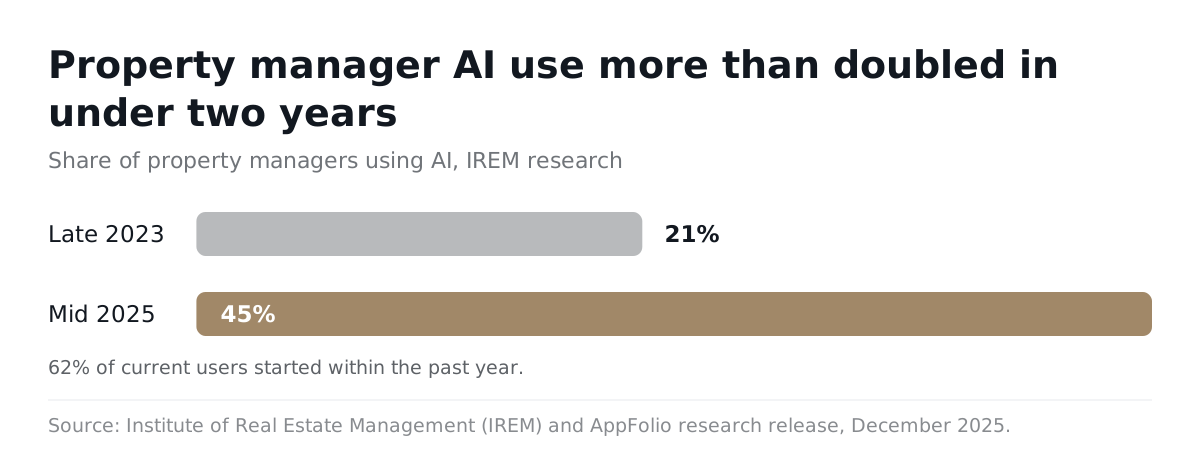
Adoption has moved fast. The Institute of Real Estate Management reported in December 2025 that AI use among property managers rose from 21% to 45% between late 2023 and mid 2025. The same release found that 62% of current users had started within the past year. So most managers using AI are still beginners.
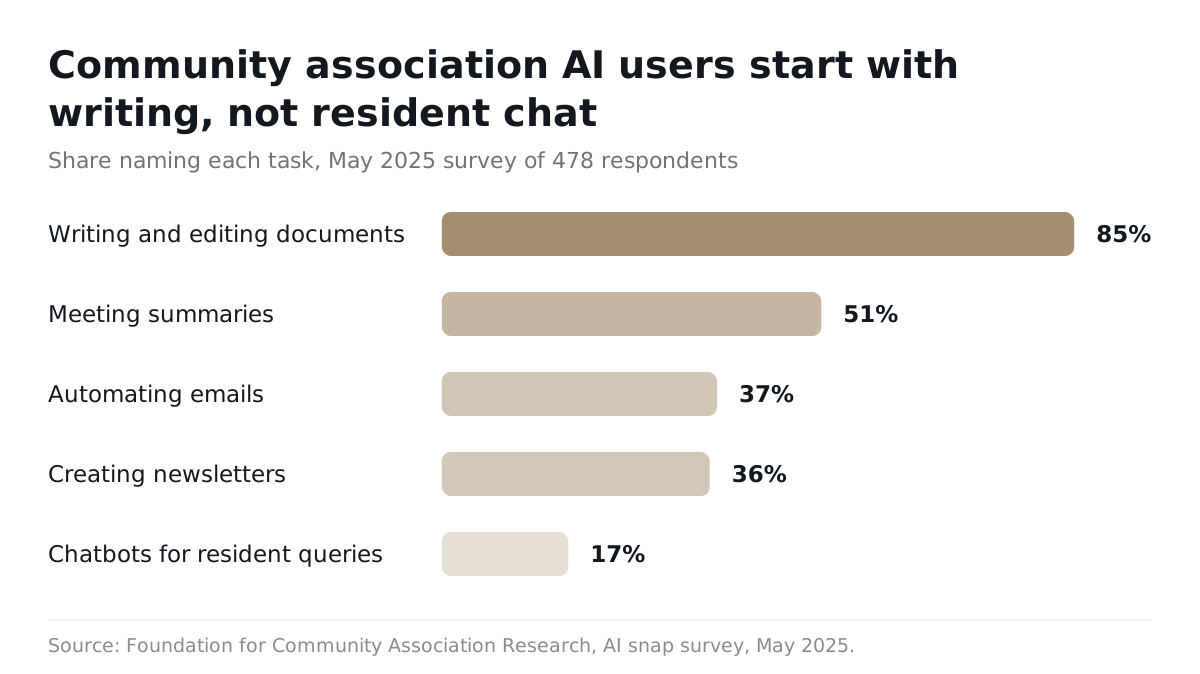
Community associations look similar. A May 2025 survey of 478 managers, board volunteers, and executives by the Foundation for Community Association Research, the research arm of the Community Associations Institute (CAI), found that 71% were already using AI. The top task was writing and editing documents, at 85%.
Dawn Carpenter, 2025 IREM President, put it plainly in that IREM release: "embracing technology like AI is no longer optional, it's essential." Essential is not the same as unsupervised. If you are worried AI is coming for your job, our take on whether AI will replace property managers explains why the judgment calls stay with you.
The table sums up all five jobs.
| Job | Who does the first pass in URBI | What a person still approves |
|---|---|---|
| Resident questions and calls | Arthur (resident facing) | New answers, refunds, anything outside the knowledge base |
| Work order intake and triage | Arthur takes the request; HERO proposes tickets and vendor work orders for staff to confirm | Emergencies, vendor dispatch, scope, and spend |
| Amenity bookings | Arthur books within the rules you set | Exceptions, deposit returns, damage, disputes |
| Notices and announcements | HERO drafts (manager facing) | Facts, audience, timing, and the final send |
| Board and owner reporting | HERO answers questions and drafts from your records | Every number and every conclusion |
Can AI answer resident questions and cut your call volume?
Yes, for questions that already have a written answer. Garbage day, gym hours, guest parking, and move in rules are typical. AI can give those answers at 2 a.m. without waking anyone. It should not improvise on anything it has not been told.
What it costs you today. We could not find a credible national benchmark for how many resident calls a building manager fields each week, and we will not invent one. You already know your own number. It is the phone that rings while you are walking a unit, and the same question answered for the fortieth time.
What AI does reliably now. In URBI, this is Arthur's job. Arthur is the resident facing AI. It answers by voice call, SMS, email, and in app chat, in ten languages. It only answers about the caller's own household, and it asks for a PIN before anything sensitive. It never claims to be the property manager.
The CAI Foundation survey shows this job is still early. Only 17% of respondents used chatbots to manage resident queries, far behind document writing. That is room to grow, if the answers are right.
Where the human step stays. When Arthur does not know an answer, it does not guess. It escalates to the manager with a summary. The manager answers once, and that answer is saved to a knowledge base scoped to the property. The next resident who asks gets it from Arthur directly. Managers can view, edit, and delete every entry. Our guide to building an AI knowledge base for property management covers how to seed it before launch.
Every call ends with a transcript, a summary, and a manager notification. That holds even if the resident hangs up mid call.
Can AI take in and triage work orders without losing any?
Yes, and the biggest win is that nothing gets lost. Speed comes second, so measure it instead of assuming it. The goal: every request lands as a tracked ticket with an owner.
What it costs you today. Requests arrive by text, email, hallway conversation, and voicemail. Some never become tickets. A real estate broker on BiggerPockets in June 2026 gave blunt advice: "get off text messages for maintenance requests." The same post warned there is no audit trail when a tenant says they reported something months ago.
What AI does reliably now. The work splits in two, and the two sides stay separate.
- Arthur, on the resident side, takes a leak report by phone, text, or chat and creates a service ticket. Residents can add photos and see progress in the app. The resident app also shows a persistent emergency line notice, so an urgent problem has a phone number, not a chat window.
- HERO, on the manager side, reads a message thread in the staff inbox and proposes a ticket, task, note, or notice from it. It can also propose a vendor work order. A person reviews each proposal and confirms it. Vendors then work from an emailed link with no login.
Where the human step stays. A person confirms emergencies, dispatch, access to units, and anything that costs money. HERO groups multi step work into a numbered plan you approve step by step. It never sends the plumber on its own. For the details of how that sorting works, read our piece on AI work order triage.
Can AI manage amenity bookings and the rules around them?
Yes, for routine bookings inside rules you have already set. Exceptions and money disputes stay with a person. This is the job where clear rules do most of the work and AI simply applies them.
What it costs you today. We found no national data on how much staff time amenity booking takes. In practice, the cost shows up as double booked party rooms, arguments over who reserved the grill first, and deposit questions after the event.
What AI does reliably now. Arthur can book an amenity for a resident over the phone, by text, or in chat. The rules you set in URBI amenity booking are what keep those bookings clean:
- Capacity aware scheduling with conflict detection, so two households cannot claim the same slot.
- Waivers attached to the booking.
- Deposits with a keep or return decision and an audit trail.
- Multi day bookings with a buffer after each one for cleaning or service.
- Cancellation and refund flows.
Where the human step stays. Arthur can request a refund, but the manager approves it. A person decides whether a deposit is kept after damage. A person handles the resident who wants an exception to the quiet hours rule. AI applies the rule. It does not rewrite it.
Can AI write your notices and announcements?
Yes, and this is the easiest place to start. Drafting is the job AI does best today. It is also where a wrong draft is cheapest to catch, because you read it before anyone else does.
What it costs you today. Notices take longer than they should. A water shutoff, a fire alarm test, a board meeting reminder, and a monthly update each need the right facts, the right audience, and the right tone. In the CAI Foundation survey, 37% of AI users were already automating emails and 36% were creating newsletters with it. Managers found this use first for a reason.
What AI does reliably now. HERO, inside the URBI Kore dashboard, drafts the notice from what you tell it and from the property's records. It can propose an announcement, an email, a push message, or an emergency banner for the lobby screens. It drafts replies to residents in the staff inbox too.
Where the human step stays. Everything HERO drafts is a proposal until a person confirms it. You check the dates, the affected units, and the wording. Then you send it, or schedule it, targeted by unit or access level. One post can go out across several properties at each building's local send time. You can see more of how this works on the HERO AI page.
Can AI prepare board and owner reports?
AI can gather the facts and write the first draft. It cannot sign off. Boards should treat every AI written report as a draft until a person has checked the numbers against the source records.
What it costs you today. Board packages eat evenings. Pulling open tickets, incident notes, amenity use, and resident issues from several places before a meeting is slow work. In the CAI Foundation survey, 51% of AI users already used it for meeting summaries.
What AI does reliably now. HERO answers plain language questions by working across the property's records, documents, and procedures. Ask it which tickets stayed open longest this quarter, or what the bylaws say about pets. Each answer comes with a "what I checked" panel, so you can see the sources. When HERO cannot find the answer, it says so instead of guessing.
For boards that want a daily pulse, Chief of Staff sends an opt in weekday morning email briefing to staff, boards, and managers. It never goes to residents. Our guide to AI for condo management goes deeper on how boards use this.
Where the human step stays. A person reconciles totals, reads the source records behind any claim, and approves the commentary. Financial and compliance statements get a human signature every time.
What are the real risks of AI in a building?
There are four: wrong answers, fair housing exposure, AI disclosure laws, and privacy. Each has a practical guardrail. None is a reason to wait. Every one is a reason to keep a person in the loop.
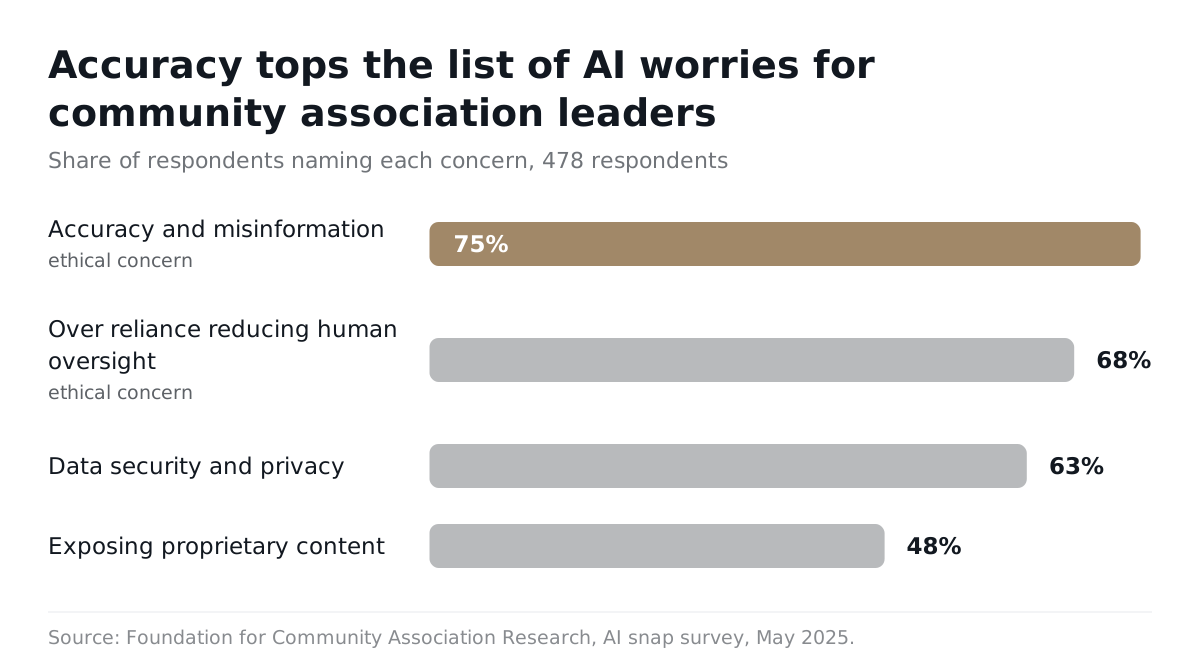
Managers already know this. In the CAI Foundation survey, 75% named accuracy and misinformation as an ethical concern. 68% worried that leaning on AI would reduce human oversight. 63% named data security and privacy as a top concern.
What happens when AI gives a resident a wrong answer?
The resident acts on it, and your building owns the result. The guardrail is to limit answers to approved content and route everything else to a person. Arthur answers from the property's knowledge base, escalates what it does not know, and saves your answer for next time. HERO shows what it checked. Our list of common property management AI mistakes covers the failures we see most.
Does fair housing law apply to AI decisions?
Yes. HUD said in April 2024 that "The Fair Housing Act applies to housing decisions regardless of what technology is used." HUD has since withdrawn a set of fair housing guidance documents, but that notice states that actions that do not comply with the Act remain subject to enforcement. The law did not change. Keep accommodation requests, rule enforcement, fines, and anything that affects a resident's rights in human hands.
Do you have to tell residents they are talking to AI?
Sometimes by law, and always as good practice. The rules vary by state:
- California bans using a bot to mislead people about its artificial identity to drive a sale or sway a vote, and requires a clear and conspicuous disclosure in those cases.
- Utah narrowed its rule in 2025 under SB 226. Businesses must disclose generative AI when a consumer directly asks, and in certain high risk interactions.
- Colorado signed Senate Bill 189 of 2026 on May 14, 2026. It counts housing as a consequential decision. It requires notice at the point of interaction and a right to meaningful human review after an adverse outcome, with protections starting January 1, 2027.
Disclosure is still uneven. Asked whether they disclose AI generated content, only 15% of CAI Foundation respondents said yes, and 46% said it depends on the content. Arthur never claims to be the property manager. Telling residents up front that they are talking to an AI assistant costs nothing and builds trust. Ask your attorney about your state.
How do you protect resident privacy?
Keep resident data inside systems built for it, not in a public chatbot. In the CAI Foundation survey, 48% worried about exposing proprietary content. Arthur only discusses the caller's own household and asks for a PIN before sensitive requests. In URBI, staff access is controlled with per module permissions.
How can a small building or condo board start without a big project?
Pick one job, run it for a month with approval on, and measure. You do not need a new department or a six month rollout.
- Choose one low risk job. Monthly notices or amenity questions are good first picks. Leave anything involving money or enforcement for later.
- Write a one page AI policy. Say what data AI may use, which decisions it may never make, and who approves what. In the CAI Foundation survey, 80% said training programs would help adoption, so plan a short session for staff and the board.
- Load approved content only. Current rules, amenity hours, contacts, emergency instructions, and board approved answers.
- Keep approval on. No notice, refund, dispatch, or report goes out without a person saying yes.
- Measure before and after. Track first response time, missed requests, rework, and your own minutes.
- Review, then add the next job. Read every escalation and every wrong answer before you expand.
URBI is built for this pace. Onboarding includes concierge training before launch, a pre launch letter to residents, and credentials on launch day. Plans run month to month. If you are comparing options, our roundup of the best AI property management software lays out what to ask. For the full picture of the platform, start with what URBI is, then see URBI for residential buildings.
What do building managers ask about AI?
Will AI replace my building manager or front desk?
No. AI takes the repeated work: the same questions, the first draft, the ticket from a text message. It does not walk a unit, calm a neighbor dispute, or decide whether a deposit is kept. In URBI, Arthur handles resident conversations and HERO drafts for the manager. Both hand consequential work to a person. The manager's role shifts toward approving, fixing exceptions, and keeping the knowledge base current.
Can a self managed condo board use AI without a property manager?
Yes. Volunteer boards have the least spare time, so the drafting help counts for a lot. Start with notices and board package drafts, since a board member can review both before anything goes out. Keep enforcement, fines, and accommodation requests with the board. Write down who approves what. A one page policy is enough for a small building, as long as everyone on the board has read it.
What should AI never decide in a building?
Anything that affects a resident's rights, money, or safety. That includes rule violations and fines, accommodation requests, deposit disputes, emergency response, and vendor spend. AI can gather facts, summarize history, and draft a recommendation for each of these. A person makes the call and owns it. Colorado's 2026 law points the same way, with a right to human review for covered housing decisions.
AI can take the repeated work off a building manager's plate today, as long as it proposes and people approve. URBI keeps the two roles apart: Arthur for residents, HERO for the manager, and a person approving every step that matters. To see the five jobs running in your building, email hello@myurbi.co.
Keep reading


