



Package room inventory software gives every parcel one record: recipient, unit, carrier, label photo, exact shelf, and every touch until pickup. Staff find boxes fast and settle disputes with evidence. URBI starts that record at intake with the AI scanner and keeps a photo chain of custody.
Why does a package room need inventory software at all?
A package room needs inventory software because the volume is now too high to track from memory, sticky notes, or a group text. A room without a record works until the first missing parcel. Then nobody can say what happened.
The numbers keep climbing. The Pitney Bowes Parcel Shipping Index puts 2025 US parcel volume at 23.1 billion shipments, up 3.3 percent from 2024. The same index says Amazon Logistics became the largest parcel carrier by volume, with 6.9 billion parcels. The Postal Service alone handled 6.8 billion shipping and package pieces in fiscal year 2025, according to USPS Postal Facts.
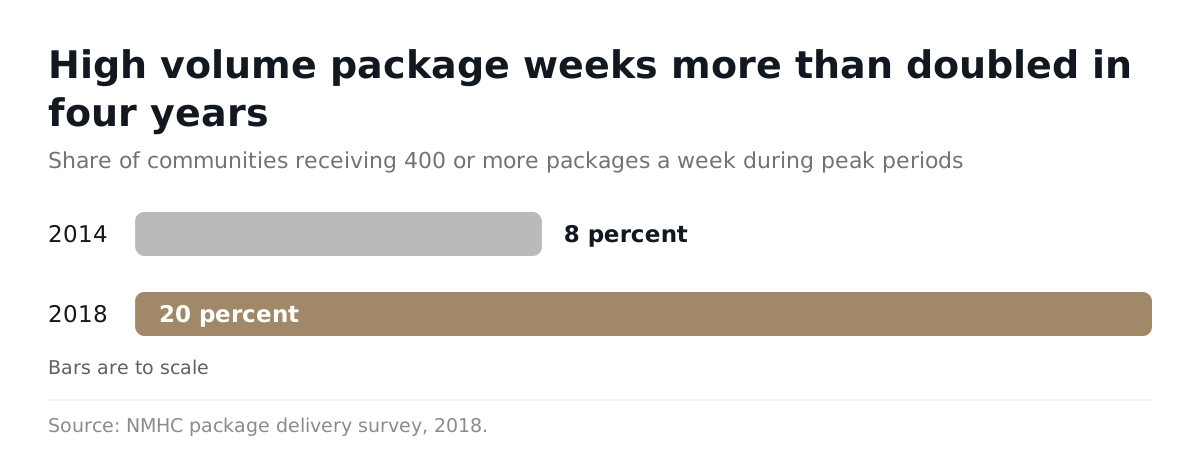
Building level data is older, but it shows the direction. In a 2018 NMHC package delivery survey, 20 percent of communities received 400 or more packages a week during peak periods. In 2014 that figure was 8 percent. No current national count of parcels per package room exists, so treat these as a floor, not a forecast.
Inventory is the part most buyers skip. They shop for notifications and hardware. The day to day work is really a stock problem: things come in, sit somewhere, and must leave with the right person. This guide covers that inventory discipline. For the full intake to pickup routine, see our package room workflow guide.
What fields belong in a package room inventory record?
A complete package record holds identity, location, and custody fields, and each one answers a question someone will ask later. If a field cannot answer a real question, drop it. If a real question has no field, add one.
Here is a minimum record for a residential building.
| Field | What it holds | The question it answers |
|---|---|---|
| Record ID | A unique number the system assigns | Which parcel are we talking about? |
| Tracking number | The carrier's tracking code from the label | Does this match what the resident sees in the carrier app? |
| Carrier | USPS, UPS, FedEx, Amazon, and others | Who dropped it off? |
| Recipient and unit | Name on the label and the matched unit | Who gets notified and who may collect it? |
| Label photo | An image taken at intake | What did the parcel look like when it arrived? |
| Received time and staff member | Timestamp plus the person who logged it | When did the building take custody, and who took it? |
| Shelf location | One code, such as A.03.2 | Where is it right now? |
| Handling flag | Oversized, perishable, fragile, signature required | Does this parcel need special treatment or a shorter hold? |
| Notification log | Each alert and reminder with its time | Was the resident told, and when? |
| Pickup record | Time, collector, and staff member who released it | Who took it out, and when? |
| Status | Received, notified, picked up, returned, or exception | Is this parcel still our responsibility? |
| Notes | Damage, moves, resident calls | What else happened along the way? |
The most skipped field is the staff member. Records that show only a timestamp cannot tell you who to ask. The second most skipped is the pickup collector. "Picked up" with no name is the weakest line in any dispute.
Keep the status list short. Five states cover almost every case. More states invite staff to guess.
How do staff find one parcel among hundreds?
Staff find parcels fast when every shelf has a printed code and every record stores that code. Search then does the rest. Without a location field, search tells you a parcel exists but not where it is.
What does a good shelf code look like?
A good shelf code reads from big to small: zone, bay, shelf. "A.03.2" means zone A, bay 3, second shelf from the floor. Print the code on every shelf edge at eye level. Use the same format on every floor and in every overflow closet.
- Zones split the room into areas staff can see from the door, such as A, B, and C.
- Bays are the upright shelving units, numbered left to right.
- Shelves count up from the floor, so the number also hints at height.
- Bins hold flat mailers and small padded envelopes, coded like shelves, such as BIN.07.
- Floor spots for oversized items get their own code, such as FLOOR.2, so a couch box still has an address.
Some rooms sort by unit number, with floors 1 to 5 on bay 1 and so on. That works at low volume. It breaks when one unit gets eight boxes in a week and its shelf overflows. A location code lets any parcel go on any open spot, because the record remembers where.
Which search filters matter most?
The filters that matter most are unit, resident name, tracking number, carrier, date received, and shelf code. Residents often ask by name or by tracking number from their phone. Staff usually search by unit. Auditors search by date range.
One more habit helps: scan or confirm the shelf code when the parcel is placed. A location typed from memory is a guess.
What is a package aging report, and what holding limit should a building set?
A package aging report lists every open parcel by how long it has been in the room, so staff act on the old ones before they turn into disputes. It turns a pile of boxes into a short to do list. Run it every morning.
How should an aging report be grouped?
Group open parcels into buckets tied to your holding policy. A building with a 10 day limit might use these:
| Days in the room | What staff do |
|---|---|
| 0 to 2 | Nothing. The first alert covers it. |
| 3 to 5 | Send a reminder. |
| 6 to 9 | Send a final notice that names the deadline. Call if the unit has a phone on file. |
| 10 and over | Move to the unclaimed area, update the record, and follow the written policy. |
Each row on the report should show the unit, shelf code, days held, last reminder sent, and any handling flag. Perishables need their own shorter clock.
What holding limits do real mailrooms use?
No national standard sets a package holding limit for apartment or condo buildings, so each building writes its own. Published university housing policies show what a clear rule looks like.
- The University of Georgia housing policy, approved in May 2024, gives owners 10 calendar days from the first notification. On day 11, staff move the parcel to an unclaimed tub and note the action in the housing system.
- Stony Brook University's mailroom returns items not picked up after 14 days to the sender. It discards perishables not collected within 48 hours.
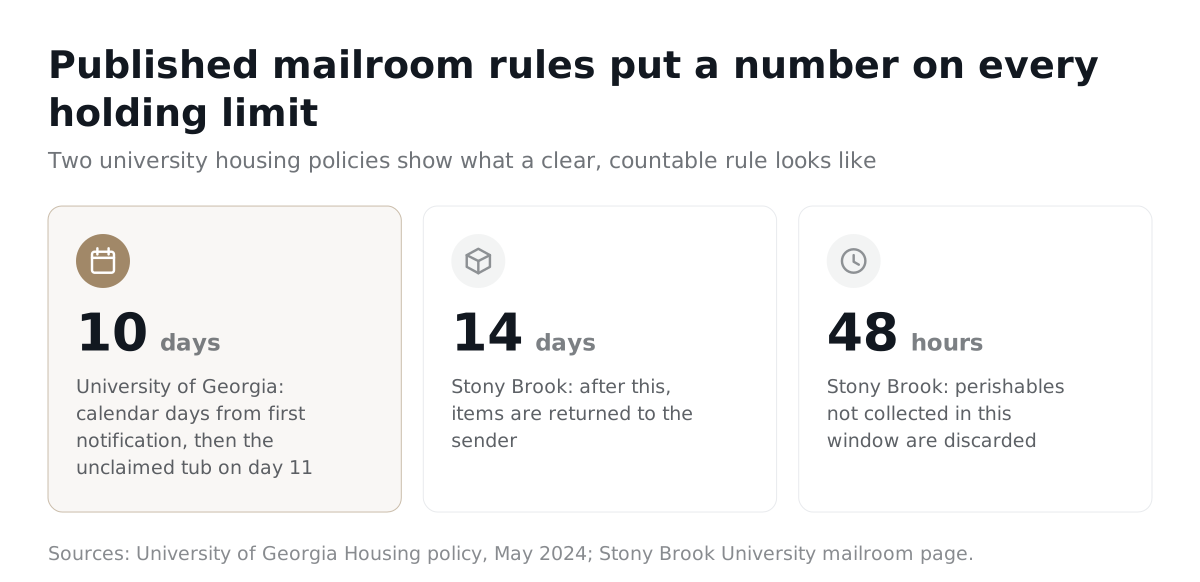
Notice what both rules share. The clock starts at a recorded event, the deadline is a number, and the action is written down. Your aging report can only enforce a limit your record can measure. Put the limit in the resident rules, then let the report do the counting.
What audit trail settles a missing package dispute?
The audit trail that settles a missing package dispute is a timeline of every event on that parcel, each with a time, a person, and ideally a photo. When a resident says "the carrier says delivered, but I never got it," the timeline shows exactly where the chain holds and where it breaks.
Walk the record in order.
- Arrival. Is there a label photo and a received time? If not, the building may never have taken custody. The dispute belongs with the carrier.
- Match. Does the photo show the resident's name and unit? A wrong unit match is a staff error you can fix.
- Placement. Which shelf code was recorded, and by whom? Check that spot and the spots next to it.
- Notification. When did the alert go out? Did reminders follow?
- Moves and notes. Was the parcel moved to overflow or the unclaimed area?
- Release. Who collected it, when, and which staff member handed it over?
Most disputes end at step one or step six. Either the building never had the parcel, or the record shows who took it. The hard cases sit in the middle, where a parcel was logged and shelved but has no pickup. Those point to a room access problem, not a software problem. Door logs and cameras then carry the rest of the story.
A clean trail also shapes the liability question. What a building owes a resident depends on the lease, state law, and whether staff took custody. We cover that in who is liable for stolen packages in an apartment. The short version: the record is what lets you answer.
Do package rooms or package lockers give better inventory control?
Lockers give tighter control for standard parcels, and rooms give more capacity and handle big items. Neither wins on every count. The right answer depends on your parcel mix and who can enter the room.
| Inventory question | Package room with software | Package lockers |
|---|---|---|
| Where is the parcel? | Only as good as the recorded shelf code | Fixed to one compartment |
| Who can touch it? | Anyone with room access | Only the person with that door's code |
| Oversized items | Fits on the floor with a floor code | Often does not fit; needs a backup spot |
| Holiday surges | Add shelving or overflow space | Capped by compartment count |
| Pickup proof | Needs a release step or room access log | Door opening is logged per compartment |
| Main failure | Parcels logged but never shelved, or shelved wrong | Full lockers push parcels back to the desk |
Oversized items are the pressure point. "Our residents are now receiving frequent deliveries of larger items," said Stephanie Dryer, a community manager with Western National Property Management, in Multifamily Executive in November 2024. In the same article, Sagi Alkobi of Universe Holdings says his company takes packages at the leasing office in fewer and fewer buildings.
That is why many buildings run both. Lockers take the standard boxes. A room takes furniture, overflow, and surges. The software should hold every parcel in one list either way, so staff never have two places to check. For the full hardware comparison, read package lockers vs package management software.
How much staff time does package inventory cost?
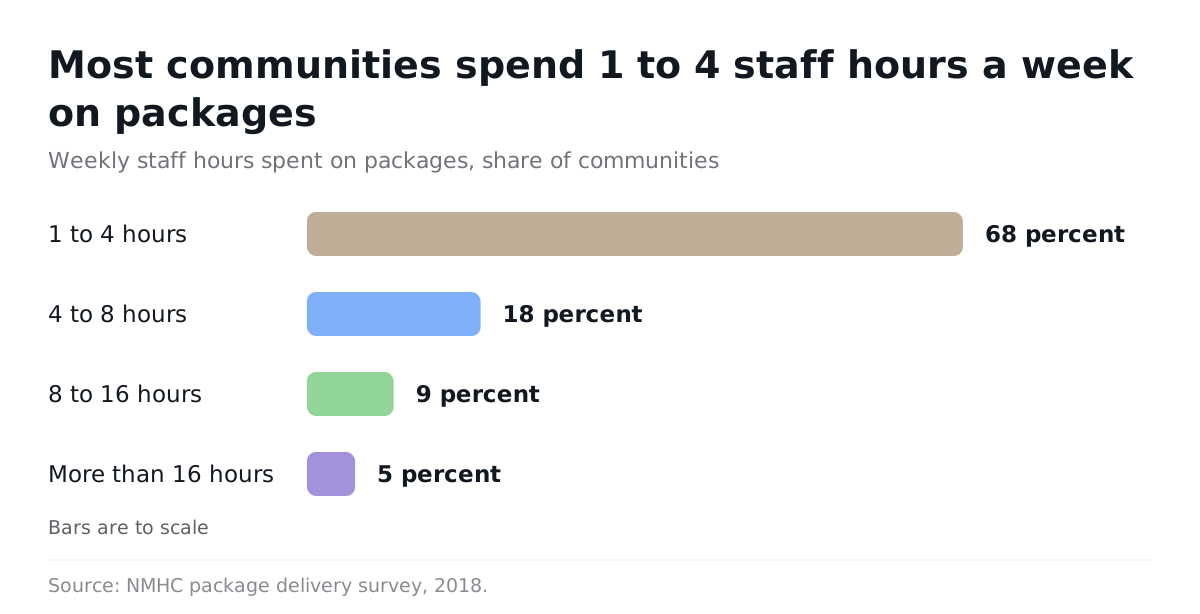
Package inventory costs most buildings a few staff hours every week, and much more at peak. The 2018 NMHC survey found 68 percent of communities spent 1 to 4 staff hours a week on packages. Another 18 percent spent 4 to 8 hours, 9 percent spent 8 to 16, and 5 percent spent more than 16.
The same survey showed how buildings handled parcels then. Holding at the management office led at 41 percent. Package lockers were at 15 percent, and resident accessible package rooms at just 5 percent. Those shares are eight years old. We found no newer public survey that asks the same questions.
Inventory habits drive most of that time. A missing shelf code means a search. A missing pickup name means a phone call. An aging report you never run means a shelf full of boxes in week three. For the full cost picture, see package handling costs for apartment buildings.
How does URBI handle package room inventory?
URBI builds the inventory record at the moment a parcel arrives, then keeps every later touch on the same record. Staff photograph the shipping label. The AI scanner reads the tracking number, the carrier, and the recipient unit, and staff confirm the match. The scanner recognizes nine carriers.
- Photo at intake. The label photo stays on the record, which covers step one of any dispute.
- Instant alert. The resident gets a push notification in the URBI app as soon as the parcel is logged.
- Per unit package tabs. Each unit has its own tab, so staff see every open parcel for that home in one place.
- Dashboard scan widget. The URBI Kore web dashboard has a scan widget for fast intake at the desk.
- Chain of custody. The record keeps a full chain of custody with photo from intake to release.
- Locker integration. Smart lockers can take small parcels while the room handles the rest.
The package tools sit inside the same platform as messaging, notes, and service tickets. A resident question about a parcel can move to a concierge chat, and every conversation is logged. You can see how that fits the wider staff toolkit on the operations and workflow features page. For how alerts and reminders reach residents, read our apartment package notification system guide.
URBI serves condo boards, property managers, and multifamily operators. The URBI for residential buildings guide shows how packages sit next to amenities, notices, and payments. New to the platform? Start with what is URBI.
FAQ: What do managers ask about package room inventory software?
What is package room inventory software?
Package room inventory software keeps one record for every parcel a building receives. The record holds the tracking number, carrier, recipient, unit, a label photo, the shelf location, alerts sent, and who picked it up. Staff use it to find parcels fast, chase old ones through an aging report, and answer disputes with a timeline. Notification tools only tell residents a parcel arrived. Inventory software also tracks where it is and who touched it.
How long should a building hold an unclaimed package?
No national rule sets a holding limit for apartment or condo buildings, so each building picks one and writes it into the resident rules. University mailrooms offer clear examples. The University of Georgia gives 10 calendar days from the first notification. Stony Brook returns items after 14 days and discards perishables after 48 hours. Pick a number, start the clock at a recorded event, and let the aging report enforce it.
How do you organize a package room with hundreds of parcels?
Give every shelf a printed code that reads zone, bay, then shelf, such as A.03.2. Record that code on each parcel when it is placed, ideally by scanning. Put flat mailers in coded bins and oversized items in coded floor spots. Then any parcel can go on any open shelf, because search tells staff where it went. Sorting by unit number alone breaks as soon as one unit overflows its shelf.
Can software prevent package theft from a shared room?
Software alone cannot stop theft if too many people can enter the room. What it can do is show exactly where the chain broke. A record with a label photo, shelf code, and release name tells you whether a parcel was ever received and whether anyone signed it out. Pair that record with door access logs and cameras. Together they show what the record alone cannot.
A package room runs on its record. Give every parcel a photo, a shelf code, a clock, and a named pickup, and most package problems shrink to a quick search. If you want to see how URBI's AI scanner, per unit package tabs, and chain of custody would work in your building, email hello@myurbi.co and we will walk you through it.
Keep reading


