



An AI chatbot for apartment residents should answer the questions people ask after move in: building rules, amenity hours, package arrivals, notices, and repair status. It should hand anything risky to a person with the full story attached. URBI builds that split into Arthur, its resident facing AI.
Why is a leasing chatbot the wrong tool for current residents?
A leasing chatbot is built to win a prospect, and a current resident needs help running a home. Leasing tools focus on tour booking and lead follow up. That work ends the day the lease is signed.
After move in, the questions change. Residents stop asking about floor plans. They ask why the gym closed early, whether a parcel arrived, and when someone will fix the dishwasher. Those answers live in building records, not in a marketing script.
Operators feel this volume every day. Amy Barricelli, senior vice president at RR Living, told Multifamily Executive in April 2026: "There are a lot of repetitive questions in leasing and resident communication." Leasing tools cover the first half of that sentence. This article covers the second half.
What questions do residents actually ask after move in?
Residents ask about five things over and over: rules, amenities, packages, notices, and repairs. No public US study we found gives a reliable percentage split across those topics. So treat the list below as a starting inventory, then count your own.
| Topic | Typical resident question | Where the true answer lives |
|---|---|---|
| Policies | Can I have a guest stay for two weeks? Are grills allowed on balconies? | Bylaws, house rules, lease addenda |
| Amenities | Is the party room free Saturday? What are pool hours? | Booking calendar and amenity rules |
| Packages | Did my package arrive? Where do I pick it up? | Package log with scan records |
| Notices | When is the water shut off? Is the elevator back? | Posted announcements and schedules |
| Service requests | Who is handling my leak? When will they come? | Open tickets and vendor updates |
The pattern matters more than the percentages. Most of these questions have one correct answer that already exists somewhere in the building's records. The bot's job is to find it, not to invent it.
Build your test set from real resident verbs. "When." "Where." "Did it arrive." "Who is handling this." Then measure each one separately after launch, per 100 units, so you learn your own mix instead of guessing.
What can a resident facing AI reliably answer today?
A resident facing AI can reliably answer questions whose answers are written down and current. That means approved policies, amenity details, package status from a real scan, posted notices, and the status of an existing service ticket. It cannot reliably answer questions that need judgment.
The reason is simple. Generative AI can sound sure and still be wrong. The 2024 NIST Generative AI Profile calls this confabulation: "confidently stated but erroneous or false content." A bot that reads from your approved documents has far less room to make things up than one that improvises.
Which answers are safe to hand to the bot, and which are not?
Safe answers come from a single source of truth that staff already maintain. Unsafe answers need a decision someone must own. Here is the split we use.
| Let the AI answer | Send to a person |
|---|---|
| Quiet hours, pet rules, move in elevator rules | Exceptions to a rule, or a neighbor dispute |
| Amenity hours, capacity, open booking slots | Deposit disputes and damage claims |
| Whether a package was scanned for your unit | A package marked delivered that the resident never got |
| Details of a posted shutoff or elevator notice | Anything about safety, habitability, or displacement |
| Status of an open ticket and its last update | A ticket closed as done when the problem remains |
Packages show the rule clearly. The bot can say a parcel arrived only if a scan says so. In URBI, staff photograph the label and the AI scanner reads the tracking number, carrier, and unit for staff to confirm. The resident gets a push alert right away. Without that scan, the honest answer is "I can't confirm that yet."
Knowledge quality decides everything here. If your rules document is three years stale, the bot will quote stale rules with confidence. Our guide to building an AI knowledge base for property management covers how to keep it current.
When must the chatbot hand off to a human, and how?
The chatbot must hand off the moment a question involves safety, strong emotion, a dispute, unclear identity, or a decision outside its authority. It must also hand off after it fails twice. The handoff must carry the whole conversation so the resident never repeats the story.
Research backs both halves. A 2026 California Management Review article by Yuqing Ren and Rongjin Zhang of the University of Minnesota names complex problems, emotionally charged complaints, and ambiguous issues as handoff triggers. It recommends passing transcripts, verified identity, and the customer request to the human agent.
What should trigger an immediate handoff?
These situations should skip the bot's answer and go straight to staff:
- Water, fire, gas, smoke, lockouts, or no heat in winter
- Harassment, threats, or a resident in distress
- Disability accommodation requests and fair housing questions
- Billing disputes and deposit disagreements
- A caller who fails identity checks or asks about another unit
- The same question failing twice, or a ticket reopened more than once
Emergencies deserve their own plan. Our post on AI versus an answering service for property management compares who picks up the phone at 2 a.m.
What does a good handoff include?
A good handoff gives staff everything they need to act without calling the resident back to ask basic questions. It should include:
- The verified resident and unit
- The request in one plain sentence
- The full transcript and any photos
- Why the bot escalated
- What the resident was told about next steps and timing
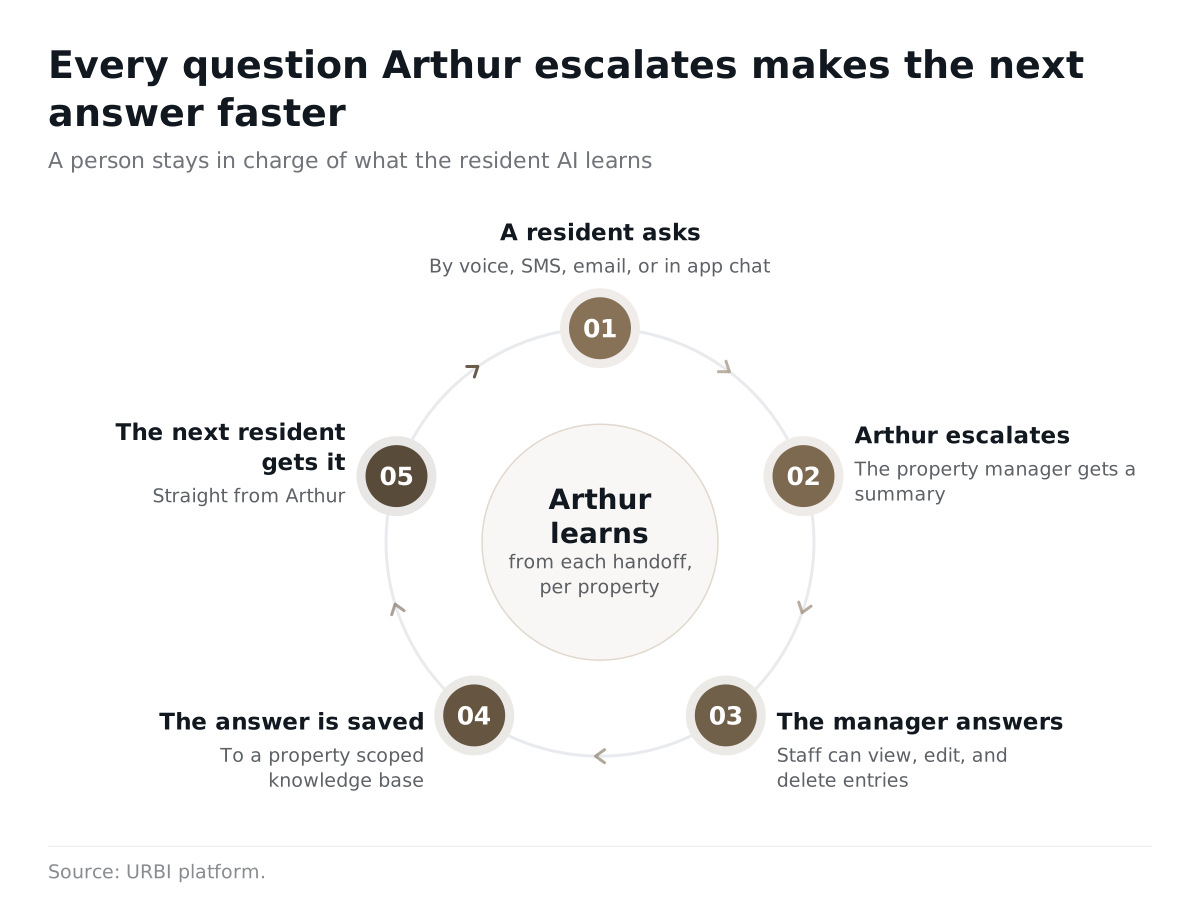
Arthur, URBI's resident facing AI, works this way. When it hits a question it cannot answer, it escalates to the property manager with a summary. The manager's answer is saved to a property scoped knowledge base, so the next resident who asks gets it from Arthur directly. Managers can view, edit, and delete those entries. Each handoff adds to what Arthur knows, and a person stays in charge of what it learns.
How should the chatbot protect household privacy?
The chatbot should verify who is asking before it shares anything sensitive, and it should answer only about that person's own household. It should never reveal another resident's name, unit, balance, package, ticket, or visitors. It should collect nothing it does not need.
The Federal Trade Commission's Start with Security guide puts the first rule bluntly: don't collect personal information you don't need. The same guide tells businesses to limit staff access to data based on job function. A resident chatbot deserves the same least privilege treatment you give employees.
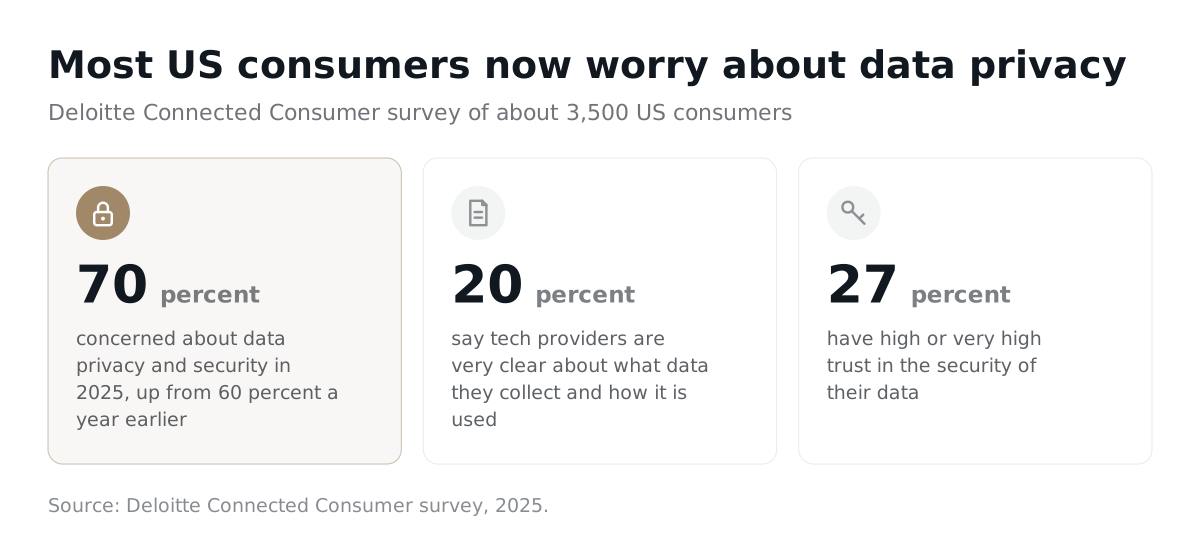
Residents are already wary. Deloitte's 2025 Connected Consumer survey of about 3,500 US consumers found concern about data privacy and security rose from 60 percent to 70 percent in a year. Only 20 percent said tech providers are "very clear" about what data they collect or how it is used, and only 27 percent reported high or very high trust in the security of their data.
What privacy rules should a resident bot follow?
A resident bot should follow a short, strict set of rules:
- Verify identity before any account detail, such as with a PIN
- Scope every answer to the verified caller's household
- Refuse questions about other units, even friendly ones
- Keep resident data inside your approved system, never in public chat tools
- Log every conversation so management can review it
Arthur follows this model. It asks for PIN verification before anything sensitive. It answers only about the caller's own household. Household leaks are one of the failures in our list of common property management AI mistakes.
Should residents be told they are talking to AI?
Yes. Tell residents plainly at the start that they are talking to an AI, what it can help with, and how to reach a person. Hiding the bot saves nothing and costs trust the first time a resident figures it out.
Disclosure rules vary by state, so have counsel check the laws where you operate. The practical case does not depend on the law, though. The California Management Review authors call "no easy path to a human" the biggest irritant in customer service automation. They also report that 53 to 77 percent of survey respondents across studies had a bad or frustrating chatbot experience, and 70 to 80 percent prefer a human agent.
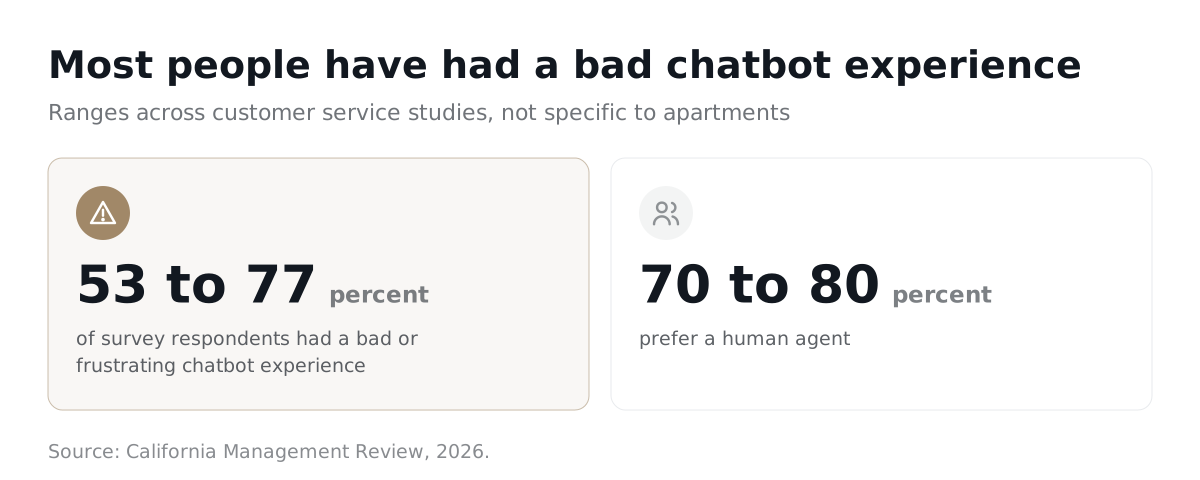
Those numbers come from general customer service, not apartments. They still set the bar. A resident bot that hides its nature, or hides the exit, starts in a hole.
Arthur never claims to be the property manager. When it cannot answer, it escalates to the property manager with a summary.
How does Arthur fit into a building's resident experience?
Arthur is the resident facing AI in URBI Premium. It answers residents on four channels: voice calls, SMS, email, and in app chat. The requests it takes land in the URBI platform, where staff work them from the URBI Kore dashboard.
Arthur can take a resident's request through to a result. It can open a service ticket, book an amenity within the building's rules, register guest parking, pre schedule a visitor, record an event RSVP, send a form, pull a receipt, or send a payment link. Refund requests go to the property manager for approval.
Two design choices matter most for trust:
- A guaranteed record. If a caller hangs up mid call, Arthur still produces a transcript, a summary, and a manager notification. Nothing a resident said gets lost.
- Ten languages. Residents can ask in the language they think in.
Keep Arthur distinct from HERO. HERO is URBI's manager facing AI inside Kore. It helps staff find answers across property records and drafts work that a person approves. Arthur talks to residents. HERO talks to staff. For the staff side, see five jobs AI can do for building managers. If you are weighing Arthur against a leasing oriented alternative, read EliseAI vs Arthur. The URBI AI product page covers both assistants.
How do you measure whether a resident chatbot works?
Measure whether residents got their problem solved, not how many chats the bot kept away from staff. Deflection alone can hide a bot that simply blocks people. Track resolution, accuracy, handoff quality, and privacy incidents together.
First contact resolution is the anchor metric, and the definition is strict. ICMI, in an article by MetricNet's Jeff Rumburg, says contacts that need a callback or escalate to another source of support do not count as resolved on first contact. The same article links high first contact resolution with high customer satisfaction.
| What to measure | How to measure it | What a bad result tells you |
|---|---|---|
| Resolution | Verified first contact resolution by topic | The bot answers but does not solve |
| Accuracy | Share of sampled answers backed by a current document | Stale or invented content |
| Repeat contact | Same resident, same topic, within 72 hours | Residents did not trust the first answer |
| Handoff | Time to a human and whether the resident had to repeat details | Escalation exists on paper only |
| Ticket quality | Correct category, required details captured, duplicates | Staff redo the bot's intake |
| Privacy and safety | Wrong household disclosures and missed emergencies | Stop and fix before anything else |
Set no universal containment target. A high containment rate can mean routine questions got answered. It can also mean residents gave up. The other rows tell you which one happened.
Split every number by property, channel, language, and topic. A bot that performs well on amenity hours and badly on repair status needs a fix to one knowledge area, not a new vendor. Our roundup of the best AI property management software shows what else to check before you buy.
How do you roll out a resident chatbot without annoying residents?
Start narrow, publish the exit to a person, and expand only after the numbers hold. A soft launch on a few topics beats a big launch that fumbles the first repair question.
- Clean up your rules, amenity details, and notices before launch.
- Turn on the safest topics first: amenities, notices, and package status.
- Tell residents it is an AI, what it covers, and how to reach staff.
- Review a sample of transcripts every week for the first month.
- Add repair status and bookings once accuracy and handoff numbers look solid.
URBI's onboarding supports this pace. Staff get concierge training before launch, residents get a pre launch letter, and service runs month to month. For a full view of how the platform works in apartment and condo buildings, see URBI for residential buildings, or start with what URBI is.
FAQ
Can an AI chatbot for apartment residents replace front desk staff?
No. A resident chatbot takes the repeat questions off the desk: amenity hours, rules, package status, and ticket updates. People still handle emergencies, disputes, accommodations, and anything that needs judgment. The best setup uses AI for volume and staff for exceptions. Arthur escalates unknown questions to the property manager with a summary, and the answer is saved so the next resident gets it faster. Staff time moves to the conversations that actually need a person.
What data does a resident chatbot need to work well?
It needs current building documents, posted notices, amenity schedules and rules, a package log built from real scans, open service tickets, and a verified link between each resident and their unit. It also needs clear escalation contacts. It does not need anything beyond what the task requires. Keep resident data inside your approved system, verify identity before sharing account details, and limit every answer to the caller's own household.
Is it legal to use an AI chatbot with residents in the US?
Generally yes, but rules on bot disclosure, call recording, texting, and data privacy vary by state. Have counsel review the laws where your buildings sit before launch. The safest operating standard is the same everywhere: tell residents they are talking to AI, collect only what you need, restrict access, keep a record of every conversation, and make reaching a person easy. That standard also builds trust faster than the legal minimum.
How long does it take to see results from a resident chatbot?
Expect useful signal within the first month if you review transcripts weekly. Expect early wins on amenity and notice questions, where answers are simple and written down. Repair status takes longer because it depends on ticket hygiene. Track first contact resolution, repeat contacts within 72 hours, and handoff time from day one. Those three numbers tell you whether to expand the bot's scope or fix its knowledge first.
A resident chatbot earns its place when it answers from real records, knows its limits, protects each household, and gets people to staff fast. Arthur was built around those rules, and it sits inside the same URBI platform that runs tickets, packages, amenities, and notices. To see how Arthur would handle your building's questions, email hello@myurbi.co.
Keep reading


