



Package handling costs in apartment buildings are mostly staff time: minutes to log, shelve, find, and release each parcel, multiplied by weekly volume and a holiday peak near 1.8 times normal. Measure them before buying anything. URBI shortens that work with an AI scanner, instant resident alerts, and photo proof.
Why measure package handling costs in minutes instead of money?
Minutes are the one unit every building can measure honestly. Wages, benefits, and contracts differ from desk to desk, but a stopwatch works the same everywhere. A board can compare two buildings, or two vendor pitches, only when both are expressed as staff hours per week.
Most of what ranks for this topic today is vendor copy with no denominator. It says "save hours" without saying how many packages, how many minutes each, or which steps were counted. This guide gives you the denominator.
- Volume: packages per unit per day, and the holiday multiplier.
- Handling time: minutes per package across the full cycle, from carrier to resident.
- Exceptions: the share of packages that turn into a search, a dispute, or a missing parcel.
Multiply those three and you have the real workload. Everything else in this post helps you fill in the numbers.
How many packages does an apartment building receive per unit per day?
The best national benchmark works out to roughly 0.08 packages per unit per day, rising to about 0.15 during the holidays. That comes from the 2018 NMHC and Kingsley package survey, the largest association study of building package work we could find.
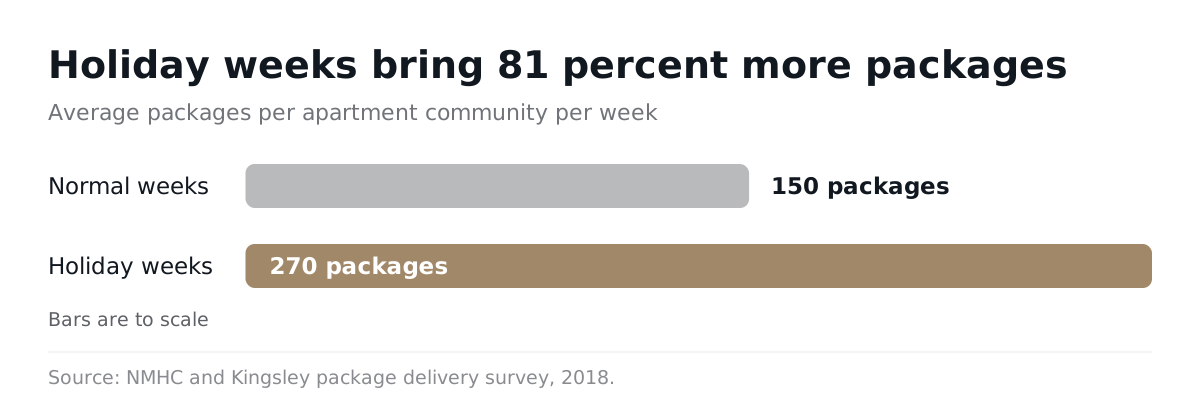
The survey reported that the average apartment community received roughly 150 packages per week, jumping to 270 during the holidays, an 81 percent increase. It covered 2,098 communities representing 543,900 units. Divide the units by the communities and the average community had about 259 units. That is how the per unit figures above are calculated.
| Measure | Normal weeks | Holiday weeks |
|---|---|---|
| Packages per community per week (NMHC 2018) | 150 | 270 |
| Packages per unit per week (259 unit average) | 0.58 | 1.04 |
| Packages per unit per day | about 0.08 | about 0.15 |
Treat 2018 as a floor, not a forecast. In November 2024, Elie Rieder, founder and CEO of Castle Lanterra, told Multifamily Executive that his portfolio's package volume had doubled in a year. His firm turned former leasing roles into resident services jobs that include package duty.
The honest answer for your building is to count. Log every package for two normal weeks and one week in December. Divide by occupied units and by seven. That number beats any benchmark.
How big is the December peak for staffing?
Plan for about 1.8 times normal volume during the holiday season. The NMHC survey's 81 percent jump is a season figure, not a single month, so your worst December week may run higher. The same survey found 20 percent of communities received 400 or more packages a week at peak.
The peak is what breaks a desk. A process that fits in a normal week can double in staff time for six weeks straight.
How many minutes does it take to log, store, and release one package?
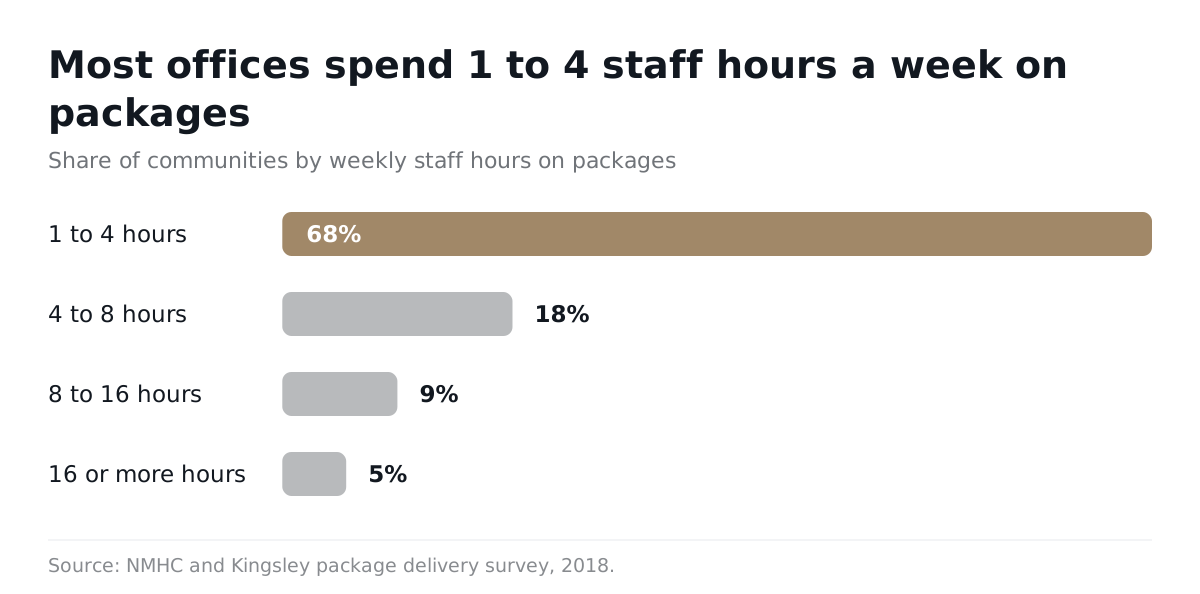
No public study times each step, but the national survey implies well under two minutes per package for most buildings, before searches. In the NMHC data, 68 percent of management offices spent 1 to 4 staff hours a week on packages.
| Staff hours per week on packages | Share of communities (NMHC 2018) |
|---|---|
| 1 to 4 hours | 68% |
| 4 to 8 hours | 18% |
| 8 to 16 hours | 9% |
| 16 or more hours | 5% |
Spread 1 to 4 hours across 150 packages and you get 0.4 to 1.6 minutes per package. That is a rough range, not a measurement. The survey did not link each building's hours to its own volume. It also likely misses the hidden time: the resident at the counter, the call about a code that never arrived, the fifteen minutes behind the shelves.
Full cycle time has five parts. Time each one at your desk.
- Log: read the label, find the unit, enter tracking and carrier.
- Notify: tell the resident, by call, text, email, or door slip.
- Store: shelve, bin, or move to a locker or package room.
- Find: locate the parcel when the resident arrives.
- Release: confirm identity, record the pickup, hand it over.
The notify step still eats time in many buildings. In the 2018 survey, only 45 percent used electronic check in alerts, while 18 percent phoned residents and 6 percent left door notices. A phone call per package is the slowest way to say "you have mail." Our guide to an apartment package notification system shows what to send instead and when to follow up.
What share of packages goes missing, and what does a lost one cost the building?
Nobody publishes a reliable national loss rate for apartment packages, so you have to track your own. The USPS Office of Inspector General counted at least 58 million packages stolen in 2024 in the United States. The same May 2025 report warns that fragmented reporting hides the full scope.
Apartments carry more of that risk. A Security.org survey of 3,307 adults in October 2025 found apartment residents were victimized 3.5 times more often than homeowners in the prior three months. That tells you direction. It does not give you a per delivery rate.
For the building, a lost package costs two things.
- Staff time: the search, the camera review, the carrier call, the written reply, and the follow up.
- Resident trust: the complaint, the repeat visits to the desk, and the renewal conversation later.
Run a simple log for a month. Record each incident type: missing, misdelivered, stolen, recovered, or carrier error. Record the staff minutes each one took. Then use this line in your worksheet: incidents per week times minutes per incident.
Here is an illustration with assumed numbers. If 1 percent of 210 weekly packages becomes a 20 minute search, that is about 42 staff minutes a week. At holiday volume it is about 76 minutes. Swap in your own share and minutes.
Who pays for the parcel itself is a separate legal question. We cover it in who is liable for stolen packages in an apartment building, so this post stays on the labor.
How much does package trouble affect resident trust?
It shows up in satisfaction scores and renewal intent. Apartment dwellers in the Security.org survey were 1.5 times more likely to feel anxious while waiting for deliveries. In a Cortland case study presented with the NMHC survey, "very good" package satisfaction rose from 31 percent to 82 percent after lockers, and 40 percent said they were significantly more likely to renew.
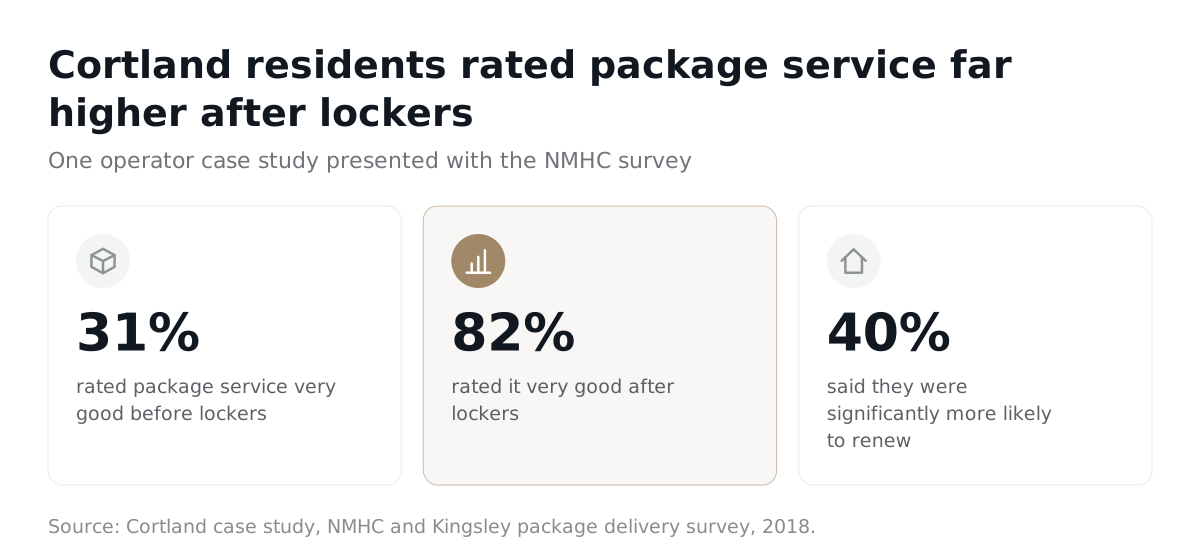
That is one operator's before and after. It is not a national result, but the pattern makes sense. Residents judge the desk by the one package that went wrong.
What is the worksheet a board or manager should run before buying anything?
Run four inputs through two lines of math and you get staff hours per week for normal and peak weeks. Fill the input cells with your own counts. Use the example column only until you have them.
| Line | Item | How to get it | Worked example (200 units) |
|---|---|---|---|
| A | Occupied units | Rent roll or unit list | 200 |
| B | Packages per unit per day | Two week count divided by A, divided by 14 | 0.15 |
| C | Minutes per package, full cycle | Stopwatch 30 packages from log to release | 3 |
| D | Peak multiplier | December week count divided by normal week count | 1.81 |
| E | Packages per week (A x B x 7) | Output | 210 |
| F | Staff hours per week, normal (E x C / 60) | Output | 10.5 |
| G | Staff hours per week, peak (F x D) | Output | 19.0 |
The example inputs are assumptions, not benchmarks. We used 0.15 packages per unit per day because the 2018 average sits near 0.08 and at least one operator reports volume doubling since. We used 3 minutes because the survey range of 0.4 to 1.6 minutes likely leaves out searches and resident questions. The peak multiplier of 1.81 is the NMHC holiday jump.
Read the result plainly. This 200 unit building spends about 1.5 staff hours a day on packages in a normal week. In the holiday peak it spends about 2.7 hours a day. That is a real slice of a front desk shift, before any lost package lands on the counter.
Add one more line if you track incidents: H equals incidents per week times minutes per incident, divided by 60. Add H to F and G.
How much does cutting one minute per package change the total?
In the 200 unit example, dropping from 3 minutes to 2 minutes saves 3.5 staff hours a week in normal weeks. In the peak it saves about 6.3 hours a week, from 19.0 down to 12.7.
| Minutes per package | Normal hours per week | Peak hours per week |
|---|---|---|
| 4 | 14.0 | 25.3 |
| 3 | 10.5 | 19.0 |
| 2 | 7.0 | 12.7 |
| 1 | 3.5 | 6.3 |
This is the table to bring to a board meeting. It shows why the minutes per package input matters more than any feature list. Every vendor should be asked which row their product moves you to, and which of the five steps it touches.
How do package rooms, lockers, and logging software change minutes per package?
Each option removes a different step, so match the tool to your slowest step. None of them removes exceptions.
| Setup | Steps it shortens | Steps that stay with staff |
|---|---|---|
| Staff held in the office | None | Log, notify, store, find, release, every search |
| Access controlled package room | Store, find, release (resident retrieves) | Oversized items, disputes, searches in a shared room |
| Smart lockers | Store, find, release for parcels that fit | Overflow, oversized items, couriers who skip the lockers |
| Logging software | Log, notify, and find (if records are good) | Physical storage and hand off |
Lockers have hard limits. In the NMHC data, 38 percent of locker buildings said capacity fell short in high volume periods. Overflow went back to the office in 52 percent of cases.
Couriers also skip systems they do not understand. Stephanie Dryer, a community manager at Calligraphy, said a confused courier "may just opt to leave the packages without sorting them in lockers," in Multifamily Executive in 2024. Then staff sort them by hand.
Buying nothing can be the right call. Among buildings without lockers, 33 percent said they were too expensive, 25 percent lacked space, and 19 percent said their current system was enough, per the same survey. A small building with carrier to door delivery and few incidents may never earn back new hardware.
For a deeper side by side, read package lockers vs package management software. For the room itself, see our package room workflow for buildings.
How does URBI cut minutes per package at the front desk?
URBI shortens the log, notify, and find steps, and it records every hand off with a photo. The package tools live inside the URBI operations and workflow features, alongside tickets and notes.
- Log: staff photograph the shipping label. The AI scanner reads the tracking number, carrier (nine carriers recognized), and recipient unit. Staff confirm instead of typing.
- Notify: the resident gets a push alert on their phone right away. No calls, no door slips.
- Store: smart locker integration handles small parcels, so they skip the shelf.
- Find: each unit has its own package tab, so staff see what is waiting for that unit in one place.
- Release and proof: a full chain of custody with a photo records each hand off.
The chain of custody also shrinks the lost package line. When a resident says a parcel never arrived, the desk can check the photo record instead of starting a shelf search. A scan widget on the dashboard keeps intake close at hand during a rush.
Run the worksheet before and after. Time 30 packages on your current process, then 30 on URBI. The difference in line C, multiplied by line E, is your weekly saving in staff hours.
New buildings can set this up before the first move in; see package management for new apartment buildings. If you are comparing tools, our guide to the best package management software for buildings lists what to ask each vendor. For how packages fit with everything else a residential team runs, see URBI for residential buildings, or start with what URBI is.
What do managers ask about package handling costs?
How many staff hours does a 200 unit building spend on packages?
With our example inputs, about 10.5 hours a week in normal weeks and about 19 hours in the holiday peak. That assumes 0.15 packages per unit per day, 3 minutes per package, and a 1.81 peak multiplier. Your number will differ. Count packages for two weeks and time 30 of them from log to release. Then run the worksheet above with your own figures.
Is the December package peak really that large?
Yes. The 2018 NMHC and Kingsley survey found average weekly volume rose from about 150 to 270 packages during the holidays, an 81 percent increase. One in five communities saw 400 or more packages a week at peak. Volumes have grown since, so size staffing and storage for the peak week, not the yearly average. Count your own December week to set the multiplier.
Do lockers eliminate front desk package work?
No. Lockers shorten storage and pickup for parcels that fit, but staff still handle overflow, oversized items, and couriers who skip the system. In the NMHC survey, 38 percent of locker buildings said capacity fell short in busy periods, and overflow often went back to the office. Lockers work best paired with software that logs every package and alerts residents.
What should we track to measure lost package costs?
Track incidents by type and the staff minutes each one takes. Use five types: missing, misdelivered, stolen, recovered, and carrier error. Note the date, unit, and outcome. After a month, you will know your incident share and average minutes per incident. Add that to your weekly staff hours. It also gives the board facts instead of anecdotes when complaints come in. If theft is driving those complaints, the playbook is in apartment package theft prevention.
Package handling costs in apartment buildings come down to one number you can measure: staff minutes per package, times volume, times the peak. Measure it, then pick the tool that moves it. If you want to see how URBI's AI scanner, instant alerts, and photo chain of custody change that number at your desk, email hello@myurbi.co.
Keep reading


