



Mass text messaging for apartments works when you text less and target more: urgent, local messages to the residents actually affected, with everything else moved to the app, email, or the lobby screen. URBI handles that split with targeted announcements, push alerts, and an AI that answers the replies.
This is the playbook for the part that comes after compliance. If you still need the consent, opt out, and carrier registration rules, start with our guide to texting residents legally under A2P 10DLC and the TCPA. Here is the short version. Get consent and record it. Honor every opt out, however the resident phrases it. Register your texting brand and campaign before you send. Then come back here, because being legal does not make a text worth reading.
Why does a compliant texting program still fail?
A compliant program fails when residents learn to ignore it or opt out before the text that matters. Legal permission to text is the entry ticket. Attention is the thing you actually spend, and every low value blast uses some of it.
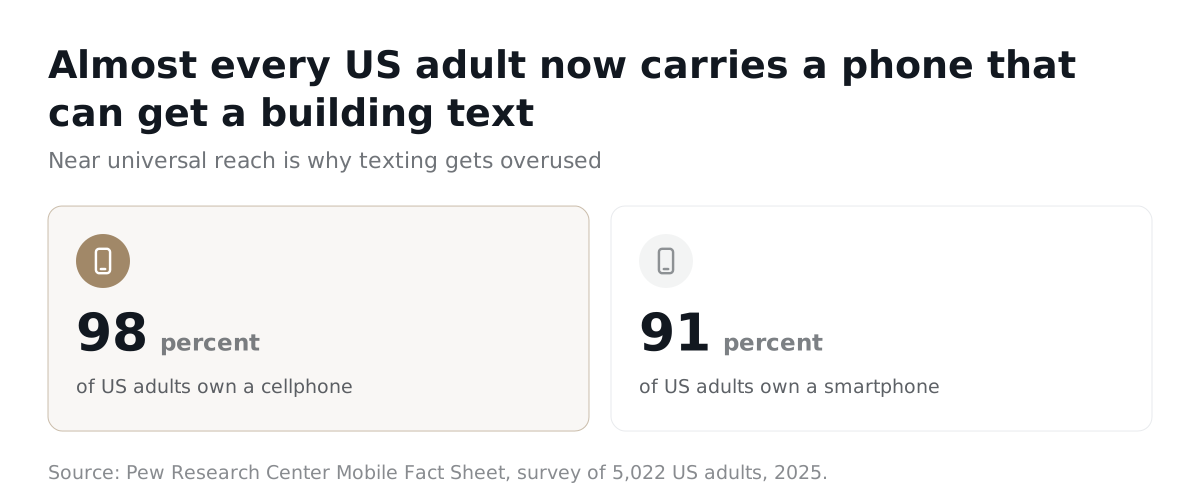
The channel reaches almost everyone, which is exactly why it gets overused. Pew Research Center surveyed 5,022 US adults between February and June 2025. It found that 98 percent own a cellphone and 91 percent own a smartphone. Near universal reach tempts managers to send everything by text. That is the mistake.
The same pattern shows up in paper notices and email. Residents stop reading channels that cry wolf. We covered the reasons in why residents do not read building notices, and SMS is no exception. It just burns out faster because it lands on the lock screen.
What should an apartment building text, and what should stay off SMS?
Text the things that change what a resident must know or do in the next day or two. Keep long, private, legal, or optional content somewhere with more room and a better record. A text should work as an alert, not as the document.
| Message | Text it? | How to handle it |
|---|---|---|
| Water, power, or elevator outage | Yes | Affected stack, floor, or building only. Service, time window, and one action. |
| Planned maintenance needing unit access | Yes | Units on the work order only. Send a reminder the day before and a done message after. |
| Emergency (fire, flood, gas) | Yes, but never alone | Send at once. Back it with push, email, phone calls, and lobby screens. |
| Package or visitor waiting | Usually a push alert | One household only. A push notification in the resident app does this job without spending SMS attention. |
| Rent reminder | Only if the resident asked | Triggered per account, never a building blast. No balances or personal details in the text. |
| Community event | Rarely | App, email digest, or lobby screen. Text only residents who chose event texts. |
| Lease changes, policy updates, fines, disputes | No, except as a pointer | Deliver the formal notice the way your lease and local law require. A text can say it is waiting. |
| Marketing, surveys, promotions | No | Email or the app. These are the messages that train people to opt out. |
The more personally relevant and time bound a message is, the better it fits SMS. Broad, optional content belongs in channels residents browse on their own time.
For a worked example of an outage message done three ways, see our water shutoff notice templates.
What read and response rates do apartment texts really get?
Nobody has published an independent read or response rate for apartment texts. The big open rate numbers you see on page one come from SMS vendors, with no sample, time period, or method disclosed. Treat them as marketing, not benchmarks.
Independent research does show how people react to volume. Volume is the lever you control, so that is the number to watch.
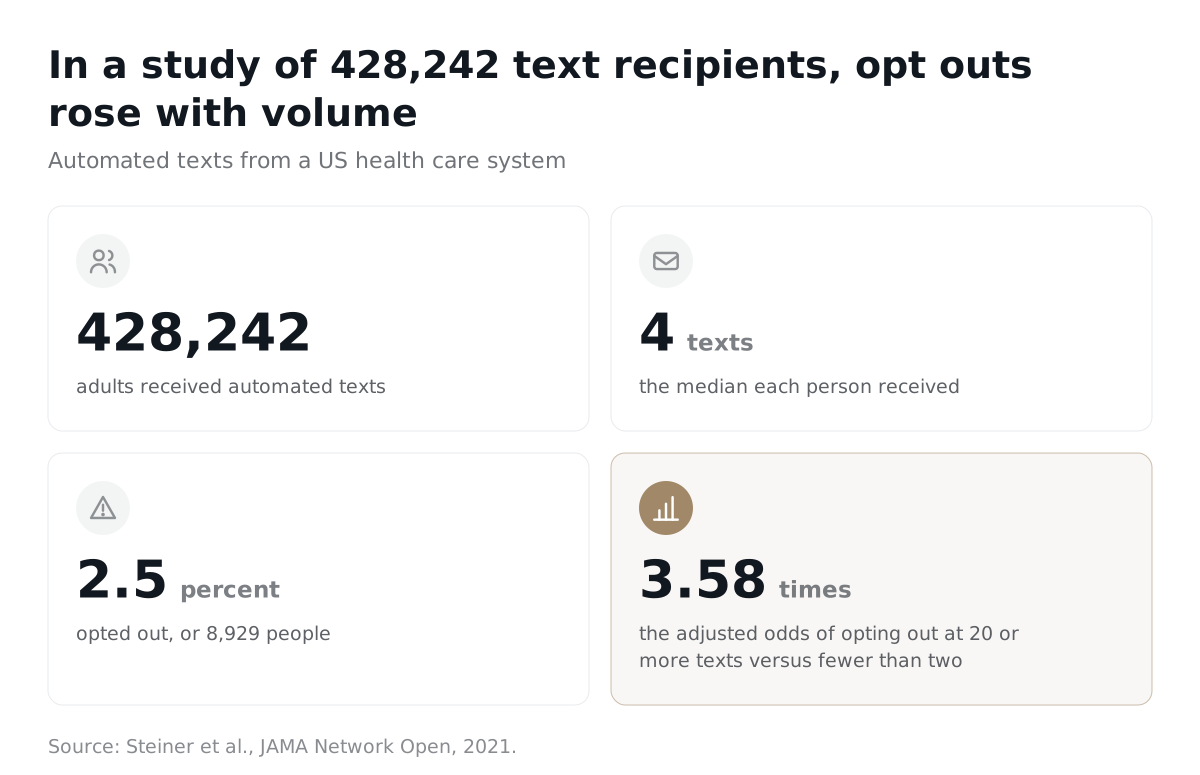
- A 2021 study in JAMA Network Open followed 428,242 adults who received automated texts from a health care system. The median person got four texts.
- About 2.5 percent of them, or 8,929 people, opted out of texts during the study.
- That is health care data, not renter data. It is still the best large, independent look at how real people respond to organizational texts.
So measure your own numbers instead of borrowing someone else's. Track delivery, replies, opt outs per 1,000 texts sent, and whether residents did the thing you asked. Those four tell you more than any vendor open rate.
How many texts a month is too many?
There is no proven monthly number for apartments. What the evidence does show is that opt outs climb as the count climbs, so the right cap is the one your own opt out data supports.
The JAMA Network Open study found a clear volume effect.
- People who received 10 or more texts were significantly more likely to opt out.
- People who received 20 or more texts had 3.58 times the adjusted odds of opting out, compared with people who got fewer than two.
Lead author J.F. Steiner and colleagues, writing in JAMA Network Open, concluded that senders "should use these messages judiciously to minimize message fatigue." That applies to buildings as much as to clinics.
Here is how to set your own ceiling:
- Count every text a resident receives from you, across leasing, payments, maintenance, events, and emergencies. Residents do not care which team sent it.
- Split expected texts (their own work order, their own package) from broadcasts you chose to send.
- Report opt outs per 1,000 texts, by message type, every month.
- Investigate any broadcast that causes a spike in opt outs within two days.
- Never hold back a real safety message to hit a cadence target.
Discretionary broadcasts are the easiest texts to cut. Move them to the app and email first, and the channel stays quiet enough to matter.
Why do broad announcements cost more opt outs than personal texts?
Broad announcements feel irrelevant to most of the people who get them, and irrelevance is what drives opt outs.
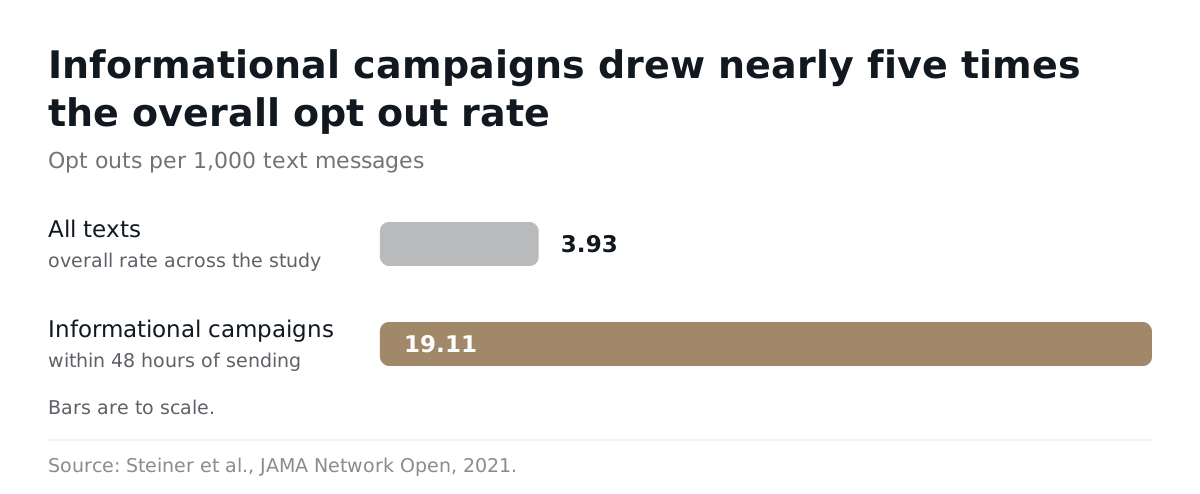
The JAMA Network Open study measured the gap. Across all texts, the opt out rate was 3.93 per 1,000 messages. Informational campaigns produced 19.11 opt outs per 1,000 messages within 48 hours. That is nearly five times higher.
Translate that to your building. A reminder about a technician coming to unit 1204 tomorrow is personal and expected. A building wide note about the new gym hours is an informational campaign. The first protects the channel. The second spends it.
What makes a building text actually get read?
A building text gets read when the resident instantly recognizes the sender, sees that it applies to them, and knows the one thing to do. Everything else is secondary.
Industry guidance backs the identity part. CTIA's 2023 messaging principles say the initial message should state the identity of the organization being represented. The same document says embedded links must not conceal or obscure the sender, and it recommends a link shortener dedicated to the sender's exclusive use.
Use this checklist before you hit send:
- Name first. Start with the building or management name, not a greeting.
- Where and when. Name the floor, stack, or building, plus the start time and expected end.
- One action. Fill the tub, move your car, reply YES, or expect an update at 3 p.m. Never stack two asks.
- A trusted link, or none. Use your own domain. Generic public shorteners look like scams.
- Short. Put the detail behind the link or in the app. The text is the alert.
- The resident's language. Send it in the language the household chose. Our guide to multilingual resident communication covers how to set that up.
A good outage text reads like this: "Maple Court: Water off in the B stack, floors 4 to 9, Tuesday 10 a.m. to 2 p.m. Fill a jug tonight. Updates in the app."
How should you segment an apartment texting list?
Segment by who is affected, not by who is on the list. The smaller and more accurate the audience, the more each text is worth.
| Segment | Good uses | Guardrail |
|---|---|---|
| Whole portfolio | True company wide changes only | Require a second person to approve. An error reaches everyone. |
| Building | Building outage, entry system change, fire alarm test | Confirm the property and its time zone before sending. |
| Floor, stack, or wing | Water shutoffs, HVAC work, hallway cleaning, access limits | Build it from real unit data, not a list someone remembers. |
| Unit or household | Work order status, entry notice, package, rent reminder | No private details in the text body. |
| Owners (condos) | Votes, meetings, assessments, new documents | Point to the document hub. Never paste financials into a text. |
| Tenants and occupants | Daily service and access messages | Respect each person's consent, language, and topic choices. |
| Staff and vendors | Dispatch and escalation | Keep them on a separate list from residents. |
Owner and tenant splits matter most in condos with rented units. The owner needs the assessment notice. The tenant needs the water shutoff. Sending both to both doubles your volume and halves your relevance.
What quiet hours should apartment texts follow?
Send routine texts between 8 a.m. and 9 p.m. in the building's local time, and send real emergencies whenever they happen. That window is a sensible floor, not a legal requirement for every operational text.
The window comes from federal rules for sales calls. Under 47 CFR 64.1200, no one may initiate a telephone solicitation to a residential subscriber before 8 a.m. or after 9 p.m., local time at the called party's location. A maintenance notice is not a sales call, but residents do not make that distinction at 10:45 at night. Our TCPA guide covers the legal side in more depth.
Three practical rules follow:
- Schedule routine notices for late morning or early evening, never overnight.
- For a portfolio across time zones, schedule by each building's local clock, not the head office's.
- Write down what counts as an emergency, so staff do not debate it at 2 a.m.
How does URBI handle building announcements without burning out SMS?
URBI moves routine broadcasts into the resident app, email, and lobby screens, so SMS is saved for the moments that need it. Staff target, schedule, and keep the record in one system.
- Targeted announcements. News and announcements in URBI can be targeted per unit and by access level, so a notice for the B stack reaches the B stack.
- Scheduled sends. Posts can be scheduled, and one post can go out across several properties at each building's local send time. That handles quiet hours for multi property portfolios.
- Push notifications. Personalized alerts cover building updates, packages, events, and emergencies, without using up anyone's patience for texts.
- Lobby and elevator screens. URBI Display shows building news on shared screens and can flip every screen to an emergency alert across the property.
- Replies that get answered. Arthur, URBI's resident facing AI on the Premium plan, answers resident questions by SMS, voice, email, and in app chat. It verifies with a PIN before anything sensitive, answers only about the resident's own household, and passes unknown questions to the property manager with a summary.
- A record you can check. Staff to resident conversations are logged and searchable, email replies to announcements land in the staff inbox as a thread, and Arthur keeps a transcript and summary of every conversation.
The record matters when something goes wrong. When a resident says they never heard about the shutoff, you want the history in one place, not in someone's personal phone. For how the pieces fit together at a residential property, see URBI for residential buildings and the communication and community features. If you are comparing platforms, our guide on how to choose building communications software lays out the questions to ask.
What do managers ask most about apartment texting?
Is mass texting better than email for apartment residents?
Texting is better for short, urgent, local messages that need action soon. Email is better for detail, documents, and anything a resident may need to find again. No independent study has measured apartment read rates for either channel, so do not trust a single headline number. Run both, track replies and opt outs per 1,000 messages, and let your own residents' behavior decide which message goes where.
Should apartments text residents during an emergency?
Yes, send the text immediately, but never make it the only channel. Phones die, numbers change, and some residents opted out months ago. Back every emergency text with a push notification, an email, phone calls to residents who need help, and your lobby screens. Write the emergency plan before you need it, including who is allowed to send and which areas each message should reach.
How do I lower opt outs from building texts?
Send fewer broadcasts and more targeted messages. Research on 428,242 text recipients found that opt outs rose with volume, and broad informational campaigns caused nearly five times the study's overall opt out rate. Move events, surveys, and general news to the app and email. Keep SMS for outages, access, and emergencies, sent only to the floors or units affected.
Can a text replace a formal notice to residents?
Treat it as a pointer, not a replacement. Lease changes, entry notices, fines, and anything tied to a dispute should go out the way your lease and local law require. A text can tell the resident that the formal notice is waiting and where to find it. That keeps the text short and the legal record in a system you control.
Mass text messaging for apartments pays off when every text is one residents are glad to get. If you want targeted announcements, push alerts, and an AI that answers the replies in one platform, see what URBI is or write to us at hello@myurbi.co.
Keep reading


